
Search

Read in kreyòl

Kreyòl

Menu

Kreyòl

Menu

Vicky Onélien
Vicky Onélien

Celebrating 11 Years of Haiti through our voices

This project has been on all of our hearts for years now. Over the past few years, through the power of social media and blogs, young Haitians and diaspora Haitians have carried out discourse about Haiti from our own perspective.

Featured Stories

Maximum Connection: Shared Study & Struggle between Haiti and Philadelphia
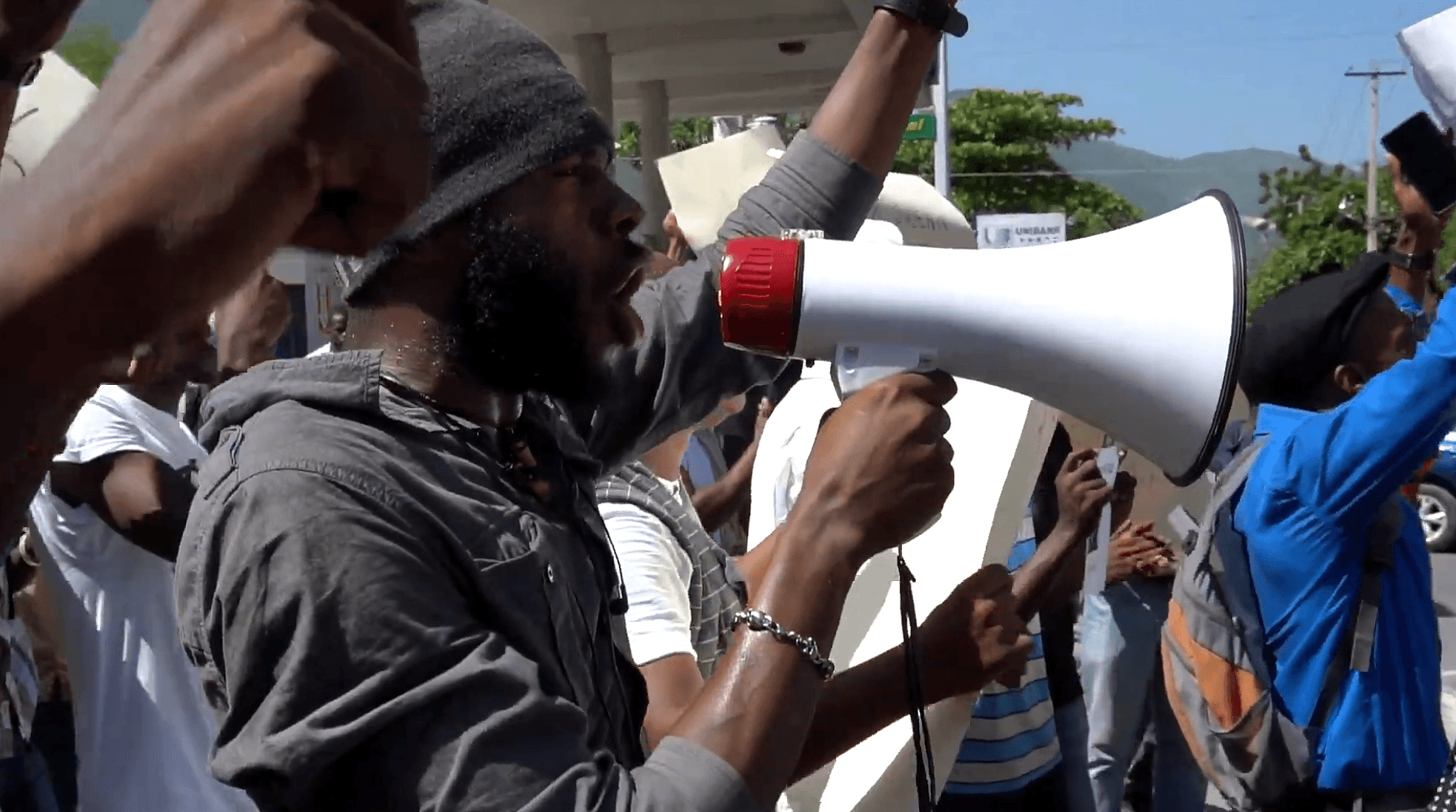
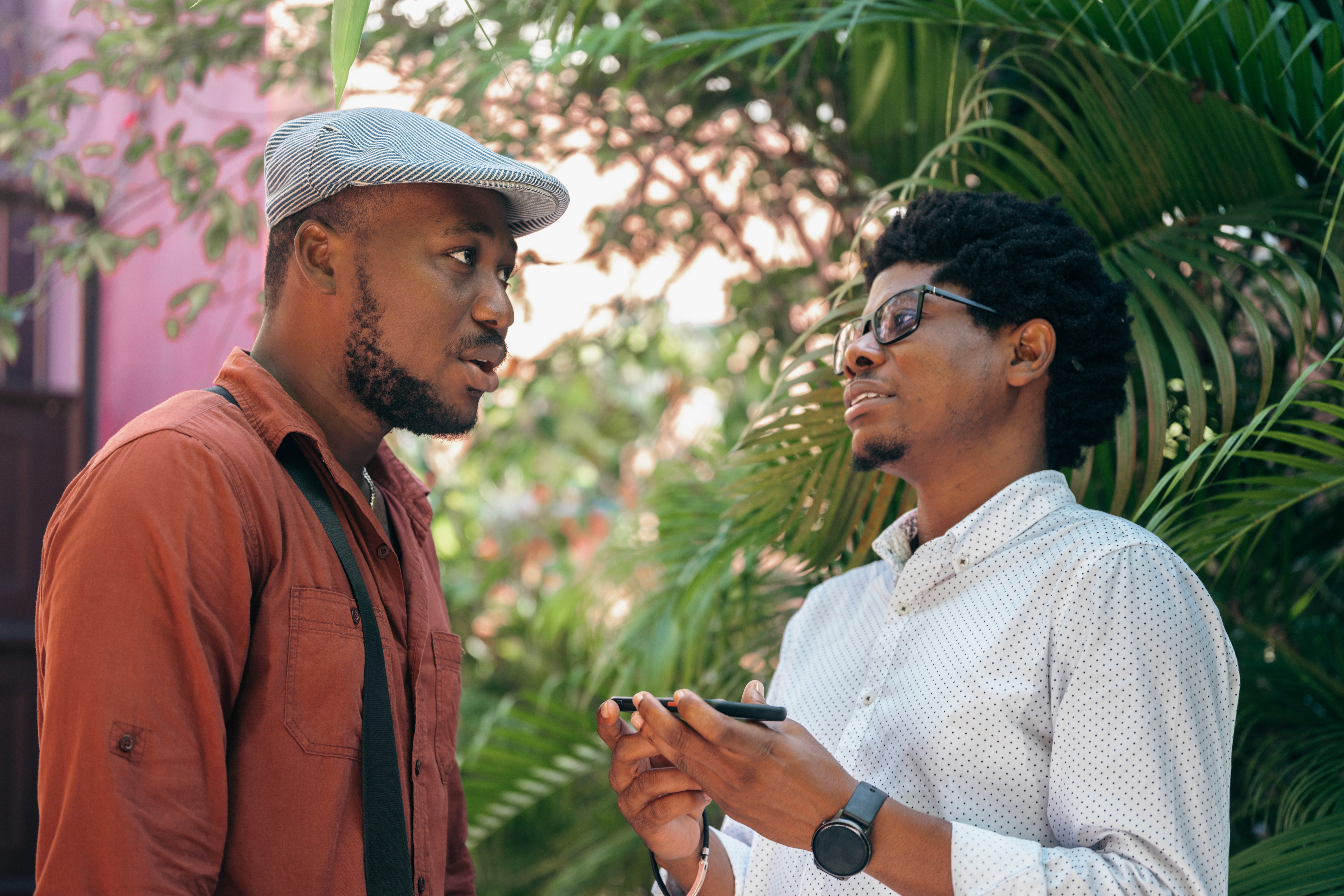
Philly and Port-au-Prince, my two homes, have seen the rise and fall of major political mobilization in the last few years. I often ask myself whether we’ve taken the time to learn all the lessons these moments and movements have to teach us. In May of 2025, I had a chat with James Beltis. He is an organizer who has been at the forefront of some of the social movements in Haiti over the last few years, including the Petro Caribe movement. He has a great way of breaking down what’s happening and helping us focus on what’s essential.  


Hotel Oloffson, The Neverending Cycle of Forced Forgetting
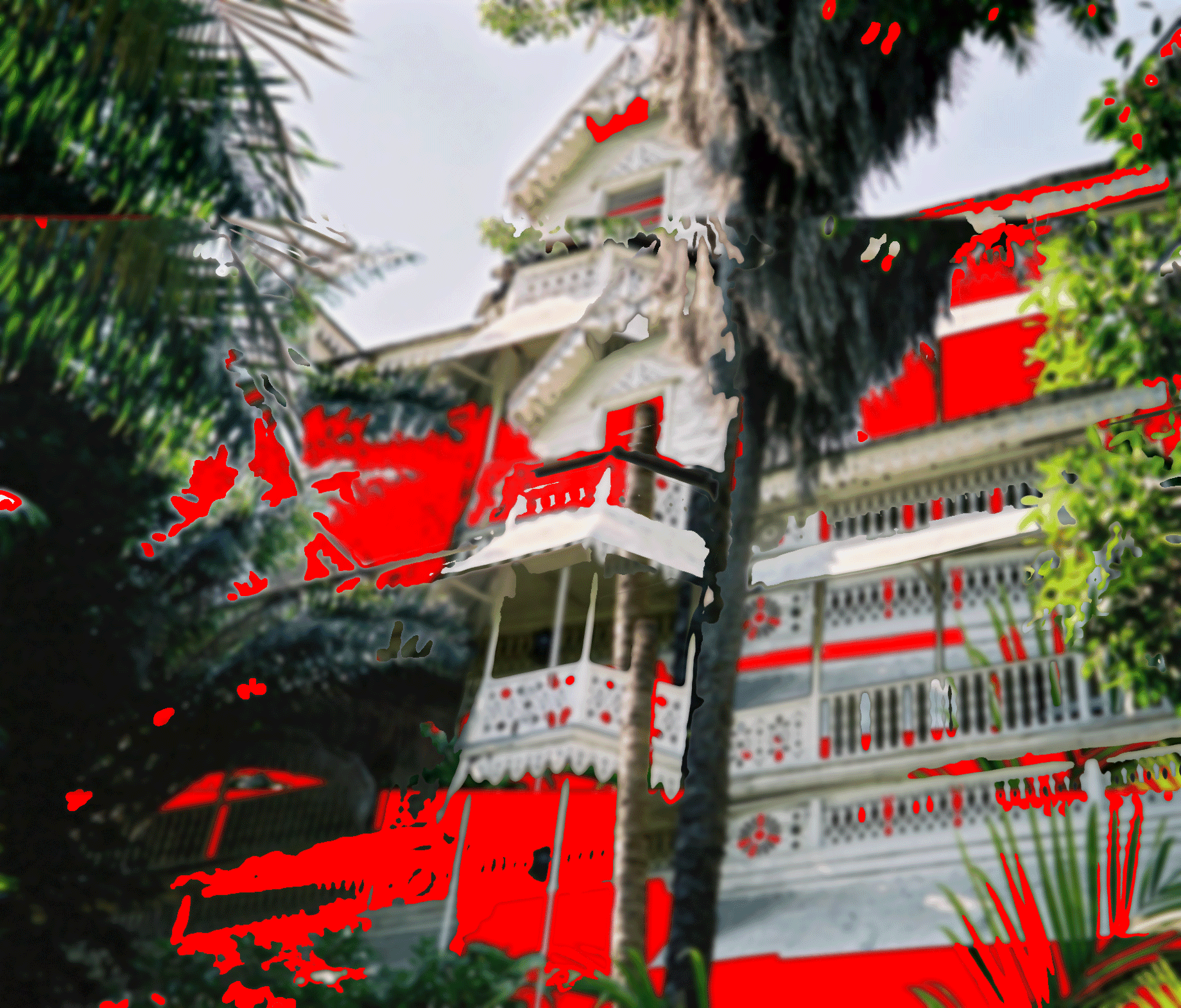
Haiti enters its 222nd year of independence under conditions that echo a long history of repression. As we celebrate this January 1st, the events of 2025 come into sharper focus. 5 months ago, while fireworks consumed American skies during the weekend of July 4, a more menacing blaze lit up Haiti’s capital as flames reduced the famed Oloffson Hotel to ashes. Like many homes and businesses in Port-au-Prince and other parts of the country, the hotel was abandoned as elite-backed paramilitary forces escalated their violent tactics.

Woy Presents A New Radio Documentary about Haitian Music
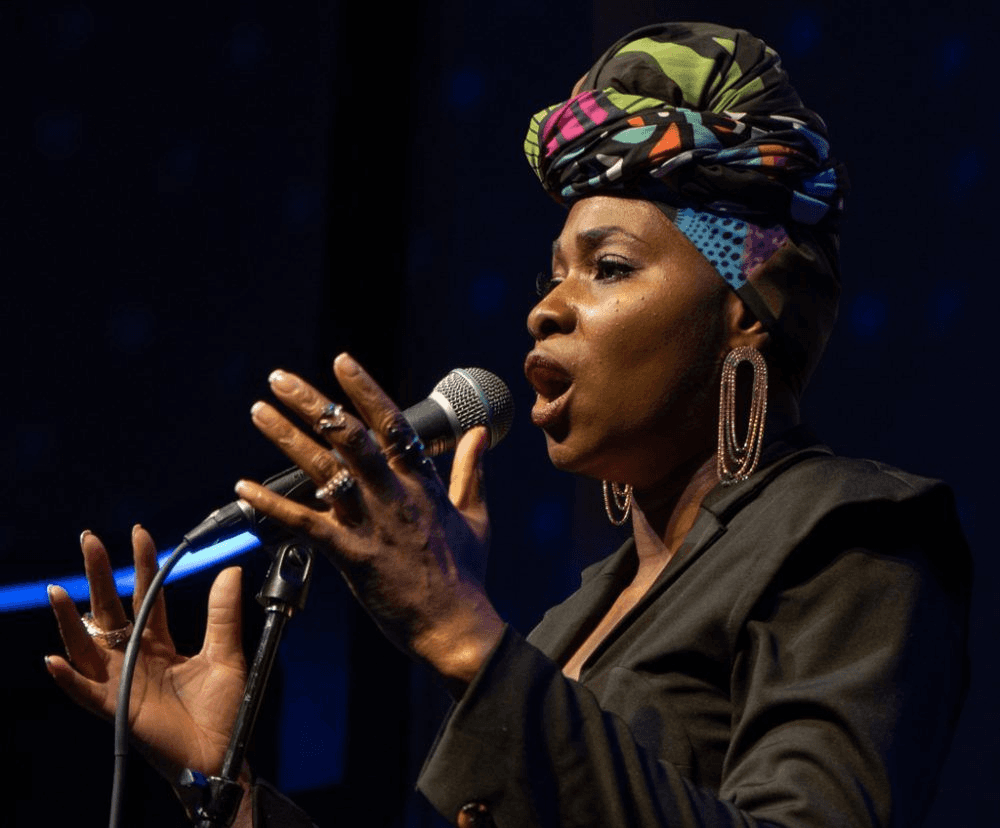
There has been a mass exodus of migration from Haiti to cities like New York, Miami, Philadelphia, Boston, etc. This may seem random and arbitrary to the random observer, but this has been a steady result of years of imperialism and government neglect, and the Haitian people have been singing about it the entire time. 

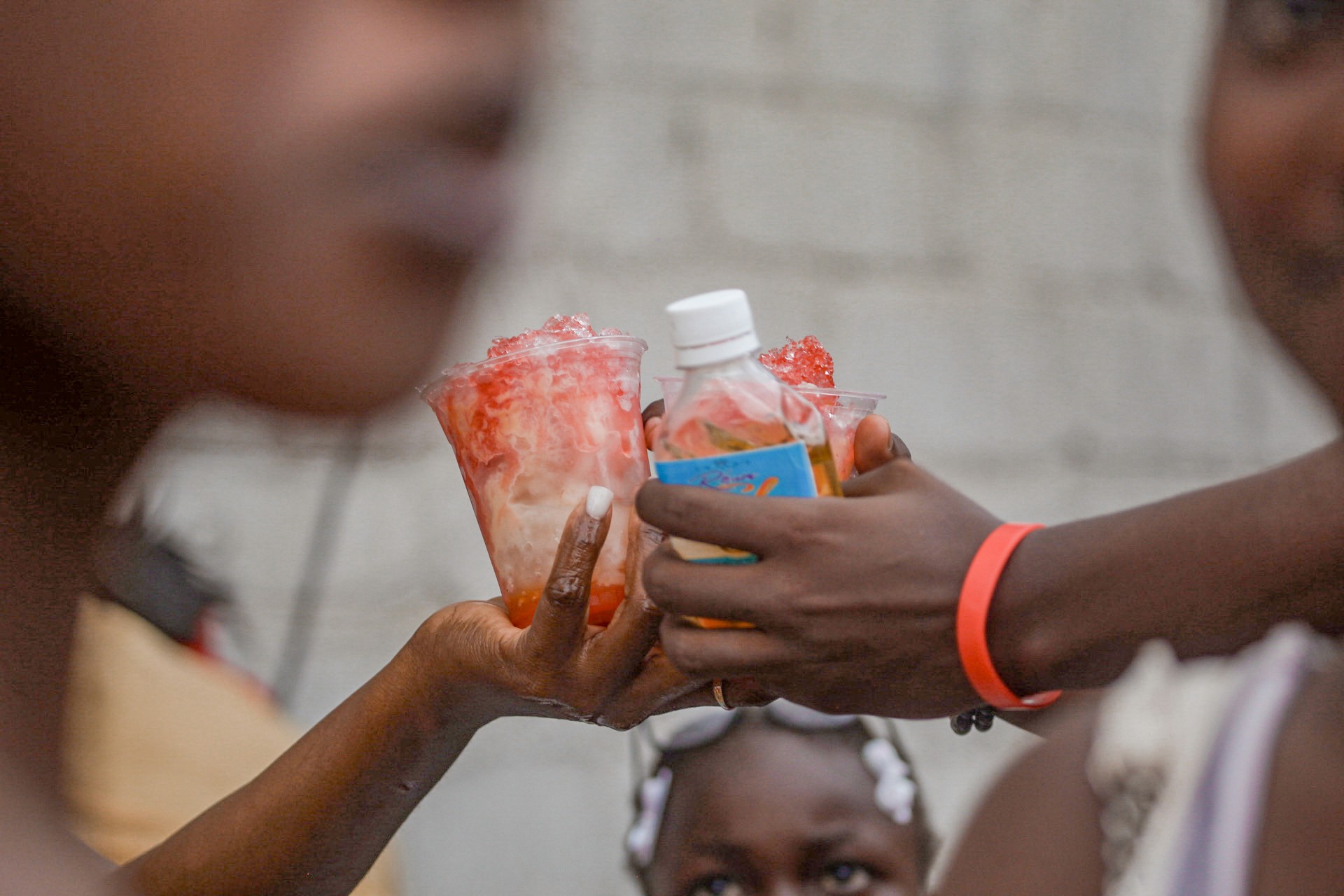
Soup Joumou: a bowl of history, love & nutrition
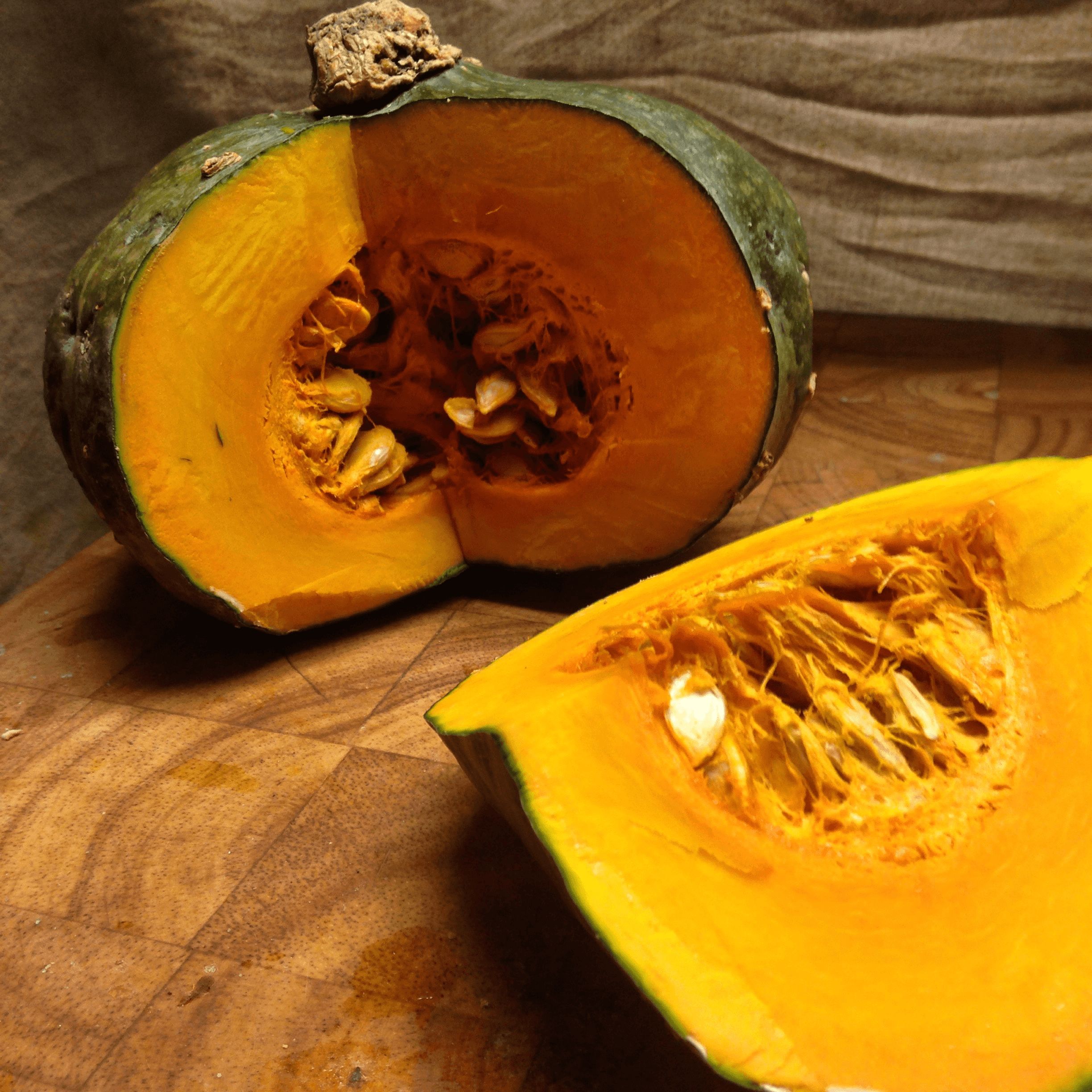
There are no memories before soup joumou. There is no marker in the mind for when this food was introduced to my body. As long as I’ve been collecting the trinkets of my days as souvenirs in my mind, there has been pumpkin soup.

Maximum Connection: Shared Study & Struggle between Haiti and Philadelphia

Philly and Port-au-Prince, my two homes, have seen the rise and fall of major political mobilization in the last few years. I often ask myself whether we’ve taken the time to learn all the lessons these moments and movements have to teach us. In May of 2025, I had a chat with James Beltis. He is an organizer who has been at the forefront of some of the social movements in Haiti over the last few years, including the Petro Caribe movement. He has a great way of breaking down what’s happening and helping us focus on what’s essential.  


Hotel Oloffson, The Neverending Cycle of Forced Forgetting

Haiti enters its 222nd year of independence under conditions that echo a long history of repression. As we celebrate this January 1st, the events of 2025 come into sharper focus. 5 months ago, while fireworks consumed American skies during the weekend of July 4, a more menacing blaze lit up Haiti’s capital as flames reduced the famed Oloffson Hotel to ashes. Like many homes and businesses in Port-au-Prince and other parts of the country, the hotel was abandoned as elite-backed paramilitary forces escalated their violent tactics.

Woy Presents A New Radio Documentary about Haitian Music

There has been a mass exodus of migration from Haiti to cities like New York, Miami, Philadelphia, Boston, etc. This may seem random and arbitrary to the random observer, but this has been a steady result of years of imperialism and government neglect, and the Haitian people have been singing about it the entire time. 

Soup Joumou: a bowl of history, love & nutrition

There are no memories before soup joumou. There is no marker in the mind for when this food was introduced to my body. As long as I’ve been collecting the trinkets of my days as souvenirs in my mind, there has been pumpkin soup.

The American Roots of Anti-Haitianism

Haiti and Haitians unwillingly being the center of news is, unfortunately, a reality we have faced for more than two centuries through systemic racism, negative stereotypes perpetuated by the media, and historical and ongoing discrimination in the United States and the world over. 

Recent headlines have been erupting out of Springfield, Ohio, where conservatives are waging attacks against Haitian émigrés is the most recent example of America’s long history of dehumanizing and vilifying anything remotely related to Haiti.  Haiti and Haitians unwillingly being the center of news is, unfortunately, a reality we have faced for more than two centuries through systemic racism, negative stereotypes perpetuated by the media, and historical and ongoing discrimination in the United States and the world over. 

Immediately following the success of the Haitian revolution in 1804, anti-Haitianism exploded in the United States, especially among Southern plantation owners and slave traffickers. And for good reason. Six years after Haiti declared itself free, the largest U.S. slave revolt, inspired by what happened in Saint Domingue, took place in Louisiana. 

The complete liberation of formerly trafficked Africans and their descendants in the region turned the world on its head. Following 13 years of battle, a corner of the world that had been drenched in the oppression of African and Indigenous peoples by European powers and the Church, all in the name of exploitation and greed, became a beacon of freedom for all oppressed peoples and directly influenced liberation movements in present-day Venezuela, Mexico, and Greece just to name a few. 

In response, the United States, France, and their allies used the entire nineteenth and twentieth centuries to wage an unholy public relations and political campaign othering Haiti and its people. The infamous debt from France was only part of the machinations put in place to weaken the new state. 

Thomas Jefferson’s Administration failed to recognize its new neighbor, and the U.S. would not do so until 1862 during the American Civil War. In 1915, U.S. marines invaded Haiti, beginning a 19-year occupation that would see the theft of the country’s financial reserves, the importation of the U.S. prison industrial complex, the torture and execution of freedom fighters like Charlemagne Péralte and other Cacos, and a reframing of Haiti’s constitution to grant “foreigners land-owning rights.” Meanwhile, famed and cherished Black American writer and anthropologist Zora Neale Hurston described it as “the end of the revolution and the beginning of peace.” 

The occupation also put the condemnation and blatant misrepresentation of Vodou and other related African Traditional Religions into overdrive. Since Bwa Kayiman, where my foremothers and fathers called on lwas such as Ezili Danto, Ogou Feray, and Dambala to form lame endijèn (the indigenous army), Vodou has been seen as a “pact to the devil.” White minds then and now could not imagine gods stronger and more just than their angry Canaanite deity. Thanks to sensational reporting from white marines and journalists, Vodou found itself mocked and weaponized in American pop culture. As Professor Patrick Bellegarde-Smith put it, “Hollywood, as loyal Americans, comes to the rescue of the U.S. state, and justified further the brutish occupation by creating the ‘voodoo,’ we now know, and the zombie films that became a basic staple.” 

Then came the HIV/AIDS crisis. 

In 1982, the Centers for Disease Control and Prevention (CDC) publicly alleged that Haitians “were at increased risk for acquiring HIV.” This led to the reckless three Hs of cause for the illness: “Homosexuals, Hemophiliacs, Heroin Addicts, and Haitians.” The unprecedented international isolation of Haitians, resulting from this fabrication, only further cemented us as subhumans within the U.S. and the rest of the world.  

Therefore, these antics by Trump, Vance, and their base are nothing new. And make no mistake, their political opponents haven’t done any better. In fact, the Biden-Harris Administration, as recently as May 2024, is considering using Guantanamo Bay to “process Haitian migrants” as Western-induced and backed crises rock the country, practically disabling the capitol. The current administration hypocritically ignores calls for free and open elections in Haiti, all while defending electoral integrity at home. 

Now, to be fair, anti-Haitian sentiment hasn’t solely been practiced by white powers – Black and Brown countries have and continue to enjoy participating in the hazing rituals. In 19th century Brazil, white enslavers rattled by the Revolution coined the word “haitismo to talk about any slave rebellion.” Today, Brazil, which has the largest population of Black people outside the African continent, is a member of the Core Group, a committee of ambassadors from the U.S., Spain, France, Germany, Canada, the European Union, the United Nations, and the Organization of American States, who, wield undue influence over Haiti’s domestic affairs. Additionally, in a recent op-ed for Common Dreams Yves Engler writes, “During an explosion of xenophobia against Haitian migrants in Guyana in 2019, reports focused on HIV/AIDS and Voodoo.” And of course, Jamaica and Kenya are currently carrying their former colonizers’ water with recent troop deployments to the nation, all under the guise of peacekeeping and safety. 

This is why it is comical at best and concerning at worst that some view this moment as an opportunity to whip up Haitian and Haitian-American votes for the Harris-Walz campaign. Anti-Haitianism is a foundational cornerstone of anti-Blackness and American political ideology as we know it. No one who heads an empire built on the economic, environmental, and physical degradation of First Nation peoples and Africans will ever have Haiti’s best interest at heart. At most, Haiti must continue to serve as an example of the torture awaiting Black people who attempt to protect themselves and their communities and revere their ancestors – both those who survived chattel slavery and those whose final resting place is the Atlantic Ocean.  

A strong Haiti, like a re-established Palestinian state, threatens the status quo as we know it and reveals the depths of depravity of white supremacy, its architects, heirs, and its footmen. 

A strong Haiti clears any and all obstructions to global Black reparations. A strong Haiti weakens capitalism and forces us to contend with how much of the Western world’s wealth remains a direct product of the transatlantic slave trade. A strong Haiti demands that we ask ourselves hard questions about pan-Africanism and how nations like Jamaica, Guyana, the Bahamas, Kenya, and others who have directly benefited from our constant humiliation can properly be held accountable for their actions. 

A strong Haiti, like a re-established Palestinian state, threatens the status quo as we know it and reveals the depths of depravity of white supremacy, its architects, heirs, and its footmen. 

If there’s anything to be gained from this moment, it is that more people will understand how a small country practically the size of the state of Maryland has given much to the world with little thanks in return. If there’s anything to be learned from this time, it is that Haiti’s current reality is the rock upon which Western idealism and comfort rests. 

Anything else is a bonus and a miracle.

The American Roots of Anti-Haitianism

Haiti and Haitians unwillingly being the center of news is, unfortunately, a reality we have faced for more than two centuries through systemic racism, negative stereotypes perpetuated by the media, and historical and ongoing discrimination in the United States and the world over. 

Recent headlines have been erupting out of Springfield, Ohio, where conservatives are waging attacks against Haitian émigrés is the most recent example of America’s long history of dehumanizing and vilifying anything remotely related to Haiti.  Haiti and Haitians unwillingly being the center of news is, unfortunately, a reality we have faced for more than two centuries through systemic racism, negative stereotypes perpetuated by the media, and historical and ongoing discrimination in the United States and the world over. 

Immediately following the success of the Haitian revolution in 1804, anti-Haitianism exploded in the United States, especially among Southern plantation owners and slave traffickers. And for good reason. Six years after Haiti declared itself free, the largest U.S. slave revolt, inspired by what happened in Saint Domingue, took place in Louisiana. 

The complete liberation of formerly trafficked Africans and their descendants in the region turned the world on its head. Following 13 years of battle, a corner of the world that had been drenched in the oppression of African and Indigenous peoples by European powers and the Church, all in the name of exploitation and greed, became a beacon of freedom for all oppressed peoples and directly influenced liberation movements in present-day Venezuela, Mexico, and Greece just to name a few. 

In response, the United States, France, and their allies used the entire nineteenth and twentieth centuries to wage an unholy public relations and political campaign othering Haiti and its people. The infamous debt from France was only part of the machinations put in place to weaken the new state. 

Thomas Jefferson’s Administration failed to recognize its new neighbor, and the U.S. would not do so until 1862 during the American Civil War. In 1915, U.S. marines invaded Haiti, beginning a 19-year occupation that would see the theft of the country’s financial reserves, the importation of the U.S. prison industrial complex, the torture and execution of freedom fighters like Charlemagne Péralte and other Cacos, and a reframing of Haiti’s constitution to grant “foreigners land-owning rights.” Meanwhile, famed and cherished Black American writer and anthropologist Zora Neale Hurston described it as “the end of the revolution and the beginning of peace.” 

The occupation also put the condemnation and blatant misrepresentation of Vodou and other related African Traditional Religions into overdrive. Since Bwa Kayiman, where my foremothers and fathers called on lwas such as Ezili Danto, Ogou Feray, and Dambala to form lame endijèn (the indigenous army), Vodou has been seen as a “pact to the devil.” White minds then and now could not imagine gods stronger and more just than their angry Canaanite deity. Thanks to sensational reporting from white marines and journalists, Vodou found itself mocked and weaponized in American pop culture. As Professor Patrick Bellegarde-Smith put it, “Hollywood, as loyal Americans, comes to the rescue of the U.S. state, and justified further the brutish occupation by creating the ‘voodoo,’ we now know, and the zombie films that became a basic staple.” 

Then came the HIV/AIDS crisis. 

In 1982, the Centers for Disease Control and Prevention (CDC) publicly alleged that Haitians “were at increased risk for acquiring HIV.” This led to the reckless three Hs of cause for the illness: “Homosexuals, Hemophiliacs, Heroin Addicts, and Haitians.” The unprecedented international isolation of Haitians, resulting from this fabrication, only further cemented us as subhumans within the U.S. and the rest of the world.  

Therefore, these antics by Trump, Vance, and their base are nothing new. And make no mistake, their political opponents haven’t done any better. In fact, the Biden-Harris Administration, as recently as May 2024, is considering using Guantanamo Bay to “process Haitian migrants” as Western-induced and backed crises rock the country, practically disabling the capitol. The current administration hypocritically ignores calls for free and open elections in Haiti, all while defending electoral integrity at home. 

Now, to be fair, anti-Haitian sentiment hasn’t solely been practiced by white powers – Black and Brown countries have and continue to enjoy participating in the hazing rituals. In 19th century Brazil, white enslavers rattled by the Revolution coined the word “haitismo to talk about any slave rebellion.” Today, Brazil, which has the largest population of Black people outside the African continent, is a member of the Core Group, a committee of ambassadors from the U.S., Spain, France, Germany, Canada, the European Union, the United Nations, and the Organization of American States, who, wield undue influence over Haiti’s domestic affairs. Additionally, in a recent op-ed for Common Dreams Yves Engler writes, “During an explosion of xenophobia against Haitian migrants in Guyana in 2019, reports focused on HIV/AIDS and Voodoo.” And of course, Jamaica and Kenya are currently carrying their former colonizers’ water with recent troop deployments to the nation, all under the guise of peacekeeping and safety. 

This is why it is comical at best and concerning at worst that some view this moment as an opportunity to whip up Haitian and Haitian-American votes for the Harris-Walz campaign. Anti-Haitianism is a foundational cornerstone of anti-Blackness and American political ideology as we know it. No one who heads an empire built on the economic, environmental, and physical degradation of First Nation peoples and Africans will ever have Haiti’s best interest at heart. At most, Haiti must continue to serve as an example of the torture awaiting Black people who attempt to protect themselves and their communities and revere their ancestors – both those who survived chattel slavery and those whose final resting place is the Atlantic Ocean.  

A strong Haiti, like a re-established Palestinian state, threatens the status quo as we know it and reveals the depths of depravity of white supremacy, its architects, heirs, and its footmen. 

A strong Haiti clears any and all obstructions to global Black reparations. A strong Haiti weakens capitalism and forces us to contend with how much of the Western world’s wealth remains a direct product of the transatlantic slave trade. A strong Haiti demands that we ask ourselves hard questions about pan-Africanism and how nations like Jamaica, Guyana, the Bahamas, Kenya, and others who have directly benefited from our constant humiliation can properly be held accountable for their actions. 

A strong Haiti, like a re-established Palestinian state, threatens the status quo as we know it and reveals the depths of depravity of white supremacy, its architects, heirs, and its footmen. 

If there’s anything to be gained from this moment, it is that more people will understand how a small country practically the size of the state of Maryland has given much to the world with little thanks in return. If there’s anything to be learned from this time, it is that Haiti’s current reality is the rock upon which Western idealism and comfort rests. 

Anything else is a bonus and a miracle.

The American Roots of Anti-Haitianism

Haiti and Haitians unwillingly being the center of news is, unfortunately, a reality we have faced for more than two centuries through systemic racism, negative stereotypes perpetuated by the media, and historical and ongoing discrimination in the United States and the world over. 

Recent headlines have been erupting out of Springfield, Ohio, where conservatives are waging attacks against Haitian émigrés is the most recent example of America’s long history of dehumanizing and vilifying anything remotely related to Haiti.  Haiti and Haitians unwillingly being the center of news is, unfortunately, a reality we have faced for more than two centuries through systemic racism, negative stereotypes perpetuated by the media, and historical and ongoing discrimination in the United States and the world over. 

Immediately following the success of the Haitian revolution in 1804, anti-Haitianism exploded in the United States, especially among Southern plantation owners and slave traffickers. And for good reason. Six years after Haiti declared itself free, the largest U.S. slave revolt, inspired by what happened in Saint Domingue, took place in Louisiana. 

The complete liberation of formerly trafficked Africans and their descendants in the region turned the world on its head. Following 13 years of battle, a corner of the world that had been drenched in the oppression of African and Indigenous peoples by European powers and the Church, all in the name of exploitation and greed, became a beacon of freedom for all oppressed peoples and directly influenced liberation movements in present-day Venezuela, Mexico, and Greece just to name a few. 

In response, the United States, France, and their allies used the entire nineteenth and twentieth centuries to wage an unholy public relations and political campaign othering Haiti and its people. The infamous debt from France was only part of the machinations put in place to weaken the new state. 

Thomas Jefferson’s Administration failed to recognize its new neighbor, and the U.S. would not do so until 1862 during the American Civil War. In 1915, U.S. marines invaded Haiti, beginning a 19-year occupation that would see the theft of the country’s financial reserves, the importation of the U.S. prison industrial complex, the torture and execution of freedom fighters like Charlemagne Péralte and other Cacos, and a reframing of Haiti’s constitution to grant “foreigners land-owning rights.” Meanwhile, famed and cherished Black American writer and anthropologist Zora Neale Hurston described it as “the end of the revolution and the beginning of peace.” 

The occupation also put the condemnation and blatant misrepresentation of Vodou and other related African Traditional Religions into overdrive. Since Bwa Kayiman, where my foremothers and fathers called on lwas such as Ezili Danto, Ogou Feray, and Dambala to form lame endijèn (the indigenous army), Vodou has been seen as a “pact to the devil.” White minds then and now could not imagine gods stronger and more just than their angry Canaanite deity. Thanks to sensational reporting from white marines and journalists, Vodou found itself mocked and weaponized in American pop culture. As Professor Patrick Bellegarde-Smith put it, “Hollywood, as loyal Americans, comes to the rescue of the U.S. state, and justified further the brutish occupation by creating the ‘voodoo,’ we now know, and the zombie films that became a basic staple.” 

Then came the HIV/AIDS crisis. 

In 1982, the Centers for Disease Control and Prevention (CDC) publicly alleged that Haitians “were at increased risk for acquiring HIV.” This led to the reckless three Hs of cause for the illness: “Homosexuals, Hemophiliacs, Heroin Addicts, and Haitians.” The unprecedented international isolation of Haitians, resulting from this fabrication, only further cemented us as subhumans within the U.S. and the rest of the world.  

Therefore, these antics by Trump, Vance, and their base are nothing new. And make no mistake, their political opponents haven’t done any better. In fact, the Biden-Harris Administration, as recently as May 2024, is considering using Guantanamo Bay to “process Haitian migrants” as Western-induced and backed crises rock the country, practically disabling the capitol. The current administration hypocritically ignores calls for free and open elections in Haiti, all while defending electoral integrity at home. 

Now, to be fair, anti-Haitian sentiment hasn’t solely been practiced by white powers – Black and Brown countries have and continue to enjoy participating in the hazing rituals. In 19th century Brazil, white enslavers rattled by the Revolution coined the word “haitismo to talk about any slave rebellion.” Today, Brazil, which has the largest population of Black people outside the African continent, is a member of the Core Group, a committee of ambassadors from the U.S., Spain, France, Germany, Canada, the European Union, the United Nations, and the Organization of American States, who, wield undue influence over Haiti’s domestic affairs. Additionally, in a recent op-ed for Common Dreams Yves Engler writes, “During an explosion of xenophobia against Haitian migrants in Guyana in 2019, reports focused on HIV/AIDS and Voodoo.” And of course, Jamaica and Kenya are currently carrying their former colonizers’ water with recent troop deployments to the nation, all under the guise of peacekeeping and safety. 

This is why it is comical at best and concerning at worst that some view this moment as an opportunity to whip up Haitian and Haitian-American votes for the Harris-Walz campaign. Anti-Haitianism is a foundational cornerstone of anti-Blackness and American political ideology as we know it. No one who heads an empire built on the economic, environmental, and physical degradation of First Nation peoples and Africans will ever have Haiti’s best interest at heart. At most, Haiti must continue to serve as an example of the torture awaiting Black people who attempt to protect themselves and their communities and revere their ancestors – both those who survived chattel slavery and those whose final resting place is the Atlantic Ocean.  

A strong Haiti, like a re-established Palestinian state, threatens the status quo as we know it and reveals the depths of depravity of white supremacy, its architects, heirs, and its footmen. 

A strong Haiti clears any and all obstructions to global Black reparations. A strong Haiti weakens capitalism and forces us to contend with how much of the Western world’s wealth remains a direct product of the transatlantic slave trade. A strong Haiti demands that we ask ourselves hard questions about pan-Africanism and how nations like Jamaica, Guyana, the Bahamas, Kenya, and others who have directly benefited from our constant humiliation can properly be held accountable for their actions. 

A strong Haiti, like a re-established Palestinian state, threatens the status quo as we know it and reveals the depths of depravity of white supremacy, its architects, heirs, and its footmen. 

If there’s anything to be gained from this moment, it is that more people will understand how a small country practically the size of the state of Maryland has given much to the world with little thanks in return. If there’s anything to be learned from this time, it is that Haiti’s current reality is the rock upon which Western idealism and comfort rests. 

Anything else is a bonus and a miracle.

Allez Les Grenadières

Whenever these young women take the field, for ninety minutes, the Grenadières allow the Haitian people to dream.

This article originally appeared on Africa Is a Country on April 8, 2024. This story was produced with support from the Round Earth Media program of the International Women’s Media Foundation in partnership with Woy Magazine. 

According to Haitian sports journalist Bertinie Cherizard, “Haiti is one of the bastions of women’s football in the Caribbean.” Les Grenadières—named for an armed unit of the Haitian indigenous army—have attracted significant attention for being what FIFA has called Haiti’s golden generation of women footballers, making their impact known year after year in the face of overwhelming local obstacles. In 2023, the national senior women’s football team competed in the women’s World Cup for the first time—appearing with one of the youngest teams in average age, with only four players older than 25 and six teenagers on the squad—but were unable to make it out of the group stages. Les Grenadières appeared on the international stage again in February 2024 for the CONCACAF Women’s Gold Cup preliminaries, competing for the final qualifying slot of the tournament against Puerto Rico. 

The recent attention is certainly a boon, but this newfound visibility did not happen in a vacuum—it is the result of a hard-fought journey spanning over 50 years. In 1971, Parc Sainte Thérèse, located in Pétion-Ville, a suburb of Port-au-Prince about eight kilometers away from the heart of the city, began hosting young women’s football games with girls from nearby neighborhoods. That December, the Amazones, Haiti’s premier women’s football club, was founded. Other clubs quickly came to fruition—AS Tigresses, Excelsior from la Plaine, and Gladiatrice were founded by early 1972. By the second tournament at Parc Sainte Thérèse in October 1972, 10 women’s football teams had signed up. The sport quickly expanded past the Port-au-Prince area—with teams like Aurore de Brach and Anacaona in Léogâne, Star des Gonaïves, Les Irondelles des Cayes, Les Jongleuses du Cap-Haitien, and Surprise de Jacmel—and the clubs all had loyal fans that drew large crowds.

In October 1973, the Haitian Football Federation (FHF) officially recognized women’s football, giving the teams access to the country’s national stadium, Stade Sylvio Cator. This pivotal change allowed Haitians to easily walk to the women’s games, eliminating prohibitive transportation costs for Port-au-Prince’s working-class fans who would have to commute to Parc Sainte Thérèse. Over the years, more resources became available to women’s football, like Camp Nou, a residential facility for young players offering traditional schooling in addition to sports training, referred to by most people as “the ranch.”

Fifty years later, the women’s national team is the darling of the country. “Today, the excitement has been taken to a new dimension. More money has been invested into the women’s football scene, there is more visibility, and the technology is more advanced. We have some veritable stars on the team,” said Cherizard. Among these star players is national team captain Nérilia Mondésir—aptly nicknamed “Nérigol” for her scoring capability—who started in AS Tigresses and now plays for France’s Ligue 1 team Montpellier HSC. There is also Melchie Dumornay, a.k.a. Corventina—Haiti’s star midfielder who “is going to be one of the best players in the world,” according to the Stade des Reims head coach—and Batcheba Louis, the Most Beautiful Goal winner of France’s top women’s football division in the 2021–2022 season. “These ladies have been producing great results from the time they were participating in U20 and U17 tournaments,” Cherizard further explained. “The recent World Cup qualification has attracted the attention of eyes outside of Haiti to our team, but in Haiti, we have been tapped in for a long time.”

Kerly Théus, the brilliant goalkeeper of the Haitian national team and FC Miami City, has undoubtedly become a darling of the Haitian people since the 2023 World Cup. Born on January 7, 1999, in Canapé-Vert, Pétion-Ville, Théus got her start playing in her neighborhood like the rest of her teammates; her career as a goalkeeper began with the Aigle Brillante team in Port-au-Prince on a day when there was no other available goalkeeper. “My sister yelled at me to go play goalie. I didn’t want to do it; I wanted to play,” Théus recalled. “There is this notion that you stick the players who aren’t very good to guard the goal, so nobody wanted to play that position.” 

Théus admits she was not a very good goalkeeper in her early days on the ranch. She recalls a game where her team was losing 3-1: “They put me in the game, and we ended up losing five to three. There wasn’t even that much time left on the clock,” she laughed. “But I believe in hard work. Cristiano [Ronaldo] is my favorite player. He also believes in hard work. That’s why he’s earned several Ballons d’Or. That is also my goal.” Her discipline would pay off: during the three matches played by the Grenadières in the World Cup, she was an essential element. While polls predicted Haiti would face overwhelming defeat against England, Théus prevented a massacre by making an impressive 10 saves and keeping the score to a 1-0 loss.

In February, qualifying senior national women’s football teams of the Confederation of North, Central America, and Caribbean Association Football (CONCACAF) competed in the inaugural Women’s Gold Cup. After the team successfully landed in second place in a qualifying group that included Costa Rica and Saint Kitts and Nevis, they were bested in their February 17 matchup with Puerto Rico. Haiti conceded a goal via a penalty in the 41st minute of the game; the Grenadiéres’ impressive offensive efforts could not tie the match by halftime. Mondésir failed to take advantage of a penalty in the 75th minute, and the team ultimately lost 1-0. Despite the talent of the Haitian players and the high-level professional clubs to which they now belong, the women’s team once again were not able to make it out of the qualifying rounds.

Théus blamed the loss on a lack of connection. “There were many new players, many of our usual players were not there, and we had new staff,” she explained. “We couldn’t find the balance. It all comes down to connection. When you see us on the field, it’s as if each person is doing their own thing.” This is in no small part due to years of lacking much of the necessary infrastructure that is viewed as vital to establishing a successful team on the world stage. While Haiti’s fans may have been disappointed, the team still left its mark: one of the top scorers of the Road to CONCACAF qualifying games was Melchie Dumornay (who also plays for football club Olympique Lyonnais), tying with El Salvador’s Brenda Cerén with eight goals each. 

In 2020, two journalists published an article in The Guardian exposing interference, corruption, and crimes within the Haitian Football Federation. The president of the FHF, Yves Jean-Bart, was accused of sexually abusing underage female players for several years at the ranch. The allegations included harassment, threats, blackmail, and psychological pressure. Jean-Bart was ultimately removed from his position as a result and banned from holding a position at the federation by FIFA, but in 2023 Jean-Bart appealed before the Court of Arbitration for Sport (CAS) and won. The investigative journalists and opposing organizations argue that the victims were threatened into silence. Despite CAS’s ruling, the federation continues to be led by a normalization committee

Haiti’s women’s team made great strides to recover and continue to play at the highest level despite the impact of the damning allegations. But as they rebuilt, the team was also forced to confront their country’s troubles. According to a UN report, 80% of Port-au-Prince is controlled by armed gangs. The catastrophe of insecurity that Haiti has been facing over the last few years has been a significant roadblock for the group and caused the ranch to shut down. The majority of social activities have been suspended, and Stade Sylvio Cator, located at the center of several armed groups’ strongholds, has been pillaged, burned, and left inoperative, with the FHF unable to organize friendly matches. 

Through the political upheaval, the women of the Haitian national team have preferred to avoid speaking about politics in the press or on social media. Members of the Haitian men’s national selection are much more candid on social media and have faced criticism for making insensitive comments. The Grenadières are more cautious with their images, letting their impact as political symbols of pride be their main contribution to the discourse. 

The sustained instability has significantly affected the team’s cohesion, preventing the players from developing synchronicity among themselves. Friendly matches are a critical practice to building compatibility as a team, and since 2020, the Grenadières have played together outside official matches only four times in as many years. In addition to their limited playing experience as a team, the insecurity in the capital prevented the national teams from organizing matches at home, forcing athletes to play in the neighboring Dominican Republic. These games occurred amid a hostile diplomatic dispute between the two countries over the construction of a canal by Haitian farmers on the Massacre River, which runs between Haiti and the DR. These extenuating circumstances would easily decimate any team, making the Grenadières’ accomplishments—from qualifications to scoring records—all the more impressive, all by a group of talented women who continue to persevere despite seemingly insurmountable obstacles.

Over the last several decades, the Haitian people have faced a series of increasingly tragic crises, and Haiti’s sports teams have not been spared. A corrupt federation, violent misogyny, a de facto government that has allowed all major institutions to crumble—the Haitian women’s football team has had to confront unimaginable odds in their desire to represent their country. Despite this, they have managed to create something special—and although they could not make it past the group stage, history will remember Les Grenadières as forces to be reckoned with. “Everything I’m doing right now is something I dreamed of,” Théus told us. Through all of these obstacles, the Grenadières continue to fight. And whenever these young women take the field, for ninety minutes, the Grenadières allow the Haitian people to dream.

Allez Les Grenadières

Whenever these young women take the field, for ninety minutes, the Grenadières allow the Haitian people to dream.

This article originally appeared on Africa Is a Country on April 8, 2024. This story was produced with support from the Round Earth Media program of the International Women’s Media Foundation in partnership with Woy Magazine. 

According to Haitian sports journalist Bertinie Cherizard, “Haiti is one of the bastions of women’s football in the Caribbean.” Les Grenadières—named for an armed unit of the Haitian indigenous army—have attracted significant attention for being what FIFA has called Haiti’s golden generation of women footballers, making their impact known year after year in the face of overwhelming local obstacles. In 2023, the national senior women’s football team competed in the women’s World Cup for the first time—appearing with one of the youngest teams in average age, with only four players older than 25 and six teenagers on the squad—but were unable to make it out of the group stages. Les Grenadières appeared on the international stage again in February 2024 for the CONCACAF Women’s Gold Cup preliminaries, competing for the final qualifying slot of the tournament against Puerto Rico. 

The recent attention is certainly a boon, but this newfound visibility did not happen in a vacuum—it is the result of a hard-fought journey spanning over 50 years. In 1971, Parc Sainte Thérèse, located in Pétion-Ville, a suburb of Port-au-Prince about eight kilometers away from the heart of the city, began hosting young women’s football games with girls from nearby neighborhoods. That December, the Amazones, Haiti’s premier women’s football club, was founded. Other clubs quickly came to fruition—AS Tigresses, Excelsior from la Plaine, and Gladiatrice were founded by early 1972. By the second tournament at Parc Sainte Thérèse in October 1972, 10 women’s football teams had signed up. The sport quickly expanded past the Port-au-Prince area—with teams like Aurore de Brach and Anacaona in Léogâne, Star des Gonaïves, Les Irondelles des Cayes, Les Jongleuses du Cap-Haitien, and Surprise de Jacmel—and the clubs all had loyal fans that drew large crowds.

In October 1973, the Haitian Football Federation (FHF) officially recognized women’s football, giving the teams access to the country’s national stadium, Stade Sylvio Cator. This pivotal change allowed Haitians to easily walk to the women’s games, eliminating prohibitive transportation costs for Port-au-Prince’s working-class fans who would have to commute to Parc Sainte Thérèse. Over the years, more resources became available to women’s football, like Camp Nou, a residential facility for young players offering traditional schooling in addition to sports training, referred to by most people as “the ranch.”

Fifty years later, the women’s national team is the darling of the country. “Today, the excitement has been taken to a new dimension. More money has been invested into the women’s football scene, there is more visibility, and the technology is more advanced. We have some veritable stars on the team,” said Cherizard. Among these star players is national team captain Nérilia Mondésir—aptly nicknamed “Nérigol” for her scoring capability—who started in AS Tigresses and now plays for France’s Ligue 1 team Montpellier HSC. There is also Melchie Dumornay, a.k.a. Corventina—Haiti’s star midfielder who “is going to be one of the best players in the world,” according to the Stade des Reims head coach—and Batcheba Louis, the Most Beautiful Goal winner of France’s top women’s football division in the 2021–2022 season. “These ladies have been producing great results from the time they were participating in U20 and U17 tournaments,” Cherizard further explained. “The recent World Cup qualification has attracted the attention of eyes outside of Haiti to our team, but in Haiti, we have been tapped in for a long time.”

Kerly Théus, the brilliant goalkeeper of the Haitian national team and FC Miami City, has undoubtedly become a darling of the Haitian people since the 2023 World Cup. Born on January 7, 1999, in Canapé-Vert, Pétion-Ville, Théus got her start playing in her neighborhood like the rest of her teammates; her career as a goalkeeper began with the Aigle Brillante team in Port-au-Prince on a day when there was no other available goalkeeper. “My sister yelled at me to go play goalie. I didn’t want to do it; I wanted to play,” Théus recalled. “There is this notion that you stick the players who aren’t very good to guard the goal, so nobody wanted to play that position.” 

Théus admits she was not a very good goalkeeper in her early days on the ranch. She recalls a game where her team was losing 3-1: “They put me in the game, and we ended up losing five to three. There wasn’t even that much time left on the clock,” she laughed. “But I believe in hard work. Cristiano [Ronaldo] is my favorite player. He also believes in hard work. That’s why he’s earned several Ballons d’Or. That is also my goal.” Her discipline would pay off: during the three matches played by the Grenadières in the World Cup, she was an essential element. While polls predicted Haiti would face overwhelming defeat against England, Théus prevented a massacre by making an impressive 10 saves and keeping the score to a 1-0 loss.

In February, qualifying senior national women’s football teams of the Confederation of North, Central America, and Caribbean Association Football (CONCACAF) competed in the inaugural Women’s Gold Cup. After the team successfully landed in second place in a qualifying group that included Costa Rica and Saint Kitts and Nevis, they were bested in their February 17 matchup with Puerto Rico. Haiti conceded a goal via a penalty in the 41st minute of the game; the Grenadiéres’ impressive offensive efforts could not tie the match by halftime. Mondésir failed to take advantage of a penalty in the 75th minute, and the team ultimately lost 1-0. Despite the talent of the Haitian players and the high-level professional clubs to which they now belong, the women’s team once again were not able to make it out of the qualifying rounds.

Théus blamed the loss on a lack of connection. “There were many new players, many of our usual players were not there, and we had new staff,” she explained. “We couldn’t find the balance. It all comes down to connection. When you see us on the field, it’s as if each person is doing their own thing.” This is in no small part due to years of lacking much of the necessary infrastructure that is viewed as vital to establishing a successful team on the world stage. While Haiti’s fans may have been disappointed, the team still left its mark: one of the top scorers of the Road to CONCACAF qualifying games was Melchie Dumornay (who also plays for football club Olympique Lyonnais), tying with El Salvador’s Brenda Cerén with eight goals each. 

In 2020, two journalists published an article in The Guardian exposing interference, corruption, and crimes within the Haitian Football Federation. The president of the FHF, Yves Jean-Bart, was accused of sexually abusing underage female players for several years at the ranch. The allegations included harassment, threats, blackmail, and psychological pressure. Jean-Bart was ultimately removed from his position as a result and banned from holding a position at the federation by FIFA, but in 2023 Jean-Bart appealed before the Court of Arbitration for Sport (CAS) and won. The investigative journalists and opposing organizations argue that the victims were threatened into silence. Despite CAS’s ruling, the federation continues to be led by a normalization committee

Haiti’s women’s team made great strides to recover and continue to play at the highest level despite the impact of the damning allegations. But as they rebuilt, the team was also forced to confront their country’s troubles. According to a UN report, 80% of Port-au-Prince is controlled by armed gangs. The catastrophe of insecurity that Haiti has been facing over the last few years has been a significant roadblock for the group and caused the ranch to shut down. The majority of social activities have been suspended, and Stade Sylvio Cator, located at the center of several armed groups’ strongholds, has been pillaged, burned, and left inoperative, with the FHF unable to organize friendly matches. 

Through the political upheaval, the women of the Haitian national team have preferred to avoid speaking about politics in the press or on social media. Members of the Haitian men’s national selection are much more candid on social media and have faced criticism for making insensitive comments. The Grenadières are more cautious with their images, letting their impact as political symbols of pride be their main contribution to the discourse. 

The sustained instability has significantly affected the team’s cohesion, preventing the players from developing synchronicity among themselves. Friendly matches are a critical practice to building compatibility as a team, and since 2020, the Grenadières have played together outside official matches only four times in as many years. In addition to their limited playing experience as a team, the insecurity in the capital prevented the national teams from organizing matches at home, forcing athletes to play in the neighboring Dominican Republic. These games occurred amid a hostile diplomatic dispute between the two countries over the construction of a canal by Haitian farmers on the Massacre River, which runs between Haiti and the DR. These extenuating circumstances would easily decimate any team, making the Grenadières’ accomplishments—from qualifications to scoring records—all the more impressive, all by a group of talented women who continue to persevere despite seemingly insurmountable obstacles.

Over the last several decades, the Haitian people have faced a series of increasingly tragic crises, and Haiti’s sports teams have not been spared. A corrupt federation, violent misogyny, a de facto government that has allowed all major institutions to crumble—the Haitian women’s football team has had to confront unimaginable odds in their desire to represent their country. Despite this, they have managed to create something special—and although they could not make it past the group stage, history will remember Les Grenadières as forces to be reckoned with. “Everything I’m doing right now is something I dreamed of,” Théus told us. Through all of these obstacles, the Grenadières continue to fight. And whenever these young women take the field, for ninety minutes, the Grenadières allow the Haitian people to dream.

Allez Les Grenadières

Whenever these young women take the field, for ninety minutes, the Grenadières allow the Haitian people to dream.

This article originally appeared on Africa Is a Country on April 8, 2024. This story was produced with support from the Round Earth Media program of the International Women’s Media Foundation in partnership with Woy Magazine. 

According to Haitian sports journalist Bertinie Cherizard, “Haiti is one of the bastions of women’s football in the Caribbean.” Les Grenadières—named for an armed unit of the Haitian indigenous army—have attracted significant attention for being what FIFA has called Haiti’s golden generation of women footballers, making their impact known year after year in the face of overwhelming local obstacles. In 2023, the national senior women’s football team competed in the women’s World Cup for the first time—appearing with one of the youngest teams in average age, with only four players older than 25 and six teenagers on the squad—but were unable to make it out of the group stages. Les Grenadières appeared on the international stage again in February 2024 for the CONCACAF Women’s Gold Cup preliminaries, competing for the final qualifying slot of the tournament against Puerto Rico. 

The recent attention is certainly a boon, but this newfound visibility did not happen in a vacuum—it is the result of a hard-fought journey spanning over 50 years. In 1971, Parc Sainte Thérèse, located in Pétion-Ville, a suburb of Port-au-Prince about eight kilometers away from the heart of the city, began hosting young women’s football games with girls from nearby neighborhoods. That December, the Amazones, Haiti’s premier women’s football club, was founded. Other clubs quickly came to fruition—AS Tigresses, Excelsior from la Plaine, and Gladiatrice were founded by early 1972. By the second tournament at Parc Sainte Thérèse in October 1972, 10 women’s football teams had signed up. The sport quickly expanded past the Port-au-Prince area—with teams like Aurore de Brach and Anacaona in Léogâne, Star des Gonaïves, Les Irondelles des Cayes, Les Jongleuses du Cap-Haitien, and Surprise de Jacmel—and the clubs all had loyal fans that drew large crowds.

In October 1973, the Haitian Football Federation (FHF) officially recognized women’s football, giving the teams access to the country’s national stadium, Stade Sylvio Cator. This pivotal change allowed Haitians to easily walk to the women’s games, eliminating prohibitive transportation costs for Port-au-Prince’s working-class fans who would have to commute to Parc Sainte Thérèse. Over the years, more resources became available to women’s football, like Camp Nou, a residential facility for young players offering traditional schooling in addition to sports training, referred to by most people as “the ranch.”

Fifty years later, the women’s national team is the darling of the country. “Today, the excitement has been taken to a new dimension. More money has been invested into the women’s football scene, there is more visibility, and the technology is more advanced. We have some veritable stars on the team,” said Cherizard. Among these star players is national team captain Nérilia Mondésir—aptly nicknamed “Nérigol” for her scoring capability—who started in AS Tigresses and now plays for France’s Ligue 1 team Montpellier HSC. There is also Melchie Dumornay, a.k.a. Corventina—Haiti’s star midfielder who “is going to be one of the best players in the world,” according to the Stade des Reims head coach—and Batcheba Louis, the Most Beautiful Goal winner of France’s top women’s football division in the 2021–2022 season. “These ladies have been producing great results from the time they were participating in U20 and U17 tournaments,” Cherizard further explained. “The recent World Cup qualification has attracted the attention of eyes outside of Haiti to our team, but in Haiti, we have been tapped in for a long time.”

Kerly Théus, the brilliant goalkeeper of the Haitian national team and FC Miami City, has undoubtedly become a darling of the Haitian people since the 2023 World Cup. Born on January 7, 1999, in Canapé-Vert, Pétion-Ville, Théus got her start playing in her neighborhood like the rest of her teammates; her career as a goalkeeper began with the Aigle Brillante team in Port-au-Prince on a day when there was no other available goalkeeper. “My sister yelled at me to go play goalie. I didn’t want to do it; I wanted to play,” Théus recalled. “There is this notion that you stick the players who aren’t very good to guard the goal, so nobody wanted to play that position.” 

Théus admits she was not a very good goalkeeper in her early days on the ranch. She recalls a game where her team was losing 3-1: “They put me in the game, and we ended up losing five to three. There wasn’t even that much time left on the clock,” she laughed. “But I believe in hard work. Cristiano [Ronaldo] is my favorite player. He also believes in hard work. That’s why he’s earned several Ballons d’Or. That is also my goal.” Her discipline would pay off: during the three matches played by the Grenadières in the World Cup, she was an essential element. While polls predicted Haiti would face overwhelming defeat against England, Théus prevented a massacre by making an impressive 10 saves and keeping the score to a 1-0 loss.

In February, qualifying senior national women’s football teams of the Confederation of North, Central America, and Caribbean Association Football (CONCACAF) competed in the inaugural Women’s Gold Cup. After the team successfully landed in second place in a qualifying group that included Costa Rica and Saint Kitts and Nevis, they were bested in their February 17 matchup with Puerto Rico. Haiti conceded a goal via a penalty in the 41st minute of the game; the Grenadiéres’ impressive offensive efforts could not tie the match by halftime. Mondésir failed to take advantage of a penalty in the 75th minute, and the team ultimately lost 1-0. Despite the talent of the Haitian players and the high-level professional clubs to which they now belong, the women’s team once again were not able to make it out of the qualifying rounds.

Théus blamed the loss on a lack of connection. “There were many new players, many of our usual players were not there, and we had new staff,” she explained. “We couldn’t find the balance. It all comes down to connection. When you see us on the field, it’s as if each person is doing their own thing.” This is in no small part due to years of lacking much of the necessary infrastructure that is viewed as vital to establishing a successful team on the world stage. While Haiti’s fans may have been disappointed, the team still left its mark: one of the top scorers of the Road to CONCACAF qualifying games was Melchie Dumornay (who also plays for football club Olympique Lyonnais), tying with El Salvador’s Brenda Cerén with eight goals each. 

In 2020, two journalists published an article in The Guardian exposing interference, corruption, and crimes within the Haitian Football Federation. The president of the FHF, Yves Jean-Bart, was accused of sexually abusing underage female players for several years at the ranch. The allegations included harassment, threats, blackmail, and psychological pressure. Jean-Bart was ultimately removed from his position as a result and banned from holding a position at the federation by FIFA, but in 2023 Jean-Bart appealed before the Court of Arbitration for Sport (CAS) and won. The investigative journalists and opposing organizations argue that the victims were threatened into silence. Despite CAS’s ruling, the federation continues to be led by a normalization committee

Haiti’s women’s team made great strides to recover and continue to play at the highest level despite the impact of the damning allegations. But as they rebuilt, the team was also forced to confront their country’s troubles. According to a UN report, 80% of Port-au-Prince is controlled by armed gangs. The catastrophe of insecurity that Haiti has been facing over the last few years has been a significant roadblock for the group and caused the ranch to shut down. The majority of social activities have been suspended, and Stade Sylvio Cator, located at the center of several armed groups’ strongholds, has been pillaged, burned, and left inoperative, with the FHF unable to organize friendly matches. 

Through the political upheaval, the women of the Haitian national team have preferred to avoid speaking about politics in the press or on social media. Members of the Haitian men’s national selection are much more candid on social media and have faced criticism for making insensitive comments. The Grenadières are more cautious with their images, letting their impact as political symbols of pride be their main contribution to the discourse. 

The sustained instability has significantly affected the team’s cohesion, preventing the players from developing synchronicity among themselves. Friendly matches are a critical practice to building compatibility as a team, and since 2020, the Grenadières have played together outside official matches only four times in as many years. In addition to their limited playing experience as a team, the insecurity in the capital prevented the national teams from organizing matches at home, forcing athletes to play in the neighboring Dominican Republic. These games occurred amid a hostile diplomatic dispute between the two countries over the construction of a canal by Haitian farmers on the Massacre River, which runs between Haiti and the DR. These extenuating circumstances would easily decimate any team, making the Grenadières’ accomplishments—from qualifications to scoring records—all the more impressive, all by a group of talented women who continue to persevere despite seemingly insurmountable obstacles.

Over the last several decades, the Haitian people have faced a series of increasingly tragic crises, and Haiti’s sports teams have not been spared. A corrupt federation, violent misogyny, a de facto government that has allowed all major institutions to crumble—the Haitian women’s football team has had to confront unimaginable odds in their desire to represent their country. Despite this, they have managed to create something special—and although they could not make it past the group stage, history will remember Les Grenadières as forces to be reckoned with. “Everything I’m doing right now is something I dreamed of,” Théus told us. Through all of these obstacles, the Grenadières continue to fight. And whenever these young women take the field, for ninety minutes, the Grenadières allow the Haitian people to dream.

The Rise and Fall of Claudine Gay

"The question remains: what will be Dr. Claudine Gay’s legacy when it comes to Palestine?"

The last few months have made Claudine Gay a household name. Before she rose to prominence as the first Black president of Harvard, she was a well-respected scholar, a professor at the Ivy League institution, and, according to her colleagues, a woman of integrity, sharp intellect, and undeniable drive. However, for the Haitian community, perhaps the most important thing about Dr. Gay is that she is the daughter of Haitian immigrants. 

At first glance, Dr. Gay’s story may look like the ultimate immigrant success story, but it is far from that. To understand how anti-Blackness left Dr. Gay susceptible to the unfortunate events that took place recently, one must understand the white supremacist propaganda that many Black immigrants, including Haitians, are fed. The unfortunate naïveté of the Black immigrant experience is buying into the white supremacist lie that there is an untapped chance at the American dream that Black Americans have simply “overlooked.” The violence of it is thinking that our Black siblings on this land are not “good enough” or “hardworking enough” to access it. An institution like Harvard does not exist for nearly 400 years (since 1636) without a Black president because no suitable Black candidate exists on this land. It is by design.

"An institution like Harvard does not exist for nearly 400 years (since 1636) without a Black president because no suitable Black candidate exists on this land. It is by design."

The truth is, Dr. Gay’s biggest faux pas was not anything she said or did not say during the congressional hearing. It was having the audacity to think a Haitian American Black woman would ever be found good enough to lead the next herd of colonizers. She thought that the respectable negro could win. But alas, the respectable negro is good but never good enough. 

When a Black person is handpicked by white supremacy, they must continuously proclaim their unwavering allegiance to it. It is indisputable that Claudine Gay is no Palestinian ally - she is far from that. Much to the chagrin and disappointment of Arab and Muslim students at Harvard, she first chose silence in the face of unspeakable tragedy. She then issued a statement condemning antisemitism without addressing the ongoing genocide of the Palestinian people and the equally alarming and ever-growing anti-Arab and Islamophobic sentiments on college campuses. 

In fact, at the congressional hearing, Dr. Gay provided intellectually cautious, diplomatic, middle-of-the-road answers that could only frustrate someone like me, who often just wants people to pick a side. 

What classed Black people like Claudine Gay failed to understand is white supremacy knows no loyalty; the choice to lean into white supremacy must be renewed daily, and your chance to remain in its good graces must be proven continuously. A chosen negro is never done proving their worth. Regardless of the truth, regardless of morals, regardless of the apparent heartbreak to the thousands of Arab and Muslim students and allies, if she had made a statement in support of white supremacy, it would have carried no adverse consequences. 

The question remains: what will be Dr. Claudine Gay’s legacy when it comes to Palestine?

Palestine’s liberation is arguably one of the most significant assignments for this generation. One cannot help but wonder if, when Palestine is inevitably free, will Harvard have the audacity to purport to have been on the right side of history all along? Will they rewrite the public humiliation of Dr. Gay as their hero story and claim that at the height of the Palestinian genocide, their institution was scrutinized and demonized for “doing the right thing”? 

After all, nothing pleases a white audience like a good story of martyrdom, and revisionist history is the never-ending gift of white supremacy. 

Ultimately, Dr. Gay found herself in a conundrum that Black women face too often - she could please no one. On the one hand, in her desperation to hold on to her status as Harvard’s elite, she never took the morally righteous stance to support Palestine, her Arab students, her Muslim students, and her Black, Brown, and Anti-Zionist Jewish students who are facing constant harassment. On the other hand, Dr. Gay never outright endorsed white supremacy. In the end, with her playing both sides, she lost the support from all groups.   

"...Dr. Gay’s revenge may, after all, rest in the liberation of the very people she was not courageous enough to boldly defend–Palestinians."

While so much remains to be seen, when Harvard decides to rewrite history and claim not to have been against Palestine, it will also have to do the work to rewrite Dr. Gay’s now tarnished legacy. Thus, Dr. Gay’s revenge may, after all, rest in the liberation of the very people she was not courageous enough to boldly defend–Palestinians. 

Dr. Gay’s downfall was heartbreaking for many who are affirmed through representation, but it was also predictable. Just as predictable as the fact that, to save face, in the next century, when generations to come start scrutinizing and interrogating Harvard’s actions, its version of the events of the last few weeks will be radically different. All of it is so predictable. The white supremacist playbook is recycled. It is recycled because it has always worked and will continue to work well so long as we refuse to accept that our struggles are intertwined and our liberation is a collective effort.

The Rise and Fall of Claudine Gay

"The question remains: what will be Dr. Claudine Gay’s legacy when it comes to Palestine?"

The last few months have made Claudine Gay a household name. Before she rose to prominence as the first Black president of Harvard, she was a well-respected scholar, a professor at the Ivy League institution, and, according to her colleagues, a woman of integrity, sharp intellect, and undeniable drive. However, for the Haitian community, perhaps the most important thing about Dr. Gay is that she is the daughter of Haitian immigrants. 

At first glance, Dr. Gay’s story may look like the ultimate immigrant success story, but it is far from that. To understand how anti-Blackness left Dr. Gay susceptible to the unfortunate events that took place recently, one must understand the white supremacist propaganda that many Black immigrants, including Haitians, are fed. The unfortunate naïveté of the Black immigrant experience is buying into the white supremacist lie that there is an untapped chance at the American dream that Black Americans have simply “overlooked.” The violence of it is thinking that our Black siblings on this land are not “good enough” or “hardworking enough” to access it. An institution like Harvard does not exist for nearly 400 years (since 1636) without a Black president because no suitable Black candidate exists on this land. It is by design.

"An institution like Harvard does not exist for nearly 400 years (since 1636) without a Black president because no suitable Black candidate exists on this land. It is by design."

The truth is, Dr. Gay’s biggest faux pas was not anything she said or did not say during the congressional hearing. It was having the audacity to think a Haitian American Black woman would ever be found good enough to lead the next herd of colonizers. She thought that the respectable negro could win. But alas, the respectable negro is good but never good enough. 

When a Black person is handpicked by white supremacy, they must continuously proclaim their unwavering allegiance to it. It is indisputable that Claudine Gay is no Palestinian ally - she is far from that. Much to the chagrin and disappointment of Arab and Muslim students at Harvard, she first chose silence in the face of unspeakable tragedy. She then issued a statement condemning antisemitism without addressing the ongoing genocide of the Palestinian people and the equally alarming and ever-growing anti-Arab and Islamophobic sentiments on college campuses. 

In fact, at the congressional hearing, Dr. Gay provided intellectually cautious, diplomatic, middle-of-the-road answers that could only frustrate someone like me, who often just wants people to pick a side. 

What classed Black people like Claudine Gay failed to understand is white supremacy knows no loyalty; the choice to lean into white supremacy must be renewed daily, and your chance to remain in its good graces must be proven continuously. A chosen negro is never done proving their worth. Regardless of the truth, regardless of morals, regardless of the apparent heartbreak to the thousands of Arab and Muslim students and allies, if she had made a statement in support of white supremacy, it would have carried no adverse consequences. 

The question remains: what will be Dr. Claudine Gay’s legacy when it comes to Palestine?

Palestine’s liberation is arguably one of the most significant assignments for this generation. One cannot help but wonder if, when Palestine is inevitably free, will Harvard have the audacity to purport to have been on the right side of history all along? Will they rewrite the public humiliation of Dr. Gay as their hero story and claim that at the height of the Palestinian genocide, their institution was scrutinized and demonized for “doing the right thing”? 

After all, nothing pleases a white audience like a good story of martyrdom, and revisionist history is the never-ending gift of white supremacy. 

Ultimately, Dr. Gay found herself in a conundrum that Black women face too often - she could please no one. On the one hand, in her desperation to hold on to her status as Harvard’s elite, she never took the morally righteous stance to support Palestine, her Arab students, her Muslim students, and her Black, Brown, and Anti-Zionist Jewish students who are facing constant harassment. On the other hand, Dr. Gay never outright endorsed white supremacy. In the end, with her playing both sides, she lost the support from all groups.   

"...Dr. Gay’s revenge may, after all, rest in the liberation of the very people she was not courageous enough to boldly defend–Palestinians."

While so much remains to be seen, when Harvard decides to rewrite history and claim not to have been against Palestine, it will also have to do the work to rewrite Dr. Gay’s now tarnished legacy. Thus, Dr. Gay’s revenge may, after all, rest in the liberation of the very people she was not courageous enough to boldly defend–Palestinians. 

Dr. Gay’s downfall was heartbreaking for many who are affirmed through representation, but it was also predictable. Just as predictable as the fact that, to save face, in the next century, when generations to come start scrutinizing and interrogating Harvard’s actions, its version of the events of the last few weeks will be radically different. All of it is so predictable. The white supremacist playbook is recycled. It is recycled because it has always worked and will continue to work well so long as we refuse to accept that our struggles are intertwined and our liberation is a collective effort.

The Rise and Fall of Claudine Gay

"The question remains: what will be Dr. Claudine Gay’s legacy when it comes to Palestine?"

The last few months have made Claudine Gay a household name. Before she rose to prominence as the first Black president of Harvard, she was a well-respected scholar, a professor at the Ivy League institution, and, according to her colleagues, a woman of integrity, sharp intellect, and undeniable drive. However, for the Haitian community, perhaps the most important thing about Dr. Gay is that she is the daughter of Haitian immigrants. 

At first glance, Dr. Gay’s story may look like the ultimate immigrant success story, but it is far from that. To understand how anti-Blackness left Dr. Gay susceptible to the unfortunate events that took place recently, one must understand the white supremacist propaganda that many Black immigrants, including Haitians, are fed. The unfortunate naïveté of the Black immigrant experience is buying into the white supremacist lie that there is an untapped chance at the American dream that Black Americans have simply “overlooked.” The violence of it is thinking that our Black siblings on this land are not “good enough” or “hardworking enough” to access it. An institution like Harvard does not exist for nearly 400 years (since 1636) without a Black president because no suitable Black candidate exists on this land. It is by design.

"An institution like Harvard does not exist for nearly 400 years (since 1636) without a Black president because no suitable Black candidate exists on this land. It is by design."

The truth is, Dr. Gay’s biggest faux pas was not anything she said or did not say during the congressional hearing. It was having the audacity to think a Haitian American Black woman would ever be found good enough to lead the next herd of colonizers. She thought that the respectable negro could win. But alas, the respectable negro is good but never good enough. 

When a Black person is handpicked by white supremacy, they must continuously proclaim their unwavering allegiance to it. It is indisputable that Claudine Gay is no Palestinian ally - she is far from that. Much to the chagrin and disappointment of Arab and Muslim students at Harvard, she first chose silence in the face of unspeakable tragedy. She then issued a statement condemning antisemitism without addressing the ongoing genocide of the Palestinian people and the equally alarming and ever-growing anti-Arab and Islamophobic sentiments on college campuses. 

In fact, at the congressional hearing, Dr. Gay provided intellectually cautious, diplomatic, middle-of-the-road answers that could only frustrate someone like me, who often just wants people to pick a side. 

What classed Black people like Claudine Gay failed to understand is white supremacy knows no loyalty; the choice to lean into white supremacy must be renewed daily, and your chance to remain in its good graces must be proven continuously. A chosen negro is never done proving their worth. Regardless of the truth, regardless of morals, regardless of the apparent heartbreak to the thousands of Arab and Muslim students and allies, if she had made a statement in support of white supremacy, it would have carried no adverse consequences. 

The question remains: what will be Dr. Claudine Gay’s legacy when it comes to Palestine?

Palestine’s liberation is arguably one of the most significant assignments for this generation. One cannot help but wonder if, when Palestine is inevitably free, will Harvard have the audacity to purport to have been on the right side of history all along? Will they rewrite the public humiliation of Dr. Gay as their hero story and claim that at the height of the Palestinian genocide, their institution was scrutinized and demonized for “doing the right thing”? 

After all, nothing pleases a white audience like a good story of martyrdom, and revisionist history is the never-ending gift of white supremacy. 

Ultimately, Dr. Gay found herself in a conundrum that Black women face too often - she could please no one. On the one hand, in her desperation to hold on to her status as Harvard’s elite, she never took the morally righteous stance to support Palestine, her Arab students, her Muslim students, and her Black, Brown, and Anti-Zionist Jewish students who are facing constant harassment. On the other hand, Dr. Gay never outright endorsed white supremacy. In the end, with her playing both sides, she lost the support from all groups.   

"...Dr. Gay’s revenge may, after all, rest in the liberation of the very people she was not courageous enough to boldly defend–Palestinians."

While so much remains to be seen, when Harvard decides to rewrite history and claim not to have been against Palestine, it will also have to do the work to rewrite Dr. Gay’s now tarnished legacy. Thus, Dr. Gay’s revenge may, after all, rest in the liberation of the very people she was not courageous enough to boldly defend–Palestinians. 

Dr. Gay’s downfall was heartbreaking for many who are affirmed through representation, but it was also predictable. Just as predictable as the fact that, to save face, in the next century, when generations to come start scrutinizing and interrogating Harvard’s actions, its version of the events of the last few weeks will be radically different. All of it is so predictable. The white supremacist playbook is recycled. It is recycled because it has always worked and will continue to work well so long as we refuse to accept that our struggles are intertwined and our liberation is a collective effort.

Women’s Bodies: Another Battlefield in the Haitian Gang Wars
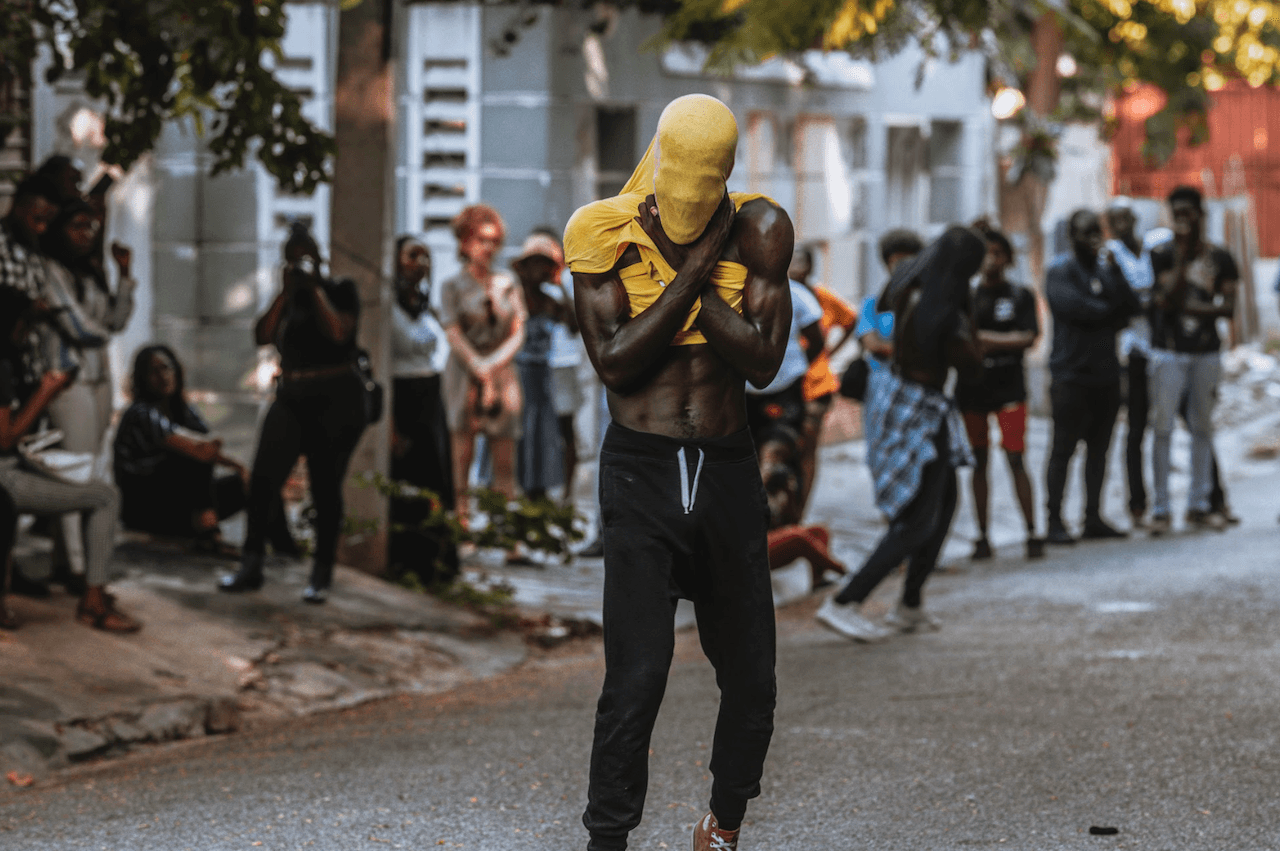
This post was originally written in Kreyòl

Content warning: this post contains descriptions of sexual assault

As these groups seize the material assets of the people living in these areas, they also consider women's bodies as objects at their disposal.

There was a time when post-war analyses never took the violence perpetrated against women in the context of war into account. These instances (victims) were considered collateral damage, and there were no efforts made to bring these women justice. While sexual violence used during the Second World War was cause for major outcry, two years prior, in 1937, the Nankin Massacre - a town in China - the Japanese used sexual assault as a means to bring the Chinese to their knees. Based solely on the cruelty demonstrated during that massacre, this event should be remembered as one of the darkest events in the world’s history, a day we should never forget. And although this is the first documented episode of mass-rapes perpetrated against women, this harrowing event was hardly the first or last time this would occur.

Technically, Haiti is not a country affected by military war, but Haitian women’s bodies are used as conquerable territories in armed gang conflicts. Haitian women are often the first unfortunate victims of territory conflicts between armed groups. According to the last report on Haiti published by the UN’s security council, all gang groups active on land perpetrate sexual violence. Armed groups of men use sexual violence as a means to terrorize, subdue, and punish the population, particularly women. As these groups seize the material assets of the people living in these areas, they also consider women's bodies as objects at their disposal.

This complicated situation worsens when an opposing gang takes over that area. Invading a territory is not simply a game of grabbing. Invading and taking over a territory means taking everything that comes with it, privileges such as land, people, and material gains.

In a report published by RNDDH (Réseau National de Défense des Droits Humains) in December 2018, 11 women were counted among the victims of a collective sexual assault that happened during the Lasalin Massacre on November 13, 2018. We say “amongst” the victims, because those numbers do not take into consideration the women who were only in passing in the area as food vendors and, therefore, were not residents of the area.

In another RNDDH report published on August 16, 2022, relaying testimonies of mass-rape, it was declared that at least 52 women and girls were victims. There was a recurring statement throughout all these testimonies. While G9 gang members were assaulting them, they recalled being told that it was because they were all TiGabriel’s (another gang leader) wives that they were being assaulted. Women are never considered as whole human beings by gang members; they are seen as the adverse gang’s property deserving of being soiled.

Monique*, a survivor whose name has been changed to protect her identity, accepted to speak to Woy Magazine. Teary-eyed, she said: “I had just made a sale. I was with another woman, and we walked by a group of men. One of them told us to come to them while accusing us of being followers of Gabriel. In the end, I was assaulted by seven men. An 8th one asked me to pleasure him, and as I refused, he proceeded to strike me so hard on my back with a gun that I fainted. There was a tree close by where they would hang the underwear of women they had assaulted.”

Every day, the number of sexual assault victims rises in these gang-dominated areas. In a report published by the feminist organization, Nègès Mawon, covering the months of April to July 2023, in their sexual violence section, there are 181 gang members mentioned as assaulters. Victims have little to no access to proper medical treatment after having been subjected to these violent and foul acts, and are unable to seek justice as many of them have been threatened, along with their families, into silence.

Although the number of cases of sexual assault is as high as it is, there is no mass outcry demanding justice and reparations for these victims. The government, which is closely affiliated with the gangs, continues to watch the population’s abuse in silence. Haitian women will continue to be subjected to all forms of violence, not knowing when all of this will end.


Translated to English by L. Lherisson

Women’s Bodies: Another Battlefield in the Haitian Gang Wars

This post was originally written in Kreyòl

Content warning: this post contains descriptions of sexual assault

As these groups seize the material assets of the people living in these areas, they also consider women's bodies as objects at their disposal.

There was a time when post-war analyses never took the violence perpetrated against women in the context of war into account. These instances (victims) were considered collateral damage, and there were no efforts made to bring these women justice. While sexual violence used during the Second World War was cause for major outcry, two years prior, in 1937, the Nankin Massacre - a town in China - the Japanese used sexual assault as a means to bring the Chinese to their knees. Based solely on the cruelty demonstrated during that massacre, this event should be remembered as one of the darkest events in the world’s history, a day we should never forget. And although this is the first documented episode of mass-rapes perpetrated against women, this harrowing event was hardly the first or last time this would occur.

Technically, Haiti is not a country affected by military war, but Haitian women’s bodies are used as conquerable territories in armed gang conflicts. Haitian women are often the first unfortunate victims of territory conflicts between armed groups. According to the last report on Haiti published by the UN’s security council, all gang groups active on land perpetrate sexual violence. Armed groups of men use sexual violence as a means to terrorize, subdue, and punish the population, particularly women. As these groups seize the material assets of the people living in these areas, they also consider women's bodies as objects at their disposal.

This complicated situation worsens when an opposing gang takes over that area. Invading a territory is not simply a game of grabbing. Invading and taking over a territory means taking everything that comes with it, privileges such as land, people, and material gains.

In a report published by RNDDH (Réseau National de Défense des Droits Humains) in December 2018, 11 women were counted among the victims of a collective sexual assault that happened during the Lasalin Massacre on November 13, 2018. We say “amongst” the victims, because those numbers do not take into consideration the women who were only in passing in the area as food vendors and, therefore, were not residents of the area.

In another RNDDH report published on August 16, 2022, relaying testimonies of mass-rape, it was declared that at least 52 women and girls were victims. There was a recurring statement throughout all these testimonies. While G9 gang members were assaulting them, they recalled being told that it was because they were all TiGabriel’s (another gang leader) wives that they were being assaulted. Women are never considered as whole human beings by gang members; they are seen as the adverse gang’s property deserving of being soiled.

Monique*, a survivor whose name has been changed to protect her identity, accepted to speak to Woy Magazine. Teary-eyed, she said: “I had just made a sale. I was with another woman, and we walked by a group of men. One of them told us to come to them while accusing us of being followers of Gabriel. In the end, I was assaulted by seven men. An 8th one asked me to pleasure him, and as I refused, he proceeded to strike me so hard on my back with a gun that I fainted. There was a tree close by where they would hang the underwear of women they had assaulted.”

Every day, the number of sexual assault victims rises in these gang-dominated areas. In a report published by the feminist organization, Nègès Mawon, covering the months of April to July 2023, in their sexual violence section, there are 181 gang members mentioned as assaulters. Victims have little to no access to proper medical treatment after having been subjected to these violent and foul acts, and are unable to seek justice as many of them have been threatened, along with their families, into silence.

Although the number of cases of sexual assault is as high as it is, there is no mass outcry demanding justice and reparations for these victims. The government, which is closely affiliated with the gangs, continues to watch the population’s abuse in silence. Haitian women will continue to be subjected to all forms of violence, not knowing when all of this will end.


Translated to English by L. Lherisson

Women’s Bodies: Another Battlefield in the Haitian Gang Wars

This post was originally written in Kreyòl

Content warning: this post contains descriptions of sexual assault

As these groups seize the material assets of the people living in these areas, they also consider women's bodies as objects at their disposal.

There was a time when post-war analyses never took the violence perpetrated against women in the context of war into account. These instances (victims) were considered collateral damage, and there were no efforts made to bring these women justice. While sexual violence used during the Second World War was cause for major outcry, two years prior, in 1937, the Nankin Massacre - a town in China - the Japanese used sexual assault as a means to bring the Chinese to their knees. Based solely on the cruelty demonstrated during that massacre, this event should be remembered as one of the darkest events in the world’s history, a day we should never forget. And although this is the first documented episode of mass-rapes perpetrated against women, this harrowing event was hardly the first or last time this would occur.

Technically, Haiti is not a country affected by military war, but Haitian women’s bodies are used as conquerable territories in armed gang conflicts. Haitian women are often the first unfortunate victims of territory conflicts between armed groups. According to the last report on Haiti published by the UN’s security council, all gang groups active on land perpetrate sexual violence. Armed groups of men use sexual violence as a means to terrorize, subdue, and punish the population, particularly women. As these groups seize the material assets of the people living in these areas, they also consider women's bodies as objects at their disposal.

This complicated situation worsens when an opposing gang takes over that area. Invading a territory is not simply a game of grabbing. Invading and taking over a territory means taking everything that comes with it, privileges such as land, people, and material gains.

In a report published by RNDDH (Réseau National de Défense des Droits Humains) in December 2018, 11 women were counted among the victims of a collective sexual assault that happened during the Lasalin Massacre on November 13, 2018. We say “amongst” the victims, because those numbers do not take into consideration the women who were only in passing in the area as food vendors and, therefore, were not residents of the area.

In another RNDDH report published on August 16, 2022, relaying testimonies of mass-rape, it was declared that at least 52 women and girls were victims. There was a recurring statement throughout all these testimonies. While G9 gang members were assaulting them, they recalled being told that it was because they were all TiGabriel’s (another gang leader) wives that they were being assaulted. Women are never considered as whole human beings by gang members; they are seen as the adverse gang’s property deserving of being soiled.

Monique*, a survivor whose name has been changed to protect her identity, accepted to speak to Woy Magazine. Teary-eyed, she said: “I had just made a sale. I was with another woman, and we walked by a group of men. One of them told us to come to them while accusing us of being followers of Gabriel. In the end, I was assaulted by seven men. An 8th one asked me to pleasure him, and as I refused, he proceeded to strike me so hard on my back with a gun that I fainted. There was a tree close by where they would hang the underwear of women they had assaulted.”

Every day, the number of sexual assault victims rises in these gang-dominated areas. In a report published by the feminist organization, Nègès Mawon, covering the months of April to July 2023, in their sexual violence section, there are 181 gang members mentioned as assaulters. Victims have little to no access to proper medical treatment after having been subjected to these violent and foul acts, and are unable to seek justice as many of them have been threatened, along with their families, into silence.

Although the number of cases of sexual assault is as high as it is, there is no mass outcry demanding justice and reparations for these victims. The government, which is closely affiliated with the gangs, continues to watch the population’s abuse in silence. Haitian women will continue to be subjected to all forms of violence, not knowing when all of this will end.


Translated to English by L. Lherisson

Vwayajè curates experiences for those eager to learn about Haiti's rural communities
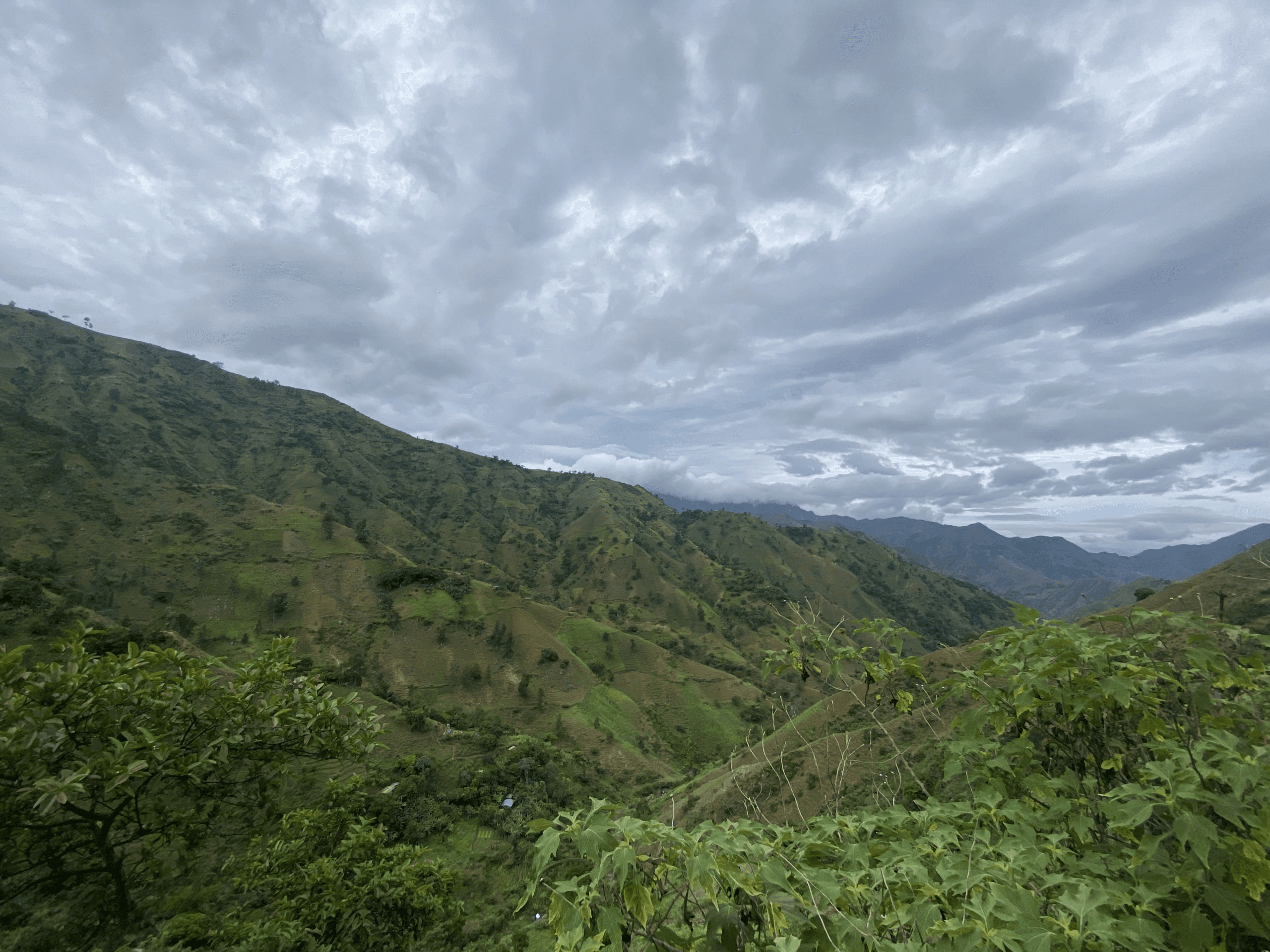
When most people see Haiti, many think of the metropolitan city of Port-au-Prince while Haiti is so much more than that. Most of the country is made up of more rural villages like Furcy; which feel almost untouched, hidden within the mountains.

Angello Jean, Founder of Vwayajè

“The country’s precarious insecurity discourages us from discovering our country. [It] is beautiful and rich. It is time for us to learn and truly know about our country”, explained Angello, the founder of Vwayajè_._ For over a year, the US State Department’s travel advisory has listed Haiti as a level 4 country  — a “do not travel country” — warning travelers to consider the risks of traveling to, and remaining in Haiti, due to the current security situation and infrastructural challenges. According to OCID’s 2021 National Survey, security stands at the forefront of worrisome issues, with over 62% of the population noting this.  “In a nation of over 10 million people, these very real struggles persist threatening to suppress our socio-economic growth and stifling us from experiencing the wonder that is our Ayiti Cheri. Despite it all. We must go on.” Angello continued.

Vwayajè is a local ecotourism initiative led by Angello Jean and a group of local guides, responsibly traveling to rural areas across the country, working to conserve the environment and to improve the well-being of local people. Vwayajè, which translates to traveler in Haitian Creole, launched in 2021, with the goal of encouraging us to discover the nature, wealth and value of Haiti through its heritage and patrimony, while respecting the environment and protecting the local culture. The project operates with the expressed purpose of directly benefiting the socio-economic well-being of the local communities it works in, and fostering further respect for Haiti's local culture, people, and biodiversity. 

After a 6 month hiatus, Angello knew that if he wanted to keep his vision alive, he needed to take a leap of faith and organize a hike. In the summer of 2022, the Vwayajè team returned to the town of Furcy where this initiative was initially launched. Furcy is a cool mountain village, located about an hour from Petion-Ville and 30 miles southeast of Port-au-Prince. Resting about 5,000 feet above the nation’s capital, this village’s welcoming community, breathtaking views and ecological preserves made it the perfect place for Vwayajè to begin. Angello quickly grew an affinity for the people of Furcy — working in partnership with the community to designate campgrounds like 'Kay Jean Paul' where locals and travelers alike could explore Haiti’s natural wonders. 

“ When most people see Haiti, many think of the metropolitan city of Port-au-Prince while Haiti is so much more than that. Most of the country is made up of more rural villages like Furcy; which feel almost untouched, hidden within the mountains. And yet, the beauty often belies a struggle”, Angello continued.

Upon entering the town, the paved roads that wind up Kenscoff end and the earthy red terracotta gravel forms a path through the outskirts of the town. Extremely limited infrastructure, food insecurity, and water access issues are exacerbated in more remote areas like Furcy. 

Most residents toil the land to survive.  They are subsistence farmers with small patches of land,  growing limited crops alongside the tiny wooden houses sprinkled across the hills. 

Climate change profoundly impacts communities like Furcy. Growing periods of extreme drought and flash flooding take a heavy toll on rural farming communities. This is compounded by widespread neglect on the part of government entities, and poor public policies which continue to undermine the country’s capacity to sustain itself — pushing most residents to migrate from their farms to the cities. Haiti’s cities do not have the capacity to absorb large amounts of people due to the deepening socio-economic crisis most live in today.  

“When we launched Vwayajè, we always kept the bigger picture in mind. We yearn for natives and travelers alike to care for and nurture this land. To be able to thrive, pass down this wealth and plan for future generations. We know this work can’t be done alone. We need the government to support communities like Furcy with infrastructure and leadership. We need our community, our leaders and government to stand hand in hand with each other, preserving that which is here, as we plan for the future”. 

Haiti‘s rugged terrain creates an ideal ecotourism destination for the adventurous, laid-back, socially-conscious traveler. 

Ironically, this untouched gem offers it all. From rich culture and traditions, delicious organically grown food, warm sandy beaches, cool lush mountain tops, hundreds of pristine falls, and cozy valleys nested in between. 

In 2022, Forbe’s magazine ranked Haiti one of the 50 most beautiful countries in the World. Although, of late, exploring the island nation rarely pops to the top of our search engines. The deteriorating socio-economic situation and mass migration of Haitians fleeing for refuge flood our headlines and this needs to change. 

The protracted political instability and gang violence menaces citizens locally, and greatly exacerbates the fragile situation of those in more remote areas like Furcy, where communities have systematically been neglected entirely.  The population looks to the government for leadership. The government is mandated to provide security and infrastructure to their citizens. It’s the state’s job.

Those we have chosen as leaders need to act and stand with the communities they represent.  While writing this article, the number of people in need of emergency food assistance grew from 3 to 4 million  people (or about 30-40% of the population). Haiti has one of the highest levels of food insecurity in the world with 4.5 million Haitians — nearly half the population — without enough to eat.

 Though endeavors like Vwayajè encourage us to celebrate, preserve and care for the land our ancestors fought for, it can't end there.  The country requires structural guidance and development.  We can’t continue to exist in silos as we have been — as our forefathers warned us. Together we are stronger.

Vwayajè curates experiences for those eager to learn about Haiti's rural communities

When most people see Haiti, many think of the metropolitan city of Port-au-Prince while Haiti is so much more than that. Most of the country is made up of more rural villages like Furcy; which feel almost untouched, hidden within the mountains.

Angello Jean, Founder of Vwayajè

“The country’s precarious insecurity discourages us from discovering our country. [It] is beautiful and rich. It is time for us to learn and truly know about our country”, explained Angello, the founder of Vwayajè_._ For over a year, the US State Department’s travel advisory has listed Haiti as a level 4 country  — a “do not travel country” — warning travelers to consider the risks of traveling to, and remaining in Haiti, due to the current security situation and infrastructural challenges. According to OCID’s 2021 National Survey, security stands at the forefront of worrisome issues, with over 62% of the population noting this.  “In a nation of over 10 million people, these very real struggles persist threatening to suppress our socio-economic growth and stifling us from experiencing the wonder that is our Ayiti Cheri. Despite it all. We must go on.” Angello continued.

Vwayajè is a local ecotourism initiative led by Angello Jean and a group of local guides, responsibly traveling to rural areas across the country, working to conserve the environment and to improve the well-being of local people. Vwayajè, which translates to traveler in Haitian Creole, launched in 2021, with the goal of encouraging us to discover the nature, wealth and value of Haiti through its heritage and patrimony, while respecting the environment and protecting the local culture. The project operates with the expressed purpose of directly benefiting the socio-economic well-being of the local communities it works in, and fostering further respect for Haiti's local culture, people, and biodiversity. 

After a 6 month hiatus, Angello knew that if he wanted to keep his vision alive, he needed to take a leap of faith and organize a hike. In the summer of 2022, the Vwayajè team returned to the town of Furcy where this initiative was initially launched. Furcy is a cool mountain village, located about an hour from Petion-Ville and 30 miles southeast of Port-au-Prince. Resting about 5,000 feet above the nation’s capital, this village’s welcoming community, breathtaking views and ecological preserves made it the perfect place for Vwayajè to begin. Angello quickly grew an affinity for the people of Furcy — working in partnership with the community to designate campgrounds like 'Kay Jean Paul' where locals and travelers alike could explore Haiti’s natural wonders. 

“ When most people see Haiti, many think of the metropolitan city of Port-au-Prince while Haiti is so much more than that. Most of the country is made up of more rural villages like Furcy; which feel almost untouched, hidden within the mountains. And yet, the beauty often belies a struggle”, Angello continued.

Upon entering the town, the paved roads that wind up Kenscoff end and the earthy red terracotta gravel forms a path through the outskirts of the town. Extremely limited infrastructure, food insecurity, and water access issues are exacerbated in more remote areas like Furcy. 

Most residents toil the land to survive.  They are subsistence farmers with small patches of land,  growing limited crops alongside the tiny wooden houses sprinkled across the hills. 

Climate change profoundly impacts communities like Furcy. Growing periods of extreme drought and flash flooding take a heavy toll on rural farming communities. This is compounded by widespread neglect on the part of government entities, and poor public policies which continue to undermine the country’s capacity to sustain itself — pushing most residents to migrate from their farms to the cities. Haiti’s cities do not have the capacity to absorb large amounts of people due to the deepening socio-economic crisis most live in today.  

“When we launched Vwayajè, we always kept the bigger picture in mind. We yearn for natives and travelers alike to care for and nurture this land. To be able to thrive, pass down this wealth and plan for future generations. We know this work can’t be done alone. We need the government to support communities like Furcy with infrastructure and leadership. We need our community, our leaders and government to stand hand in hand with each other, preserving that which is here, as we plan for the future”. 

Haiti‘s rugged terrain creates an ideal ecotourism destination for the adventurous, laid-back, socially-conscious traveler. 

Ironically, this untouched gem offers it all. From rich culture and traditions, delicious organically grown food, warm sandy beaches, cool lush mountain tops, hundreds of pristine falls, and cozy valleys nested in between. 

In 2022, Forbe’s magazine ranked Haiti one of the 50 most beautiful countries in the World. Although, of late, exploring the island nation rarely pops to the top of our search engines. The deteriorating socio-economic situation and mass migration of Haitians fleeing for refuge flood our headlines and this needs to change. 

The protracted political instability and gang violence menaces citizens locally, and greatly exacerbates the fragile situation of those in more remote areas like Furcy, where communities have systematically been neglected entirely.  The population looks to the government for leadership. The government is mandated to provide security and infrastructure to their citizens. It’s the state’s job.

Those we have chosen as leaders need to act and stand with the communities they represent.  While writing this article, the number of people in need of emergency food assistance grew from 3 to 4 million  people (or about 30-40% of the population). Haiti has one of the highest levels of food insecurity in the world with 4.5 million Haitians — nearly half the population — without enough to eat.

 Though endeavors like Vwayajè encourage us to celebrate, preserve and care for the land our ancestors fought for, it can't end there.  The country requires structural guidance and development.  We can’t continue to exist in silos as we have been — as our forefathers warned us. Together we are stronger.

Vwayajè curates experiences for those eager to learn about Haiti's rural communities

When most people see Haiti, many think of the metropolitan city of Port-au-Prince while Haiti is so much more than that. Most of the country is made up of more rural villages like Furcy; which feel almost untouched, hidden within the mountains.

Angello Jean, Founder of Vwayajè

“The country’s precarious insecurity discourages us from discovering our country. [It] is beautiful and rich. It is time for us to learn and truly know about our country”, explained Angello, the founder of Vwayajè_._ For over a year, the US State Department’s travel advisory has listed Haiti as a level 4 country  — a “do not travel country” — warning travelers to consider the risks of traveling to, and remaining in Haiti, due to the current security situation and infrastructural challenges. According to OCID’s 2021 National Survey, security stands at the forefront of worrisome issues, with over 62% of the population noting this.  “In a nation of over 10 million people, these very real struggles persist threatening to suppress our socio-economic growth and stifling us from experiencing the wonder that is our Ayiti Cheri. Despite it all. We must go on.” Angello continued.

Vwayajè is a local ecotourism initiative led by Angello Jean and a group of local guides, responsibly traveling to rural areas across the country, working to conserve the environment and to improve the well-being of local people. Vwayajè, which translates to traveler in Haitian Creole, launched in 2021, with the goal of encouraging us to discover the nature, wealth and value of Haiti through its heritage and patrimony, while respecting the environment and protecting the local culture. The project operates with the expressed purpose of directly benefiting the socio-economic well-being of the local communities it works in, and fostering further respect for Haiti's local culture, people, and biodiversity. 

After a 6 month hiatus, Angello knew that if he wanted to keep his vision alive, he needed to take a leap of faith and organize a hike. In the summer of 2022, the Vwayajè team returned to the town of Furcy where this initiative was initially launched. Furcy is a cool mountain village, located about an hour from Petion-Ville and 30 miles southeast of Port-au-Prince. Resting about 5,000 feet above the nation’s capital, this village’s welcoming community, breathtaking views and ecological preserves made it the perfect place for Vwayajè to begin. Angello quickly grew an affinity for the people of Furcy — working in partnership with the community to designate campgrounds like 'Kay Jean Paul' where locals and travelers alike could explore Haiti’s natural wonders. 

“ When most people see Haiti, many think of the metropolitan city of Port-au-Prince while Haiti is so much more than that. Most of the country is made up of more rural villages like Furcy; which feel almost untouched, hidden within the mountains. And yet, the beauty often belies a struggle”, Angello continued.

Upon entering the town, the paved roads that wind up Kenscoff end and the earthy red terracotta gravel forms a path through the outskirts of the town. Extremely limited infrastructure, food insecurity, and water access issues are exacerbated in more remote areas like Furcy. 

Most residents toil the land to survive.  They are subsistence farmers with small patches of land,  growing limited crops alongside the tiny wooden houses sprinkled across the hills. 

Climate change profoundly impacts communities like Furcy. Growing periods of extreme drought and flash flooding take a heavy toll on rural farming communities. This is compounded by widespread neglect on the part of government entities, and poor public policies which continue to undermine the country’s capacity to sustain itself — pushing most residents to migrate from their farms to the cities. Haiti’s cities do not have the capacity to absorb large amounts of people due to the deepening socio-economic crisis most live in today.  

“When we launched Vwayajè, we always kept the bigger picture in mind. We yearn for natives and travelers alike to care for and nurture this land. To be able to thrive, pass down this wealth and plan for future generations. We know this work can’t be done alone. We need the government to support communities like Furcy with infrastructure and leadership. We need our community, our leaders and government to stand hand in hand with each other, preserving that which is here, as we plan for the future”. 

Haiti‘s rugged terrain creates an ideal ecotourism destination for the adventurous, laid-back, socially-conscious traveler. 

Ironically, this untouched gem offers it all. From rich culture and traditions, delicious organically grown food, warm sandy beaches, cool lush mountain tops, hundreds of pristine falls, and cozy valleys nested in between. 

In 2022, Forbe’s magazine ranked Haiti one of the 50 most beautiful countries in the World. Although, of late, exploring the island nation rarely pops to the top of our search engines. The deteriorating socio-economic situation and mass migration of Haitians fleeing for refuge flood our headlines and this needs to change. 

The protracted political instability and gang violence menaces citizens locally, and greatly exacerbates the fragile situation of those in more remote areas like Furcy, where communities have systematically been neglected entirely.  The population looks to the government for leadership. The government is mandated to provide security and infrastructure to their citizens. It’s the state’s job.

Those we have chosen as leaders need to act and stand with the communities they represent.  While writing this article, the number of people in need of emergency food assistance grew from 3 to 4 million  people (or about 30-40% of the population). Haiti has one of the highest levels of food insecurity in the world with 4.5 million Haitians — nearly half the population — without enough to eat.

 Though endeavors like Vwayajè encourage us to celebrate, preserve and care for the land our ancestors fought for, it can't end there.  The country requires structural guidance and development.  We can’t continue to exist in silos as we have been — as our forefathers warned us. Together we are stronger.

Haitians Struggle to Access a New Path to the U.S.
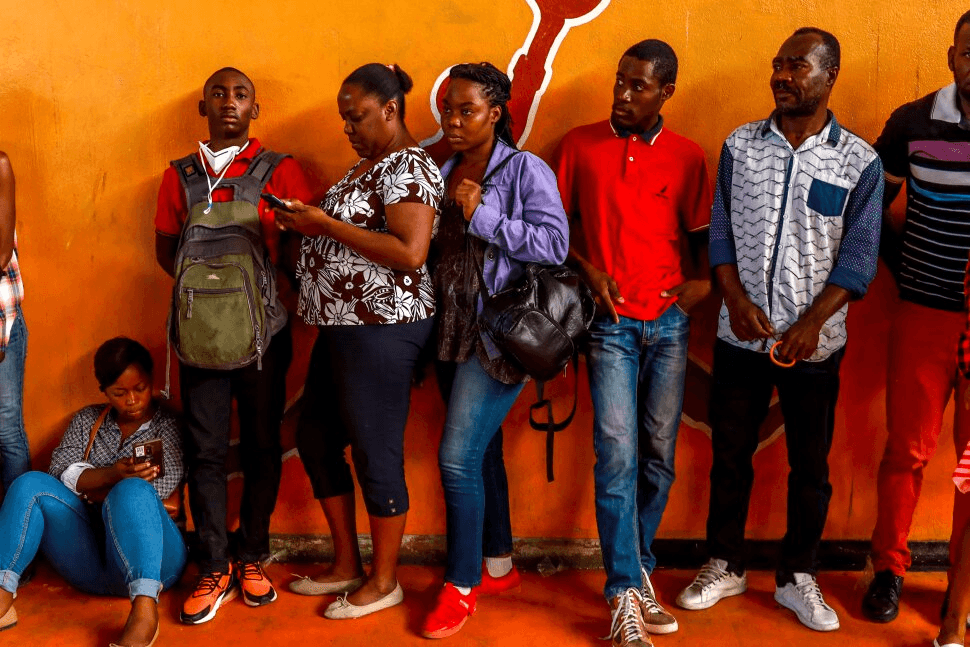
This story was produced with the support of the Round Earth Media program of the International Women’s Media Foundation in partnership with Woy Magazine.

PORT-AU-PRINCE, Haiti — Andre Samedi was briefly held at gunpoint last year after picking up his car from customs. The assailants stopped the 43-year-old in Canaan, a small town on the outskirts of Haiti’s capital of Port-au-Prince, and drove away with him. They eventually decided to let him go, but got away with the 2003 Nissan Pathfinder.

“Since then, I’ve been very scared,” says Samedi, who owns a shipping and electronic sales business. “I can’t go out often and only do so if it’s an emergency. When I do go out my heart races and I’m very stressed. The experience has left me traumatized.”

Samedi is one of tens of thousands of Haitians who applied for a new U.S. immigration program that President Joe Biden announced in early January 2023. The program, known as humanitarian parole, allows Haitians, Cubans, Venezuelans and Nicaraguans to apply to move to the U.S. for a two-year stay.

But the popular program has proved difficult to access for many Haitians, some of whom complain about language barriers, technology challenges and financial obstacles. Many say the process of acquiring mandatory documents for the program has become frustrating and at times frightening, with violence breaking out at passport centers.

Haitians Struggle to Access a New Path to the U.S.

This story was produced with the support of the Round Earth Media program of the International Women’s Media Foundation in partnership with Woy Magazine.

PORT-AU-PRINCE, Haiti — Andre Samedi was briefly held at gunpoint last year after picking up his car from customs. The assailants stopped the 43-year-old in Canaan, a small town on the outskirts of Haiti’s capital of Port-au-Prince, and drove away with him. They eventually decided to let him go, but got away with the 2003 Nissan Pathfinder.

“Since then, I’ve been very scared,” says Samedi, who owns a shipping and electronic sales business. “I can’t go out often and only do so if it’s an emergency. When I do go out my heart races and I’m very stressed. The experience has left me traumatized.”

Samedi is one of tens of thousands of Haitians who applied for a new U.S. immigration program that President Joe Biden announced in early January 2023. The program, known as humanitarian parole, allows Haitians, Cubans, Venezuelans and Nicaraguans to apply to move to the U.S. for a two-year stay.

But the popular program has proved difficult to access for many Haitians, some of whom complain about language barriers, technology challenges and financial obstacles. Many say the process of acquiring mandatory documents for the program has become frustrating and at times frightening, with violence breaking out at passport centers.

Haitians Struggle to Access a New Path to the U.S.

This story was produced with the support of the Round Earth Media program of the International Women’s Media Foundation in partnership with Woy Magazine.

PORT-AU-PRINCE, Haiti — Andre Samedi was briefly held at gunpoint last year after picking up his car from customs. The assailants stopped the 43-year-old in Canaan, a small town on the outskirts of Haiti’s capital of Port-au-Prince, and drove away with him. They eventually decided to let him go, but got away with the 2003 Nissan Pathfinder.

“Since then, I’ve been very scared,” says Samedi, who owns a shipping and electronic sales business. “I can’t go out often and only do so if it’s an emergency. When I do go out my heart races and I’m very stressed. The experience has left me traumatized.”

Samedi is one of tens of thousands of Haitians who applied for a new U.S. immigration program that President Joe Biden announced in early January 2023. The program, known as humanitarian parole, allows Haitians, Cubans, Venezuelans and Nicaraguans to apply to move to the U.S. for a two-year stay.

But the popular program has proved difficult to access for many Haitians, some of whom complain about language barriers, technology challenges and financial obstacles. Many say the process of acquiring mandatory documents for the program has become frustrating and at times frightening, with violence breaking out at passport centers.

#WoyChat with Edwidge Danticat Haitian Art & Memory

Haiti, Wakanda, and Capitalist Realism
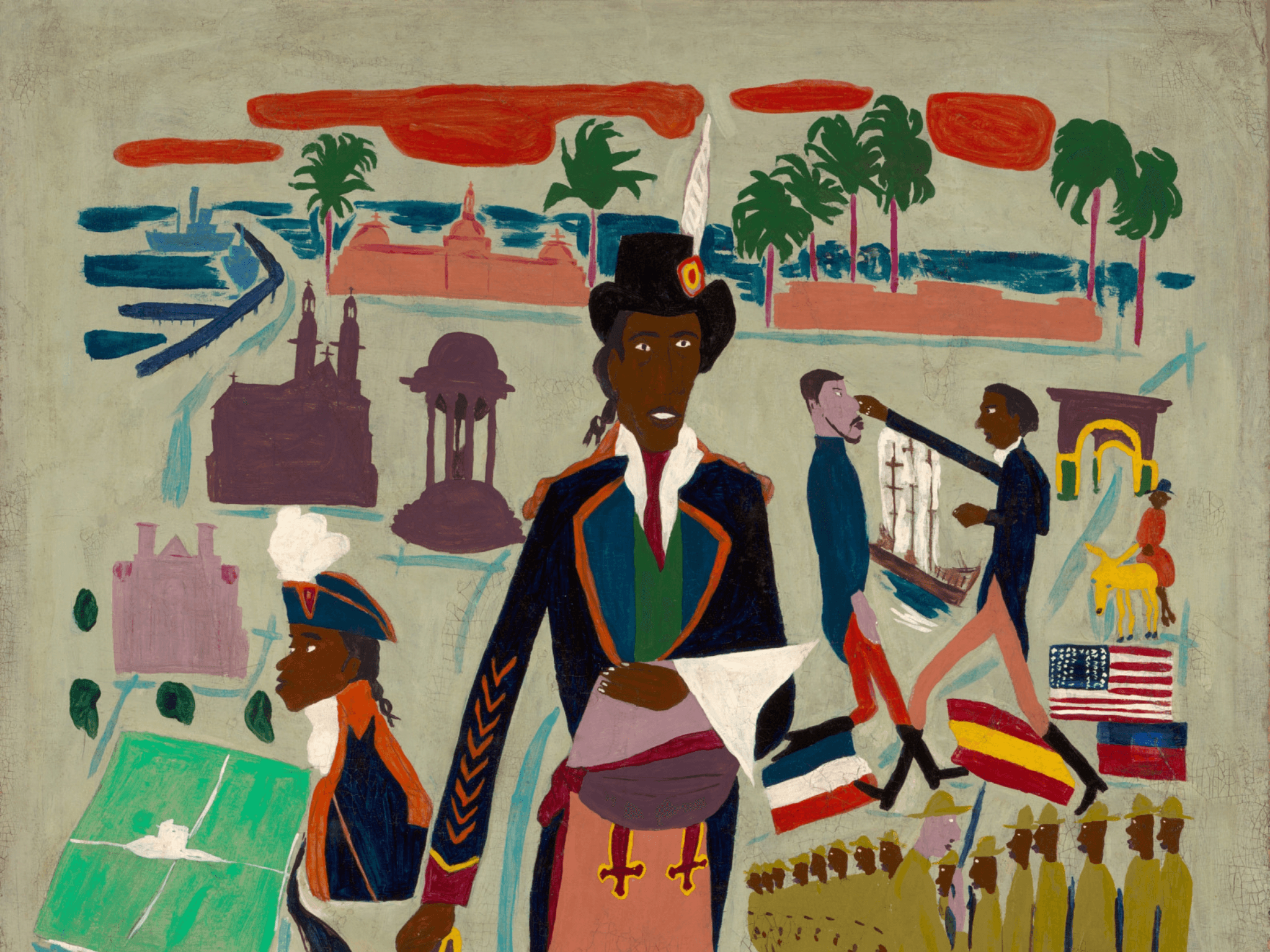
It matters very little if one is pro-capitalist or not, for as capitalism has transcended such dualities of pros and cons, the mere act of existing is capitalist...

ALAIN MARTIN

Not too long before writing this piece, trending on Haitian Twitter was the surprising revelation that Haiti had been featured, prominently so, in the latest Disney tentpole, Wakanda Forever. One scene pivotal to advancing the film’s plot took place in Cap-Haitien, Haiti’s former capital. Another featured a character that was not only central to the film but seems poised to hold critical sway in phase 5 of Marvel’s cinematic extravaganza based on their own comics; that character is named Toussaint, an homage to Toussaint L’Ouverture, a seminal figure of the Haitian Revolution. That surprising revelation set off a storm of excitement in the social media world as Haitians heralded the improbable reality of seeing their distressed country in one of the decade's most anticipated and biggest blockbuster films. It is this excitement and this celebration that reminded me of the late author Mark Fisher and his growing influential concept of Capitalist Realism. If we consider Haiti’s appearance in Wakanda Forever within the context of Fisher’s Capitalist Realism, we duly realize that there is not much to celebrate in the first black country in the Western Hemisphere making an appearance in a Hollywood superhero film. 

Mark Fisher’s 'Capitalist Realism' isn’t a criticism of capitalism as it is a sulky reminder that capitalism should no longer be considered simply a mere economic system; it is now a psychological state of being, a way of life that is now entrenched in our very being. It matters very little if one is pro-capitalist or not, for as capitalism has transcended such dualities of pros and cons, the mere act of existing is capitalist, for capitalism has cunningly evolved to integrate even the views of its most formidable opponents within its operating framework. In other words, capitalism is completely capable of offering you, at a profit, that which it has continuously deprived you of. Companionship for the loneliness one feels in the ongoing digitization of human life; a sense of meaning and purpose in an ever-secular society. Mass protests happen on Facebook, as was the case for Occupy Wall Street and it is Twitter that facilitated the international movement that was Black Lives Matter.  It is a system that is equipped with an arsenal of solutions ready to respond to every need, even the need to be pessimistic of the system. 

The legacy of Che Guevara stands as a quintessential example of this. Guevarra, a stalwart opponent of capitalism now finds himself immortalized as an emblem in popular t-shirts sold all over the world. These t-shirts are of course mass produced in factories and the profits derived are for the benefit of a very few.  Another example, provided by Fisher himself, is another Disney Blockbuster film, Wall-E. The film prides itself as a takedown of the corporatization of life and yet was made by a corporation that itself made millions of dollars off the film. 

We are reminded by Fisher that in the current system, that a thing, whether it be a book, or a film, or a secondary education, is only valuable if it can be monetized. Even one’s sense of virtues, of values, of morality overall can be packaged to him to consume for comfort. As such, a criticism of the capitalist system is nothing but an extension of the very system it is criticizing. 

Wakanda Forever, and its predecessor, Black Panther, delighted many critics who saw in the films a searing criticism of colonialism and its ensuing brutalities and wanton destruction.  It only makes sense that the legacy of Haiti would be celebrated in the latest Panther film. Haiti holds the distinction of being the place where the slave class struck the first successful and deafening blow against colonialism. Although the Haitians of then did not have a King T-Challa nor their armies equipped with the futuristic technology of the Wakandians, they were able to overcome the mighty armies of the French to establish the First Nation founded by women and men who were slaves, black slaves at that. The ongoing commentary around the Haitian revolution in a multitude of circles usually limit it to race and the victory of the slaves resonate only through this racial prism, as people take pride in the fact that a black people were able to defeat, resoundingly so, subsequent armies of white men fighting viciously for the preservation of slavery. 

The Haitian Revolution, like all other things in Western Society, exists to be commodified...

ALAIN MARTIN

But the Haitian Revolution was more than that. It was a stand against the profits at all cost approach that dominate our very lives today. It was a bloody battle against the commoditization of one’s life and time, an uncompromising stance against this shallow idea that life itself is only meaningful if it can be reduced to a numerical value having to do with money. The Haitian Revolution embodied the ideas of the Bolshevik Revolution and those of the Cuban Revolution, an entire century before either of those revolutions took place. Haiti making an appearance in a Disney film that is on its way to making a billion dollars at the box office is a depressing reminder that the Revolution has failed to make the necessary dent against colonialism. 

The Haitian Revolution, like all other things in Western Society, exists to be commodified, and we must admit that it is a rather tragic outcome that the legacy of that revolution is an integral part of the larger anti-colonialist message of Wakanda Forever, because Wakanda Forever is a property of the Walt Disney company. Disney’s founder, Walt Disney_,_ is someone whose work betrays him as a troubling individual. In an article by writer Amanda Dobbins in Vulture magazine, a set of disturbing facts are posited against him as not only a racist, but as someone who promoted racism through his films. Mr. Disney played a part in the dissemination of black stereotypes during the latter years of Jim Crow. In the 90’s, Haitian workers were subjected to horrid conditions working in factories producing Pocahontas and Mickey Mouse pajamas, earning meager wages. 

Now, in 2023, the Disney corporation has co-opted the legacy of the ancestors of those working in those factories, packaged it in a blockbuster film and sold it back to Haitians and black persons all over the world, who relish in the accomplishment of the Haitian Revolution. Disney considers our feelings on colonialism, our criticism of their exploitation of human beings, our admiration for the Haitians who overthrew slavery and instead of branding us as enemies of its system, it enlists us as collaborators by corroborating the anti-colonialist ideas we hold against it. In this way, Fisher warns us, we are placated by way of appeasement. Our craving to make a stand against the system is satisfied by consuming that stand in an IMAX screen. 

This is not to say Wakanda Forever should not have featured Haiti in the film. This is simply to remind us that we are all willing or unwilling participants of a system we claim we do not like; it matters very little what we feel about it; we are trapped in it. To make my own film on the United States Occupation of Haiti, I relied on Facebook and Twitter and Google to get the word out and raise the funds necessary. The executives of Facebook and Twitter are not exactly exemplary models of social equity, for they too are in the business of selling virtue, of selling political ideas deemed noble. One of the most enduring criticisms against capitalism is found in Joshua Oppenheimer’s The Act of Killing, and that film itself was partially funded by the Ford Foundation and there exists troubling criticisms of the Ford Foundation for its support of our current prison system. Ken Burns’ The Vietnam War is likewise a potent criticism of the follies of our incessant foreign interventions. It is also a production of the Public Broadcasting Service and the long list of individuals and organizations that it receives funds from continues to invite skepticism. So it is perhaps impossible to celebrate the legacy of the Haitian revolution without making appeasement to that very system once attacked by the slaves of that revolution.

Haiti, Wakanda, and Capitalist Realism

It matters very little if one is pro-capitalist or not, for as capitalism has transcended such dualities of pros and cons, the mere act of existing is capitalist...

ALAIN MARTIN

Not too long before writing this piece, trending on Haitian Twitter was the surprising revelation that Haiti had been featured, prominently so, in the latest Disney tentpole, Wakanda Forever. One scene pivotal to advancing the film’s plot took place in Cap-Haitien, Haiti’s former capital. Another featured a character that was not only central to the film but seems poised to hold critical sway in phase 5 of Marvel’s cinematic extravaganza based on their own comics; that character is named Toussaint, an homage to Toussaint L’Ouverture, a seminal figure of the Haitian Revolution. That surprising revelation set off a storm of excitement in the social media world as Haitians heralded the improbable reality of seeing their distressed country in one of the decade's most anticipated and biggest blockbuster films. It is this excitement and this celebration that reminded me of the late author Mark Fisher and his growing influential concept of Capitalist Realism. If we consider Haiti’s appearance in Wakanda Forever within the context of Fisher’s Capitalist Realism, we duly realize that there is not much to celebrate in the first black country in the Western Hemisphere making an appearance in a Hollywood superhero film. 

Mark Fisher’s 'Capitalist Realism' isn’t a criticism of capitalism as it is a sulky reminder that capitalism should no longer be considered simply a mere economic system; it is now a psychological state of being, a way of life that is now entrenched in our very being. It matters very little if one is pro-capitalist or not, for as capitalism has transcended such dualities of pros and cons, the mere act of existing is capitalist, for capitalism has cunningly evolved to integrate even the views of its most formidable opponents within its operating framework. In other words, capitalism is completely capable of offering you, at a profit, that which it has continuously deprived you of. Companionship for the loneliness one feels in the ongoing digitization of human life; a sense of meaning and purpose in an ever-secular society. Mass protests happen on Facebook, as was the case for Occupy Wall Street and it is Twitter that facilitated the international movement that was Black Lives Matter.  It is a system that is equipped with an arsenal of solutions ready to respond to every need, even the need to be pessimistic of the system. 

The legacy of Che Guevara stands as a quintessential example of this. Guevarra, a stalwart opponent of capitalism now finds himself immortalized as an emblem in popular t-shirts sold all over the world. These t-shirts are of course mass produced in factories and the profits derived are for the benefit of a very few.  Another example, provided by Fisher himself, is another Disney Blockbuster film, Wall-E. The film prides itself as a takedown of the corporatization of life and yet was made by a corporation that itself made millions of dollars off the film. 

We are reminded by Fisher that in the current system, that a thing, whether it be a book, or a film, or a secondary education, is only valuable if it can be monetized. Even one’s sense of virtues, of values, of morality overall can be packaged to him to consume for comfort. As such, a criticism of the capitalist system is nothing but an extension of the very system it is criticizing. 

Wakanda Forever, and its predecessor, Black Panther, delighted many critics who saw in the films a searing criticism of colonialism and its ensuing brutalities and wanton destruction.  It only makes sense that the legacy of Haiti would be celebrated in the latest Panther film. Haiti holds the distinction of being the place where the slave class struck the first successful and deafening blow against colonialism. Although the Haitians of then did not have a King T-Challa nor their armies equipped with the futuristic technology of the Wakandians, they were able to overcome the mighty armies of the French to establish the First Nation founded by women and men who were slaves, black slaves at that. The ongoing commentary around the Haitian revolution in a multitude of circles usually limit it to race and the victory of the slaves resonate only through this racial prism, as people take pride in the fact that a black people were able to defeat, resoundingly so, subsequent armies of white men fighting viciously for the preservation of slavery. 

The Haitian Revolution, like all other things in Western Society, exists to be commodified...

ALAIN MARTIN

But the Haitian Revolution was more than that. It was a stand against the profits at all cost approach that dominate our very lives today. It was a bloody battle against the commoditization of one’s life and time, an uncompromising stance against this shallow idea that life itself is only meaningful if it can be reduced to a numerical value having to do with money. The Haitian Revolution embodied the ideas of the Bolshevik Revolution and those of the Cuban Revolution, an entire century before either of those revolutions took place. Haiti making an appearance in a Disney film that is on its way to making a billion dollars at the box office is a depressing reminder that the Revolution has failed to make the necessary dent against colonialism. 

The Haitian Revolution, like all other things in Western Society, exists to be commodified, and we must admit that it is a rather tragic outcome that the legacy of that revolution is an integral part of the larger anti-colonialist message of Wakanda Forever, because Wakanda Forever is a property of the Walt Disney company. Disney’s founder, Walt Disney_,_ is someone whose work betrays him as a troubling individual. In an article by writer Amanda Dobbins in Vulture magazine, a set of disturbing facts are posited against him as not only a racist, but as someone who promoted racism through his films. Mr. Disney played a part in the dissemination of black stereotypes during the latter years of Jim Crow. In the 90’s, Haitian workers were subjected to horrid conditions working in factories producing Pocahontas and Mickey Mouse pajamas, earning meager wages. 

Now, in 2023, the Disney corporation has co-opted the legacy of the ancestors of those working in those factories, packaged it in a blockbuster film and sold it back to Haitians and black persons all over the world, who relish in the accomplishment of the Haitian Revolution. Disney considers our feelings on colonialism, our criticism of their exploitation of human beings, our admiration for the Haitians who overthrew slavery and instead of branding us as enemies of its system, it enlists us as collaborators by corroborating the anti-colonialist ideas we hold against it. In this way, Fisher warns us, we are placated by way of appeasement. Our craving to make a stand against the system is satisfied by consuming that stand in an IMAX screen. 

This is not to say Wakanda Forever should not have featured Haiti in the film. This is simply to remind us that we are all willing or unwilling participants of a system we claim we do not like; it matters very little what we feel about it; we are trapped in it. To make my own film on the United States Occupation of Haiti, I relied on Facebook and Twitter and Google to get the word out and raise the funds necessary. The executives of Facebook and Twitter are not exactly exemplary models of social equity, for they too are in the business of selling virtue, of selling political ideas deemed noble. One of the most enduring criticisms against capitalism is found in Joshua Oppenheimer’s The Act of Killing, and that film itself was partially funded by the Ford Foundation and there exists troubling criticisms of the Ford Foundation for its support of our current prison system. Ken Burns’ The Vietnam War is likewise a potent criticism of the follies of our incessant foreign interventions. It is also a production of the Public Broadcasting Service and the long list of individuals and organizations that it receives funds from continues to invite skepticism. So it is perhaps impossible to celebrate the legacy of the Haitian revolution without making appeasement to that very system once attacked by the slaves of that revolution.

Haiti, Wakanda, and Capitalist Realism

It matters very little if one is pro-capitalist or not, for as capitalism has transcended such dualities of pros and cons, the mere act of existing is capitalist...

ALAIN MARTIN

Not too long before writing this piece, trending on Haitian Twitter was the surprising revelation that Haiti had been featured, prominently so, in the latest Disney tentpole, Wakanda Forever. One scene pivotal to advancing the film’s plot took place in Cap-Haitien, Haiti’s former capital. Another featured a character that was not only central to the film but seems poised to hold critical sway in phase 5 of Marvel’s cinematic extravaganza based on their own comics; that character is named Toussaint, an homage to Toussaint L’Ouverture, a seminal figure of the Haitian Revolution. That surprising revelation set off a storm of excitement in the social media world as Haitians heralded the improbable reality of seeing their distressed country in one of the decade's most anticipated and biggest blockbuster films. It is this excitement and this celebration that reminded me of the late author Mark Fisher and his growing influential concept of Capitalist Realism. If we consider Haiti’s appearance in Wakanda Forever within the context of Fisher’s Capitalist Realism, we duly realize that there is not much to celebrate in the first black country in the Western Hemisphere making an appearance in a Hollywood superhero film. 

Mark Fisher’s 'Capitalist Realism' isn’t a criticism of capitalism as it is a sulky reminder that capitalism should no longer be considered simply a mere economic system; it is now a psychological state of being, a way of life that is now entrenched in our very being. It matters very little if one is pro-capitalist or not, for as capitalism has transcended such dualities of pros and cons, the mere act of existing is capitalist, for capitalism has cunningly evolved to integrate even the views of its most formidable opponents within its operating framework. In other words, capitalism is completely capable of offering you, at a profit, that which it has continuously deprived you of. Companionship for the loneliness one feels in the ongoing digitization of human life; a sense of meaning and purpose in an ever-secular society. Mass protests happen on Facebook, as was the case for Occupy Wall Street and it is Twitter that facilitated the international movement that was Black Lives Matter.  It is a system that is equipped with an arsenal of solutions ready to respond to every need, even the need to be pessimistic of the system. 

The legacy of Che Guevara stands as a quintessential example of this. Guevarra, a stalwart opponent of capitalism now finds himself immortalized as an emblem in popular t-shirts sold all over the world. These t-shirts are of course mass produced in factories and the profits derived are for the benefit of a very few.  Another example, provided by Fisher himself, is another Disney Blockbuster film, Wall-E. The film prides itself as a takedown of the corporatization of life and yet was made by a corporation that itself made millions of dollars off the film. 

We are reminded by Fisher that in the current system, that a thing, whether it be a book, or a film, or a secondary education, is only valuable if it can be monetized. Even one’s sense of virtues, of values, of morality overall can be packaged to him to consume for comfort. As such, a criticism of the capitalist system is nothing but an extension of the very system it is criticizing. 

Wakanda Forever, and its predecessor, Black Panther, delighted many critics who saw in the films a searing criticism of colonialism and its ensuing brutalities and wanton destruction.  It only makes sense that the legacy of Haiti would be celebrated in the latest Panther film. Haiti holds the distinction of being the place where the slave class struck the first successful and deafening blow against colonialism. Although the Haitians of then did not have a King T-Challa nor their armies equipped with the futuristic technology of the Wakandians, they were able to overcome the mighty armies of the French to establish the First Nation founded by women and men who were slaves, black slaves at that. The ongoing commentary around the Haitian revolution in a multitude of circles usually limit it to race and the victory of the slaves resonate only through this racial prism, as people take pride in the fact that a black people were able to defeat, resoundingly so, subsequent armies of white men fighting viciously for the preservation of slavery. 

The Haitian Revolution, like all other things in Western Society, exists to be commodified...

ALAIN MARTIN

But the Haitian Revolution was more than that. It was a stand against the profits at all cost approach that dominate our very lives today. It was a bloody battle against the commoditization of one’s life and time, an uncompromising stance against this shallow idea that life itself is only meaningful if it can be reduced to a numerical value having to do with money. The Haitian Revolution embodied the ideas of the Bolshevik Revolution and those of the Cuban Revolution, an entire century before either of those revolutions took place. Haiti making an appearance in a Disney film that is on its way to making a billion dollars at the box office is a depressing reminder that the Revolution has failed to make the necessary dent against colonialism. 

The Haitian Revolution, like all other things in Western Society, exists to be commodified, and we must admit that it is a rather tragic outcome that the legacy of that revolution is an integral part of the larger anti-colonialist message of Wakanda Forever, because Wakanda Forever is a property of the Walt Disney company. Disney’s founder, Walt Disney_,_ is someone whose work betrays him as a troubling individual. In an article by writer Amanda Dobbins in Vulture magazine, a set of disturbing facts are posited against him as not only a racist, but as someone who promoted racism through his films. Mr. Disney played a part in the dissemination of black stereotypes during the latter years of Jim Crow. In the 90’s, Haitian workers were subjected to horrid conditions working in factories producing Pocahontas and Mickey Mouse pajamas, earning meager wages. 

Now, in 2023, the Disney corporation has co-opted the legacy of the ancestors of those working in those factories, packaged it in a blockbuster film and sold it back to Haitians and black persons all over the world, who relish in the accomplishment of the Haitian Revolution. Disney considers our feelings on colonialism, our criticism of their exploitation of human beings, our admiration for the Haitians who overthrew slavery and instead of branding us as enemies of its system, it enlists us as collaborators by corroborating the anti-colonialist ideas we hold against it. In this way, Fisher warns us, we are placated by way of appeasement. Our craving to make a stand against the system is satisfied by consuming that stand in an IMAX screen. 

This is not to say Wakanda Forever should not have featured Haiti in the film. This is simply to remind us that we are all willing or unwilling participants of a system we claim we do not like; it matters very little what we feel about it; we are trapped in it. To make my own film on the United States Occupation of Haiti, I relied on Facebook and Twitter and Google to get the word out and raise the funds necessary. The executives of Facebook and Twitter are not exactly exemplary models of social equity, for they too are in the business of selling virtue, of selling political ideas deemed noble. One of the most enduring criticisms against capitalism is found in Joshua Oppenheimer’s The Act of Killing, and that film itself was partially funded by the Ford Foundation and there exists troubling criticisms of the Ford Foundation for its support of our current prison system. Ken Burns’ The Vietnam War is likewise a potent criticism of the follies of our incessant foreign interventions. It is also a production of the Public Broadcasting Service and the long list of individuals and organizations that it receives funds from continues to invite skepticism. So it is perhaps impossible to celebrate the legacy of the Haitian revolution without making appeasement to that very system once attacked by the slaves of that revolution.

“Chèche lavi lòt bò dlo”: An Interview with Haitian Singer Jean Belony “BélO” Murat on Migration and Healing
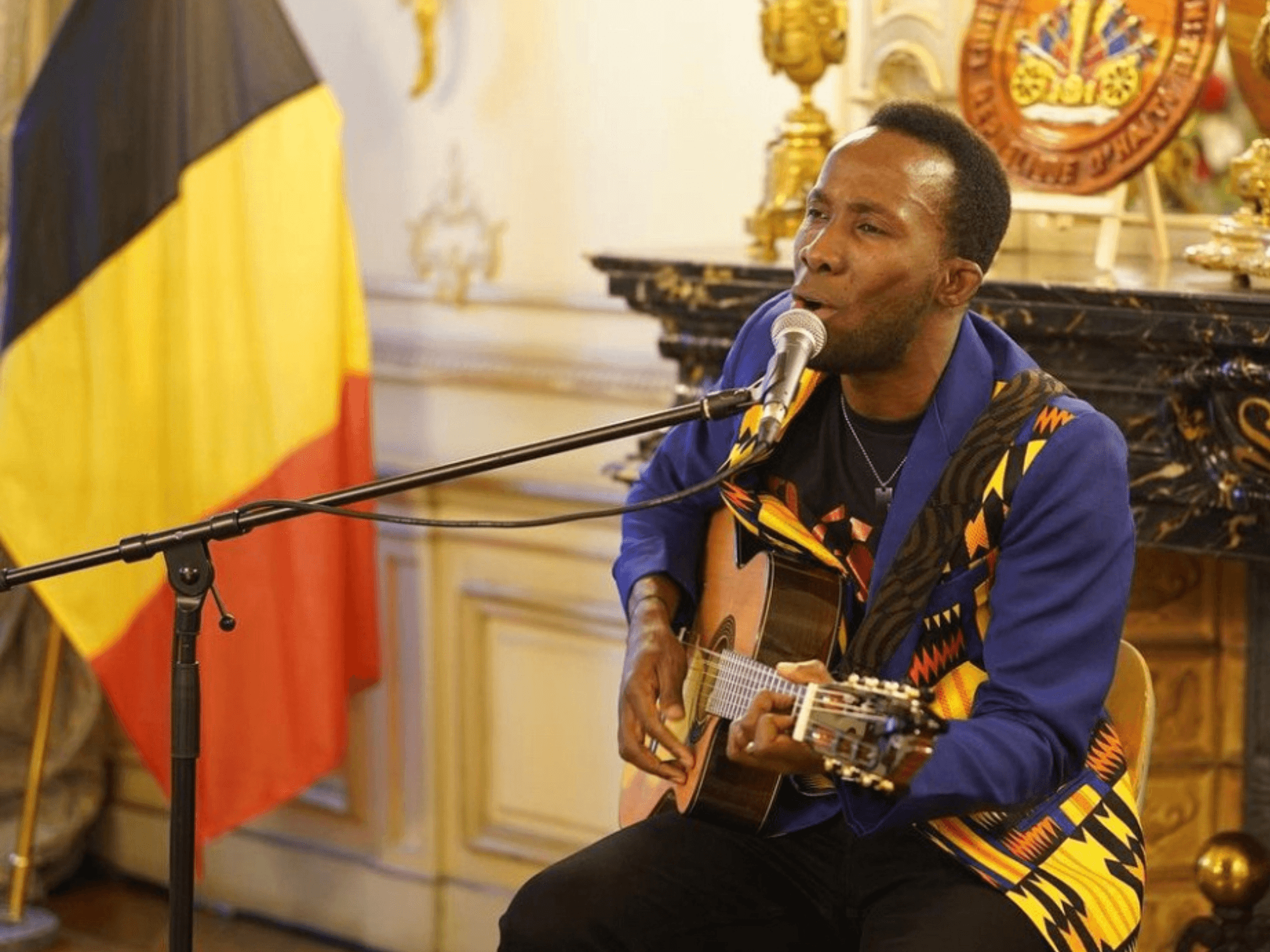
To be honest with you, I really think that if it wasn’t for Haiti, I wouldn’t be an artist.

BélO

In 2021, Haiti experienced a series of traumatic events including the assassination of the President Jovenel Moïse, another devastating earthquake of 7.1 magnitude, and the arrival of 15,000 Haitian asylum seekers at the Del Rio, Texas border.

In the midst of recurring trauma, there is a need for Haitians to recalibrate to have deeper conversations about healing. Jean Belony “BélO” Murat is a socially conscious Haitian artist and musical ambassador who uses his distinctive traditional sound to share messages of collective healing and community building.

In this interview, BélO discusses his view of “chèche lavi lòt bò dlo” (looking for a better life abroad) through his work. As a Haitian ambassador, BélO’s objective is to use his music to share Haitian experiences, traditions and culture at home and abroad.

Be sure to check out his latest project, a recreation of his very first album "Lakou Trankil" — which came out 18 years ago now — reimagined with the help of female artists the likes of Wiliadel Denervil, Queen Bee, and Sherlee Skai, who reinterpreted the tracks on the original album to make a compilation of covers called "Fanm Lakou Trankil".

He spoke to Ashley E. Lazarre, PhD Candidate of Global Inclusion and Social Development at the University of Massachusetts Boston. 

Song: Intro Kote Moun Yo by BélO

AEL: In a previous interview, you mentioned that your inspiration always comes from Haiti. Your album “Natif Natal” (of native origin) personifies Haiti as your native roots. Even when you explore other genres, such as Afrobeats with Adekunle Gold or Electronic Music with Michael Brun (which can be considered outside of your norm), no matter what beat you are on when I hear your voice I know this is BélO. Why is it important to you that your inspiration comes from Haiti?

JBM: To be honest with you, I really think that if it wasn’t for Haiti, I wouldn’t be an artist. To me, it is very important for Haiti to be at the center of my music —it is not even a choice— that’s the way it is meant to be.

I did not plan for it to be this way but my mission is to take a socially-conscious approach to my work because Haiti has very specific needs.

It’s been over 200 years since we've been fighting a difficult battle dating back to our independence, including addressing environmental problems and political disasters.

Even if everyone is partying, I have to go to sleep so that I can dream and receive the remedy for the sickness in my country — “Si m pa dòmi mwen p ap fè rèv la” (If I don’t sleep, I won’t have the dream).

The privilege that usually comes with being an artist such as having big cars and luxury, none of that is fit for me.

AEL: In music you talk about an overemphasis on Haiti’s trauma by mainstream media, which can also be reproduced in academia. You challenge these narratives by singing about the importance of HIV screenings, knowing your roots, preserving your culture, farming, and mental health. Why is healing a critical message in your music?

JBM: Because there is a need for healing. The media looks for news that the world is more interested in – that is their role. But what is our role as Haitian people?

If people are trying to demonize you, do you try to put yourself in a better position every day?

I think this is where we should focus our efforts. I also have to be realistic about the current state of our country, but are there a lot of Haitians who focus on promoting good things about our country? Are we proud enough about our Vodou? Do we let people know what it is? Or do we just let Hollywood show one side of it?

That’s why when I am touring, I always wear something Haitian. I always put our traditions to the forefront so that everyone knows that this is traditional Haitian wear, it is from Vodou, it is from Haiti. I want to show the sides of Haiti that people have never seen before. 

We also need more people to bring value to our language. There are many people who have told me that I would be further along in my career as a musician if I sang in languages other than Kreyòl. I always respond by saying “I have gotten quite far using my language”.

If more Haitians created more things in Kreyòl perhaps it would have been a more popular language than it is now. We should not adapt to everything being in English and follow suit because we miss out on our culture and identity. 

“Nou se Wozo, nou pliye nou paka kase”.

Song: Wozo by BélO

AEL: "Wozo" is my favorite song. It inspired me in times where I didn’t really see the light in my work, where it was going or what I wanted to do. The song reminded me of why I am here, specifically that I am Haitian and that there is a deeper sense of resilience in me. I often use “Wozo” as a concept in my research when talking about Haitians and who we are as a people. You released this song after the 2010 earthquake as a reminder to Haitians to uplift themselves. Can you talk about the roots of the Kreyòl term "wozo"? 

JBM: "Wozo" means bamboo tree. A bamboo tree is a plant that you can bend, but it is really hard to break it.

The day after the earthquake in 2010, I was in Guadeloupe when I received the news that “there are no more Haitians left in Haiti”. That’s the way the news was presented to me.

They said it was over for Haiti and that there was no one left standing in the country. I was shocked but I thought “these images and videos are coming from Haiti, so there is at least one Haitian alive.” And knowing my people, if there is at least one man and one woman in Haiti, that’s enough for us to come back to life.

I said to myself  “nou se Wozo, nou pliye nou paka kase” (we are wozo, we bend but we cannot break).

Song: Istwa Dwòl by BélO

AEL: Let’s talk about the concept of “chache lavi lòt bò dlo” (looking for a better life abroad). I think this resonates for me personally, as I have had to step back from going to Haiti frequently due to recent social issues. There is a distance that’s been created between me and home, where I had to find home wherever I am. How do you think the experience of “cheche lavi lòt bò dlo” relates to a search for healing?

JBM:Al chèche lavi” does not mean going to look for a plate of food. From a Haitian context, a peasant who sends their children to the city to get a better education is looking to “chèche lavi” (look for a better life) for their children. They are aware of the limitations and obstacles that come with being illiterate, so their goal is to provide more for their children.

Haitians fight to give their children a better life so that they don’t have to go through the same obstacles as they have. This also applies to middle class Haitians. Parents send their kids abroad to look for a better life not because they need better food and housing but because there is a bigger vision to fund their future to become doctors, athletes, engineers, or artists.

They go to the U.S. because that is where they can get a better education with resources to learn. “Al chèche lavi” for me means being proactive about looking for a better future. 

AEL: In the video “Istwa Dwòl”, there is a scene of 5 men taking a small boat to leave the country while their families worry about their whereabouts and the potential risks along the journey. This video which was shot more than 15 years ago foreshadows the actual scenes we saw involving the 15,000 Haitian asylum seekers who walked from South America to the Del Rio, Texas border. Why did you choose to show scenes of Haitians escaping home in the video?

JBM: I chose to show these visuals because as the saying goes, "a picture is worth a thousand words". It was important for me to show Haitians that there are some problems that we cannot control but that there are things within our reach. We should focus our energy on the circumstances that we can control. 

The song itself sheds light on the fact that if peasants are leaving, artists are leaving, and doctors are leaving, it is because there is a central problem in our country.

Who will they kidnap when everyone leaves? Or will we rethink our stance to convince each other to stop the self-inflicted violence so we can all be home together again.

With solidarity we can resist being brainwashed and save our country. We know that we are “Wozo” (resilient) and we can get back up, but it is much harder to get back up by yourself than if someone gives you a hand.

Haitians can’t consider each other to be a problem because there are many other external factors that we have to deal with. 

Haiti is our mother and no matter where we are in the world, we will never be considered Haiti’s stepchild. 

Song: Pitit Deyò by BélO

AEL: In the song, you also elaborate on the relationship of the diaspora with Haiti. What does it mean to be a “pitit deyò”?

JBM: I named the song “Pitit Deyò” (stepchild) because in literal terms when a father births a child outside of wedlock we call this child the “stepchild”. But when a mother births a child outside of her marriage, that kid remains her biological child no matter what. Every mother’s child is considered biological.

In that sense, Haiti is our mother and no matter where we are in the world, we will never be considered Haiti’s stepchild. 

With that, the song speaks to improving our relationship with the diaspora. I felt this fear coming from them so that's why I wrote the song.

We cannot just expect the diaspora to send us money via Western Union and nice sneakers every month. We need a relationship that is more inclusive.

AEL: Anthropologist Gina A. Ulysse, speaks about the need for “rasanblaj” – “the need for deeper, thoughtful, and self-reflective conversations among Haitians”. She notes that “living in fragmentation has been our way” and she urges Haitians to take pause to recalibrate. How do you recalibrate in times of crisis, personally and as an artist?

JBM: I would say personally it is a hard thing to do. For the past two years, I’ve been more active on social media, not just to share my art but to share a little message of hope because I know when you are in crisis it is hard to think outside of the box. But as an artist, sometimes I travel or my soul leaves my body and goes to get inspiration elsewhere, not just for me, but to share with other people because to me that’s what an artist is. 

AEL: A great note to end our conversation on. Thank you so much for sharing your thoughts on "chèche lavi lòt bò dlo". 

“Chèche lavi lòt bò dlo”: An Interview with Haitian Singer Jean Belony “BélO” Murat on Migration and Healing

To be honest with you, I really think that if it wasn’t for Haiti, I wouldn’t be an artist.

BélO

In 2021, Haiti experienced a series of traumatic events including the assassination of the President Jovenel Moïse, another devastating earthquake of 7.1 magnitude, and the arrival of 15,000 Haitian asylum seekers at the Del Rio, Texas border.

In the midst of recurring trauma, there is a need for Haitians to recalibrate to have deeper conversations about healing. Jean Belony “BélO” Murat is a socially conscious Haitian artist and musical ambassador who uses his distinctive traditional sound to share messages of collective healing and community building.

In this interview, BélO discusses his view of “chèche lavi lòt bò dlo” (looking for a better life abroad) through his work. As a Haitian ambassador, BélO’s objective is to use his music to share Haitian experiences, traditions and culture at home and abroad.

Be sure to check out his latest project, a recreation of his very first album "Lakou Trankil" — which came out 18 years ago now — reimagined with the help of female artists the likes of Wiliadel Denervil, Queen Bee, and Sherlee Skai, who reinterpreted the tracks on the original album to make a compilation of covers called "Fanm Lakou Trankil".

He spoke to Ashley E. Lazarre, PhD Candidate of Global Inclusion and Social Development at the University of Massachusetts Boston. 

Song: Intro Kote Moun Yo by BélO

AEL: In a previous interview, you mentioned that your inspiration always comes from Haiti. Your album “Natif Natal” (of native origin) personifies Haiti as your native roots. Even when you explore other genres, such as Afrobeats with Adekunle Gold or Electronic Music with Michael Brun (which can be considered outside of your norm), no matter what beat you are on when I hear your voice I know this is BélO. Why is it important to you that your inspiration comes from Haiti?

JBM: To be honest with you, I really think that if it wasn’t for Haiti, I wouldn’t be an artist. To me, it is very important for Haiti to be at the center of my music —it is not even a choice— that’s the way it is meant to be.

I did not plan for it to be this way but my mission is to take a socially-conscious approach to my work because Haiti has very specific needs.

It’s been over 200 years since we've been fighting a difficult battle dating back to our independence, including addressing environmental problems and political disasters.

Even if everyone is partying, I have to go to sleep so that I can dream and receive the remedy for the sickness in my country — “Si m pa dòmi mwen p ap fè rèv la” (If I don’t sleep, I won’t have the dream).

The privilege that usually comes with being an artist such as having big cars and luxury, none of that is fit for me.

AEL: In music you talk about an overemphasis on Haiti’s trauma by mainstream media, which can also be reproduced in academia. You challenge these narratives by singing about the importance of HIV screenings, knowing your roots, preserving your culture, farming, and mental health. Why is healing a critical message in your music?

JBM: Because there is a need for healing. The media looks for news that the world is more interested in – that is their role. But what is our role as Haitian people?

If people are trying to demonize you, do you try to put yourself in a better position every day?

I think this is where we should focus our efforts. I also have to be realistic about the current state of our country, but are there a lot of Haitians who focus on promoting good things about our country? Are we proud enough about our Vodou? Do we let people know what it is? Or do we just let Hollywood show one side of it?

That’s why when I am touring, I always wear something Haitian. I always put our traditions to the forefront so that everyone knows that this is traditional Haitian wear, it is from Vodou, it is from Haiti. I want to show the sides of Haiti that people have never seen before. 

We also need more people to bring value to our language. There are many people who have told me that I would be further along in my career as a musician if I sang in languages other than Kreyòl. I always respond by saying “I have gotten quite far using my language”.

If more Haitians created more things in Kreyòl perhaps it would have been a more popular language than it is now. We should not adapt to everything being in English and follow suit because we miss out on our culture and identity. 

“Nou se Wozo, nou pliye nou paka kase”.

Song: Wozo by BélO

AEL: "Wozo" is my favorite song. It inspired me in times where I didn’t really see the light in my work, where it was going or what I wanted to do. The song reminded me of why I am here, specifically that I am Haitian and that there is a deeper sense of resilience in me. I often use “Wozo” as a concept in my research when talking about Haitians and who we are as a people. You released this song after the 2010 earthquake as a reminder to Haitians to uplift themselves. Can you talk about the roots of the Kreyòl term "wozo"? 

JBM: "Wozo" means bamboo tree. A bamboo tree is a plant that you can bend, but it is really hard to break it.

The day after the earthquake in 2010, I was in Guadeloupe when I received the news that “there are no more Haitians left in Haiti”. That’s the way the news was presented to me.

They said it was over for Haiti and that there was no one left standing in the country. I was shocked but I thought “these images and videos are coming from Haiti, so there is at least one Haitian alive.” And knowing my people, if there is at least one man and one woman in Haiti, that’s enough for us to come back to life.

I said to myself  “nou se Wozo, nou pliye nou paka kase” (we are wozo, we bend but we cannot break).

Song: Istwa Dwòl by BélO

AEL: Let’s talk about the concept of “chache lavi lòt bò dlo” (looking for a better life abroad). I think this resonates for me personally, as I have had to step back from going to Haiti frequently due to recent social issues. There is a distance that’s been created between me and home, where I had to find home wherever I am. How do you think the experience of “cheche lavi lòt bò dlo” relates to a search for healing?

JBM:Al chèche lavi” does not mean going to look for a plate of food. From a Haitian context, a peasant who sends their children to the city to get a better education is looking to “chèche lavi” (look for a better life) for their children. They are aware of the limitations and obstacles that come with being illiterate, so their goal is to provide more for their children.

Haitians fight to give their children a better life so that they don’t have to go through the same obstacles as they have. This also applies to middle class Haitians. Parents send their kids abroad to look for a better life not because they need better food and housing but because there is a bigger vision to fund their future to become doctors, athletes, engineers, or artists.

They go to the U.S. because that is where they can get a better education with resources to learn. “Al chèche lavi” for me means being proactive about looking for a better future. 

AEL: In the video “Istwa Dwòl”, there is a scene of 5 men taking a small boat to leave the country while their families worry about their whereabouts and the potential risks along the journey. This video which was shot more than 15 years ago foreshadows the actual scenes we saw involving the 15,000 Haitian asylum seekers who walked from South America to the Del Rio, Texas border. Why did you choose to show scenes of Haitians escaping home in the video?

JBM: I chose to show these visuals because as the saying goes, "a picture is worth a thousand words". It was important for me to show Haitians that there are some problems that we cannot control but that there are things within our reach. We should focus our energy on the circumstances that we can control. 

The song itself sheds light on the fact that if peasants are leaving, artists are leaving, and doctors are leaving, it is because there is a central problem in our country.

Who will they kidnap when everyone leaves? Or will we rethink our stance to convince each other to stop the self-inflicted violence so we can all be home together again.

With solidarity we can resist being brainwashed and save our country. We know that we are “Wozo” (resilient) and we can get back up, but it is much harder to get back up by yourself than if someone gives you a hand.

Haitians can’t consider each other to be a problem because there are many other external factors that we have to deal with. 

Haiti is our mother and no matter where we are in the world, we will never be considered Haiti’s stepchild. 

Song: Pitit Deyò by BélO

AEL: In the song, you also elaborate on the relationship of the diaspora with Haiti. What does it mean to be a “pitit deyò”?

JBM: I named the song “Pitit Deyò” (stepchild) because in literal terms when a father births a child outside of wedlock we call this child the “stepchild”. But when a mother births a child outside of her marriage, that kid remains her biological child no matter what. Every mother’s child is considered biological.

In that sense, Haiti is our mother and no matter where we are in the world, we will never be considered Haiti’s stepchild. 

With that, the song speaks to improving our relationship with the diaspora. I felt this fear coming from them so that's why I wrote the song.

We cannot just expect the diaspora to send us money via Western Union and nice sneakers every month. We need a relationship that is more inclusive.

AEL: Anthropologist Gina A. Ulysse, speaks about the need for “rasanblaj” – “the need for deeper, thoughtful, and self-reflective conversations among Haitians”. She notes that “living in fragmentation has been our way” and she urges Haitians to take pause to recalibrate. How do you recalibrate in times of crisis, personally and as an artist?

JBM: I would say personally it is a hard thing to do. For the past two years, I’ve been more active on social media, not just to share my art but to share a little message of hope because I know when you are in crisis it is hard to think outside of the box. But as an artist, sometimes I travel or my soul leaves my body and goes to get inspiration elsewhere, not just for me, but to share with other people because to me that’s what an artist is. 

AEL: A great note to end our conversation on. Thank you so much for sharing your thoughts on "chèche lavi lòt bò dlo". 

“Chèche lavi lòt bò dlo”: An Interview with Haitian Singer Jean Belony “BélO” Murat on Migration and Healing

To be honest with you, I really think that if it wasn’t for Haiti, I wouldn’t be an artist.

BélO

In 2021, Haiti experienced a series of traumatic events including the assassination of the President Jovenel Moïse, another devastating earthquake of 7.1 magnitude, and the arrival of 15,000 Haitian asylum seekers at the Del Rio, Texas border.

In the midst of recurring trauma, there is a need for Haitians to recalibrate to have deeper conversations about healing. Jean Belony “BélO” Murat is a socially conscious Haitian artist and musical ambassador who uses his distinctive traditional sound to share messages of collective healing and community building.

In this interview, BélO discusses his view of “chèche lavi lòt bò dlo” (looking for a better life abroad) through his work. As a Haitian ambassador, BélO’s objective is to use his music to share Haitian experiences, traditions and culture at home and abroad.

Be sure to check out his latest project, a recreation of his very first album "Lakou Trankil" — which came out 18 years ago now — reimagined with the help of female artists the likes of Wiliadel Denervil, Queen Bee, and Sherlee Skai, who reinterpreted the tracks on the original album to make a compilation of covers called "Fanm Lakou Trankil".

He spoke to Ashley E. Lazarre, PhD Candidate of Global Inclusion and Social Development at the University of Massachusetts Boston. 

Song: Intro Kote Moun Yo by BélO

AEL: In a previous interview, you mentioned that your inspiration always comes from Haiti. Your album “Natif Natal” (of native origin) personifies Haiti as your native roots. Even when you explore other genres, such as Afrobeats with Adekunle Gold or Electronic Music with Michael Brun (which can be considered outside of your norm), no matter what beat you are on when I hear your voice I know this is BélO. Why is it important to you that your inspiration comes from Haiti?

JBM: To be honest with you, I really think that if it wasn’t for Haiti, I wouldn’t be an artist. To me, it is very important for Haiti to be at the center of my music —it is not even a choice— that’s the way it is meant to be.

I did not plan for it to be this way but my mission is to take a socially-conscious approach to my work because Haiti has very specific needs.

It’s been over 200 years since we've been fighting a difficult battle dating back to our independence, including addressing environmental problems and political disasters.

Even if everyone is partying, I have to go to sleep so that I can dream and receive the remedy for the sickness in my country — “Si m pa dòmi mwen p ap fè rèv la” (If I don’t sleep, I won’t have the dream).

The privilege that usually comes with being an artist such as having big cars and luxury, none of that is fit for me.

AEL: In music you talk about an overemphasis on Haiti’s trauma by mainstream media, which can also be reproduced in academia. You challenge these narratives by singing about the importance of HIV screenings, knowing your roots, preserving your culture, farming, and mental health. Why is healing a critical message in your music?

JBM: Because there is a need for healing. The media looks for news that the world is more interested in – that is their role. But what is our role as Haitian people?

If people are trying to demonize you, do you try to put yourself in a better position every day?

I think this is where we should focus our efforts. I also have to be realistic about the current state of our country, but are there a lot of Haitians who focus on promoting good things about our country? Are we proud enough about our Vodou? Do we let people know what it is? Or do we just let Hollywood show one side of it?

That’s why when I am touring, I always wear something Haitian. I always put our traditions to the forefront so that everyone knows that this is traditional Haitian wear, it is from Vodou, it is from Haiti. I want to show the sides of Haiti that people have never seen before. 

We also need more people to bring value to our language. There are many people who have told me that I would be further along in my career as a musician if I sang in languages other than Kreyòl. I always respond by saying “I have gotten quite far using my language”.

If more Haitians created more things in Kreyòl perhaps it would have been a more popular language than it is now. We should not adapt to everything being in English and follow suit because we miss out on our culture and identity. 

“Nou se Wozo, nou pliye nou paka kase”.

Song: Wozo by BélO

AEL: "Wozo" is my favorite song. It inspired me in times where I didn’t really see the light in my work, where it was going or what I wanted to do. The song reminded me of why I am here, specifically that I am Haitian and that there is a deeper sense of resilience in me. I often use “Wozo” as a concept in my research when talking about Haitians and who we are as a people. You released this song after the 2010 earthquake as a reminder to Haitians to uplift themselves. Can you talk about the roots of the Kreyòl term "wozo"? 

JBM: "Wozo" means bamboo tree. A bamboo tree is a plant that you can bend, but it is really hard to break it.

The day after the earthquake in 2010, I was in Guadeloupe when I received the news that “there are no more Haitians left in Haiti”. That’s the way the news was presented to me.

They said it was over for Haiti and that there was no one left standing in the country. I was shocked but I thought “these images and videos are coming from Haiti, so there is at least one Haitian alive.” And knowing my people, if there is at least one man and one woman in Haiti, that’s enough for us to come back to life.

I said to myself  “nou se Wozo, nou pliye nou paka kase” (we are wozo, we bend but we cannot break).

Song: Istwa Dwòl by BélO

AEL: Let’s talk about the concept of “chache lavi lòt bò dlo” (looking for a better life abroad). I think this resonates for me personally, as I have had to step back from going to Haiti frequently due to recent social issues. There is a distance that’s been created between me and home, where I had to find home wherever I am. How do you think the experience of “cheche lavi lòt bò dlo” relates to a search for healing?

JBM:Al chèche lavi” does not mean going to look for a plate of food. From a Haitian context, a peasant who sends their children to the city to get a better education is looking to “chèche lavi” (look for a better life) for their children. They are aware of the limitations and obstacles that come with being illiterate, so their goal is to provide more for their children.

Haitians fight to give their children a better life so that they don’t have to go through the same obstacles as they have. This also applies to middle class Haitians. Parents send their kids abroad to look for a better life not because they need better food and housing but because there is a bigger vision to fund their future to become doctors, athletes, engineers, or artists.

They go to the U.S. because that is where they can get a better education with resources to learn. “Al chèche lavi” for me means being proactive about looking for a better future. 

AEL: In the video “Istwa Dwòl”, there is a scene of 5 men taking a small boat to leave the country while their families worry about their whereabouts and the potential risks along the journey. This video which was shot more than 15 years ago foreshadows the actual scenes we saw involving the 15,000 Haitian asylum seekers who walked from South America to the Del Rio, Texas border. Why did you choose to show scenes of Haitians escaping home in the video?

JBM: I chose to show these visuals because as the saying goes, "a picture is worth a thousand words". It was important for me to show Haitians that there are some problems that we cannot control but that there are things within our reach. We should focus our energy on the circumstances that we can control. 

The song itself sheds light on the fact that if peasants are leaving, artists are leaving, and doctors are leaving, it is because there is a central problem in our country.

Who will they kidnap when everyone leaves? Or will we rethink our stance to convince each other to stop the self-inflicted violence so we can all be home together again.

With solidarity we can resist being brainwashed and save our country. We know that we are “Wozo” (resilient) and we can get back up, but it is much harder to get back up by yourself than if someone gives you a hand.

Haitians can’t consider each other to be a problem because there are many other external factors that we have to deal with. 

Haiti is our mother and no matter where we are in the world, we will never be considered Haiti’s stepchild. 

Song: Pitit Deyò by BélO

AEL: In the song, you also elaborate on the relationship of the diaspora with Haiti. What does it mean to be a “pitit deyò”?

JBM: I named the song “Pitit Deyò” (stepchild) because in literal terms when a father births a child outside of wedlock we call this child the “stepchild”. But when a mother births a child outside of her marriage, that kid remains her biological child no matter what. Every mother’s child is considered biological.

In that sense, Haiti is our mother and no matter where we are in the world, we will never be considered Haiti’s stepchild. 

With that, the song speaks to improving our relationship with the diaspora. I felt this fear coming from them so that's why I wrote the song.

We cannot just expect the diaspora to send us money via Western Union and nice sneakers every month. We need a relationship that is more inclusive.

AEL: Anthropologist Gina A. Ulysse, speaks about the need for “rasanblaj” – “the need for deeper, thoughtful, and self-reflective conversations among Haitians”. She notes that “living in fragmentation has been our way” and she urges Haitians to take pause to recalibrate. How do you recalibrate in times of crisis, personally and as an artist?

JBM: I would say personally it is a hard thing to do. For the past two years, I’ve been more active on social media, not just to share my art but to share a little message of hope because I know when you are in crisis it is hard to think outside of the box. But as an artist, sometimes I travel or my soul leaves my body and goes to get inspiration elsewhere, not just for me, but to share with other people because to me that’s what an artist is. 

AEL: A great note to end our conversation on. Thank you so much for sharing your thoughts on "chèche lavi lòt bò dlo". 

Zanmi Femme: Pathologizing Women Friendships

This post was originally written in Kreyòl.

The need for advice, fun, closeness, a shoulder to lean on, etc. are not needs specific to one gender. However, capitalist and patriarchal social constructs have created a gender divide for basic needs rendering the concept of bad friends and friendships arbitrary. 

WILSON THIERSAINT

For several weeks praises have been pouring in for Zafèm’s very first album “LAS”.  In the midst of all of this, Reginald Cangé and Dener Céide have produced a thorough work, raising the bar in terms of sonic experience, vocal delivery, creative themes, and the variety of subjects broached in their compositions. The project has also allowed Konpa Dirèk enthusiasts to rediscover elements of a Konpa tradition that has marked several generations of Haitians.

The critiquing of a work can take many forms: appreciation, consideration, consumption, remarks, or comparison, all the way to redaction of the work or parts of it. Therefore, the critique has as an objective the rendering of all the works' qualities. And it is in this process that its limits, contradictions, and its incoherences appear. This happened with Tayc's last album "Chambre 96" and the song "Quand tu dors" because it can be interpreted as a song that excuses conjugal violence. 

Since its release, the "LAS" album has stirred a lot of conversation. The public has been waiting for this release with great anticipation – receiving  it with open arms. The buzz and anticipation surrounding the album was amplified by Ticket Magazine’s bitter categorization of the group as “The disappointment of the year” – as part of the popular Haitian magazine’s annual end of the year round up back in 2021. Therefore, the release of this album is set in a space and time where the discourse surrounding the band’s work (or lack thereof) has been loud since well before the album even existed. It is within this context that Mathania Charles’ petition asking for the withdrawal of “Zanmi Femme” is set. 

Here it is important to note that while critique and boycotts might appear to be the same, they do not share the same objective. 

Zafèm’s album “LAS” is a jewel, a quality artistic and literary work. However, certain themes present in the album can open it to criticism, and the characters created are often rooted in common stereotypes making them easily identifiable social archetypes. Notably, the reality depicted in the song “Zanmi Femme” (Female Friends) on the “LAS” album relies on a discriminatory depiction of a social minority – a minority not in quality or quantity, but rather in social representation.

The songs starts off with the lyrics “bèl fanm ti sèvèl" (beautiful woman small brain) followed by “zanmi fanm konn mete w dozado ak mouche marye w” (female friends can turn you against your husband) to “tèt kole fanm ak fanm gen gwo danje ladan l” (women working together can be very dangerous). It’s clear that the reality being denounced in this song is friendship, but more specifically, friendship amongst women.

A friendship can involve two or more people, but only they can decide how to navigate it, whether to maintain it or to end it, however they please. Friendships are based on people’s likes and quirks. And since likes and quirks are the result of various perceptions and representations that permeate society, friendships are a social construct. But the tendency to classify friendships based on gender, race or class comes from a hyperbolic way of thinking that is gendered and racialized. And it is these structures that determine what will come out of these relationships. In this way, the classifying of female friendships as a problem in their relationships amongst themselves, or as a threat to relationships one or many of them may have with a man goes against the principle that all humans are equal. This kind of thinking belittles the solidarity women have built among themselves as a historically victimized group, but it also circles back to a misogynistic philosophy that could lead to physical or emotional violence towards a woman if, as the song says  “female friendships can be very dangerous.”

The construction and spreading of such a philosophy is the same system that pathologizes friendships among women, in a society which, as stated in Gaelle Bien-Aimé’s “Kwonik Yon Dayiva S2E4”, does not favor or understand female solidarity.  These attitudes underline a misogynistic logic, which seeks to limit the freedom to build an autonomous reality for one’s mind and body. We must always be in pursuit of a mindset that does not reproduce misogynistic logic and does not pose a threat to the emancipation of the oppressed. An oppression that is capitalist, and therefore imperialist, all thanks to white supremacy and the patriarchy.

Conversely, in another tune on the same album, Reginald Cangé sings “Fanm ak gason gen menm bezwen, egal ego” (women and men have the same needs, they are equal). The need for advice, fun, closeness, a shoulder to lean on etc. are not needs specific to one gender. However, capitalist and patriarchal social constructs have created a gender divide for basic needs. Therefore, the concept of bad friends and friendships becomes arbitrary. People in general can be bad friends, it is not female friendships that are inherently dangerous. As it stands, it is female friendships that are depicted negatively in Haitian cultural productions, and female friends are responsible for creating toxicity (through gossip) in romantic relationships. 

The songs in the Haitian musical canon that reflect this are many. From Move zanmi, Méridionale de Montréal ; Zanmi Femme, Méridionale des Cayes, to Zafèm’s cover of the same tune. There are other productions representing these attitudes such as Marcelo Nilecram Tripotay, where he plays the role of the gossiper, or BélO’s Deblozay. The latter speaks of the friend of a man named Laurent who caused his wife to leave him after gossiping about him, and yet the danger of male friendships was not the conclusion in this story. As Gaelle Bien-Aimé says, “why can men be “bro’s” and “partners” but a friendship between women carries such negativity in the song?”

This idea that a woman’s friends can lead her to make decisions that could potentially ruin her relationship infantilizes her and belittles the choices she makes. Not to mention comments like “you have to stay strong by him” or tactics to stop women from “wearing the pants” in the relationship, open the door to physical or emotional violence. These are the kinds of empty slogans being left to the interpretation of each and every consumer playing the song. 

The petitioners ask that the track be removed from the album. I don't know if they should remove it. But it would not be the first time music is removed from an album. In 2022, Beyonce withdrew a title from the "Renaissance" album due to accusations of plagiarism. Indeed, Zafèm could issue a note to rectify the fact that the music was more intended to pay homage to the old Meridionale des Cayes majesty than to reinforce a structural logic that promotes the hatred, limitations and infantilization imposed on women in the patriarchal capitalist society. This will honor the public, the artists, the country and women. It is otherwise a beautiful album.

Zanmi Femme: Pathologizing Women Friendships

This post was originally written in Kreyòl.

The need for advice, fun, closeness, a shoulder to lean on, etc. are not needs specific to one gender. However, capitalist and patriarchal social constructs have created a gender divide for basic needs rendering the concept of bad friends and friendships arbitrary. 

WILSON THIERSAINT

For several weeks praises have been pouring in for Zafèm’s very first album “LAS”.  In the midst of all of this, Reginald Cangé and Dener Céide have produced a thorough work, raising the bar in terms of sonic experience, vocal delivery, creative themes, and the variety of subjects broached in their compositions. The project has also allowed Konpa Dirèk enthusiasts to rediscover elements of a Konpa tradition that has marked several generations of Haitians.

The critiquing of a work can take many forms: appreciation, consideration, consumption, remarks, or comparison, all the way to redaction of the work or parts of it. Therefore, the critique has as an objective the rendering of all the works' qualities. And it is in this process that its limits, contradictions, and its incoherences appear. This happened with Tayc's last album "Chambre 96" and the song "Quand tu dors" because it can be interpreted as a song that excuses conjugal violence. 

Since its release, the "LAS" album has stirred a lot of conversation. The public has been waiting for this release with great anticipation – receiving  it with open arms. The buzz and anticipation surrounding the album was amplified by Ticket Magazine’s bitter categorization of the group as “The disappointment of the year” – as part of the popular Haitian magazine’s annual end of the year round up back in 2021. Therefore, the release of this album is set in a space and time where the discourse surrounding the band’s work (or lack thereof) has been loud since well before the album even existed. It is within this context that Mathania Charles’ petition asking for the withdrawal of “Zanmi Femme” is set. 

Here it is important to note that while critique and boycotts might appear to be the same, they do not share the same objective. 

Zafèm’s album “LAS” is a jewel, a quality artistic and literary work. However, certain themes present in the album can open it to criticism, and the characters created are often rooted in common stereotypes making them easily identifiable social archetypes. Notably, the reality depicted in the song “Zanmi Femme” (Female Friends) on the “LAS” album relies on a discriminatory depiction of a social minority – a minority not in quality or quantity, but rather in social representation.

The songs starts off with the lyrics “bèl fanm ti sèvèl" (beautiful woman small brain) followed by “zanmi fanm konn mete w dozado ak mouche marye w” (female friends can turn you against your husband) to “tèt kole fanm ak fanm gen gwo danje ladan l” (women working together can be very dangerous). It’s clear that the reality being denounced in this song is friendship, but more specifically, friendship amongst women.

A friendship can involve two or more people, but only they can decide how to navigate it, whether to maintain it or to end it, however they please. Friendships are based on people’s likes and quirks. And since likes and quirks are the result of various perceptions and representations that permeate society, friendships are a social construct. But the tendency to classify friendships based on gender, race or class comes from a hyperbolic way of thinking that is gendered and racialized. And it is these structures that determine what will come out of these relationships. In this way, the classifying of female friendships as a problem in their relationships amongst themselves, or as a threat to relationships one or many of them may have with a man goes against the principle that all humans are equal. This kind of thinking belittles the solidarity women have built among themselves as a historically victimized group, but it also circles back to a misogynistic philosophy that could lead to physical or emotional violence towards a woman if, as the song says  “female friendships can be very dangerous.”

The construction and spreading of such a philosophy is the same system that pathologizes friendships among women, in a society which, as stated in Gaelle Bien-Aimé’s “Kwonik Yon Dayiva S2E4”, does not favor or understand female solidarity.  These attitudes underline a misogynistic logic, which seeks to limit the freedom to build an autonomous reality for one’s mind and body. We must always be in pursuit of a mindset that does not reproduce misogynistic logic and does not pose a threat to the emancipation of the oppressed. An oppression that is capitalist, and therefore imperialist, all thanks to white supremacy and the patriarchy.

Conversely, in another tune on the same album, Reginald Cangé sings “Fanm ak gason gen menm bezwen, egal ego” (women and men have the same needs, they are equal). The need for advice, fun, closeness, a shoulder to lean on etc. are not needs specific to one gender. However, capitalist and patriarchal social constructs have created a gender divide for basic needs. Therefore, the concept of bad friends and friendships becomes arbitrary. People in general can be bad friends, it is not female friendships that are inherently dangerous. As it stands, it is female friendships that are depicted negatively in Haitian cultural productions, and female friends are responsible for creating toxicity (through gossip) in romantic relationships. 

The songs in the Haitian musical canon that reflect this are many. From Move zanmi, Méridionale de Montréal ; Zanmi Femme, Méridionale des Cayes, to Zafèm’s cover of the same tune. There are other productions representing these attitudes such as Marcelo Nilecram Tripotay, where he plays the role of the gossiper, or BélO’s Deblozay. The latter speaks of the friend of a man named Laurent who caused his wife to leave him after gossiping about him, and yet the danger of male friendships was not the conclusion in this story. As Gaelle Bien-Aimé says, “why can men be “bro’s” and “partners” but a friendship between women carries such negativity in the song?”

This idea that a woman’s friends can lead her to make decisions that could potentially ruin her relationship infantilizes her and belittles the choices she makes. Not to mention comments like “you have to stay strong by him” or tactics to stop women from “wearing the pants” in the relationship, open the door to physical or emotional violence. These are the kinds of empty slogans being left to the interpretation of each and every consumer playing the song. 

The petitioners ask that the track be removed from the album. I don't know if they should remove it. But it would not be the first time music is removed from an album. In 2022, Beyonce withdrew a title from the "Renaissance" album due to accusations of plagiarism. Indeed, Zafèm could issue a note to rectify the fact that the music was more intended to pay homage to the old Meridionale des Cayes majesty than to reinforce a structural logic that promotes the hatred, limitations and infantilization imposed on women in the patriarchal capitalist society. This will honor the public, the artists, the country and women. It is otherwise a beautiful album.

Zanmi Femme: Pathologizing Women Friendships

This post was originally written in Kreyòl.

The need for advice, fun, closeness, a shoulder to lean on, etc. are not needs specific to one gender. However, capitalist and patriarchal social constructs have created a gender divide for basic needs rendering the concept of bad friends and friendships arbitrary. 

WILSON THIERSAINT

For several weeks praises have been pouring in for Zafèm’s very first album “LAS”.  In the midst of all of this, Reginald Cangé and Dener Céide have produced a thorough work, raising the bar in terms of sonic experience, vocal delivery, creative themes, and the variety of subjects broached in their compositions. The project has also allowed Konpa Dirèk enthusiasts to rediscover elements of a Konpa tradition that has marked several generations of Haitians.

The critiquing of a work can take many forms: appreciation, consideration, consumption, remarks, or comparison, all the way to redaction of the work or parts of it. Therefore, the critique has as an objective the rendering of all the works' qualities. And it is in this process that its limits, contradictions, and its incoherences appear. This happened with Tayc's last album "Chambre 96" and the song "Quand tu dors" because it can be interpreted as a song that excuses conjugal violence. 

Since its release, the "LAS" album has stirred a lot of conversation. The public has been waiting for this release with great anticipation – receiving  it with open arms. The buzz and anticipation surrounding the album was amplified by Ticket Magazine’s bitter categorization of the group as “The disappointment of the year” – as part of the popular Haitian magazine’s annual end of the year round up back in 2021. Therefore, the release of this album is set in a space and time where the discourse surrounding the band’s work (or lack thereof) has been loud since well before the album even existed. It is within this context that Mathania Charles’ petition asking for the withdrawal of “Zanmi Femme” is set. 

Here it is important to note that while critique and boycotts might appear to be the same, they do not share the same objective. 

Zafèm’s album “LAS” is a jewel, a quality artistic and literary work. However, certain themes present in the album can open it to criticism, and the characters created are often rooted in common stereotypes making them easily identifiable social archetypes. Notably, the reality depicted in the song “Zanmi Femme” (Female Friends) on the “LAS” album relies on a discriminatory depiction of a social minority – a minority not in quality or quantity, but rather in social representation.

The songs starts off with the lyrics “bèl fanm ti sèvèl" (beautiful woman small brain) followed by “zanmi fanm konn mete w dozado ak mouche marye w” (female friends can turn you against your husband) to “tèt kole fanm ak fanm gen gwo danje ladan l” (women working together can be very dangerous). It’s clear that the reality being denounced in this song is friendship, but more specifically, friendship amongst women.

A friendship can involve two or more people, but only they can decide how to navigate it, whether to maintain it or to end it, however they please. Friendships are based on people’s likes and quirks. And since likes and quirks are the result of various perceptions and representations that permeate society, friendships are a social construct. But the tendency to classify friendships based on gender, race or class comes from a hyperbolic way of thinking that is gendered and racialized. And it is these structures that determine what will come out of these relationships. In this way, the classifying of female friendships as a problem in their relationships amongst themselves, or as a threat to relationships one or many of them may have with a man goes against the principle that all humans are equal. This kind of thinking belittles the solidarity women have built among themselves as a historically victimized group, but it also circles back to a misogynistic philosophy that could lead to physical or emotional violence towards a woman if, as the song says  “female friendships can be very dangerous.”

The construction and spreading of such a philosophy is the same system that pathologizes friendships among women, in a society which, as stated in Gaelle Bien-Aimé’s “Kwonik Yon Dayiva S2E4”, does not favor or understand female solidarity.  These attitudes underline a misogynistic logic, which seeks to limit the freedom to build an autonomous reality for one’s mind and body. We must always be in pursuit of a mindset that does not reproduce misogynistic logic and does not pose a threat to the emancipation of the oppressed. An oppression that is capitalist, and therefore imperialist, all thanks to white supremacy and the patriarchy.

Conversely, in another tune on the same album, Reginald Cangé sings “Fanm ak gason gen menm bezwen, egal ego” (women and men have the same needs, they are equal). The need for advice, fun, closeness, a shoulder to lean on etc. are not needs specific to one gender. However, capitalist and patriarchal social constructs have created a gender divide for basic needs. Therefore, the concept of bad friends and friendships becomes arbitrary. People in general can be bad friends, it is not female friendships that are inherently dangerous. As it stands, it is female friendships that are depicted negatively in Haitian cultural productions, and female friends are responsible for creating toxicity (through gossip) in romantic relationships. 

The songs in the Haitian musical canon that reflect this are many. From Move zanmi, Méridionale de Montréal ; Zanmi Femme, Méridionale des Cayes, to Zafèm’s cover of the same tune. There are other productions representing these attitudes such as Marcelo Nilecram Tripotay, where he plays the role of the gossiper, or BélO’s Deblozay. The latter speaks of the friend of a man named Laurent who caused his wife to leave him after gossiping about him, and yet the danger of male friendships was not the conclusion in this story. As Gaelle Bien-Aimé says, “why can men be “bro’s” and “partners” but a friendship between women carries such negativity in the song?”

This idea that a woman’s friends can lead her to make decisions that could potentially ruin her relationship infantilizes her and belittles the choices she makes. Not to mention comments like “you have to stay strong by him” or tactics to stop women from “wearing the pants” in the relationship, open the door to physical or emotional violence. These are the kinds of empty slogans being left to the interpretation of each and every consumer playing the song. 

The petitioners ask that the track be removed from the album. I don't know if they should remove it. But it would not be the first time music is removed from an album. In 2022, Beyonce withdrew a title from the "Renaissance" album due to accusations of plagiarism. Indeed, Zafèm could issue a note to rectify the fact that the music was more intended to pay homage to the old Meridionale des Cayes majesty than to reinforce a structural logic that promotes the hatred, limitations and infantilization imposed on women in the patriarchal capitalist society. This will honor the public, the artists, the country and women. It is otherwise a beautiful album.

"Creativity is our Oxygen," an interview with Charline Jean-Gilles

The situation of the country cannot prevent us from creating. We must continue to create, because it is from creativity that we live. Creativity is our oxygen. Ayibobo.

CHARLINE JEAN GILLES

"Creativity is our Oxygen," an interview with Charline Jean-Gilles

The situation of the country cannot prevent us from creating. We must continue to create, because it is from creativity that we live. Creativity is our oxygen. Ayibobo.

CHARLINE JEAN GILLES

"Creativity is our Oxygen," an interview with Charline Jean-Gilles

The situation of the country cannot prevent us from creating. We must continue to create, because it is from creativity that we live. Creativity is our oxygen. Ayibobo.

CHARLINE JEAN GILLES

Photo Gallery

Kanaval - Okap, Ayiti
Christian Hayden
Kanaval - Okap, Ayiti
Christian Hayden
Kanaval - Okap, Ayiti
Christian Hayden
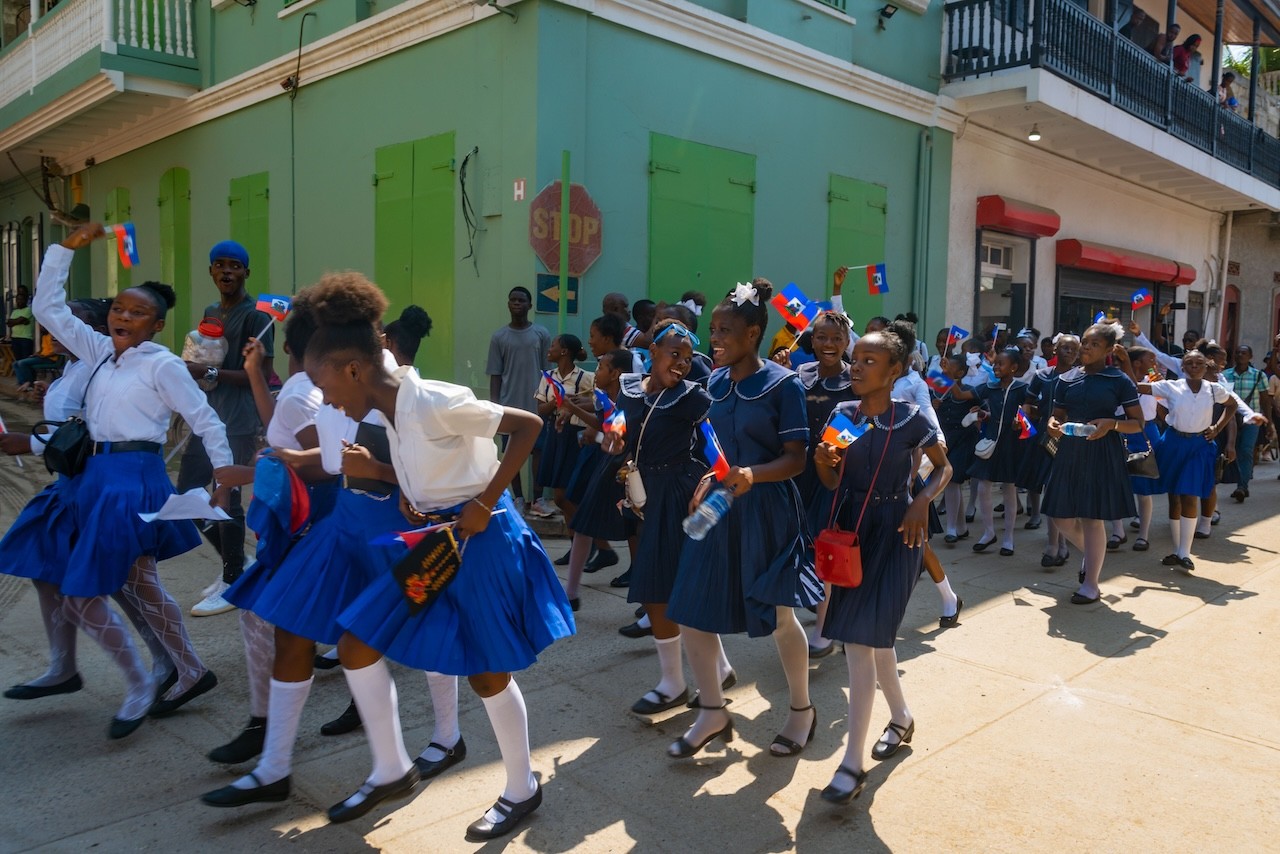
Fresko - Okap, Ayiti
Thierry Prinston
Fresko - Okap, Ayiti
Thierry Prinston
Fresko - Okap, Ayiti
Thierry Prinston
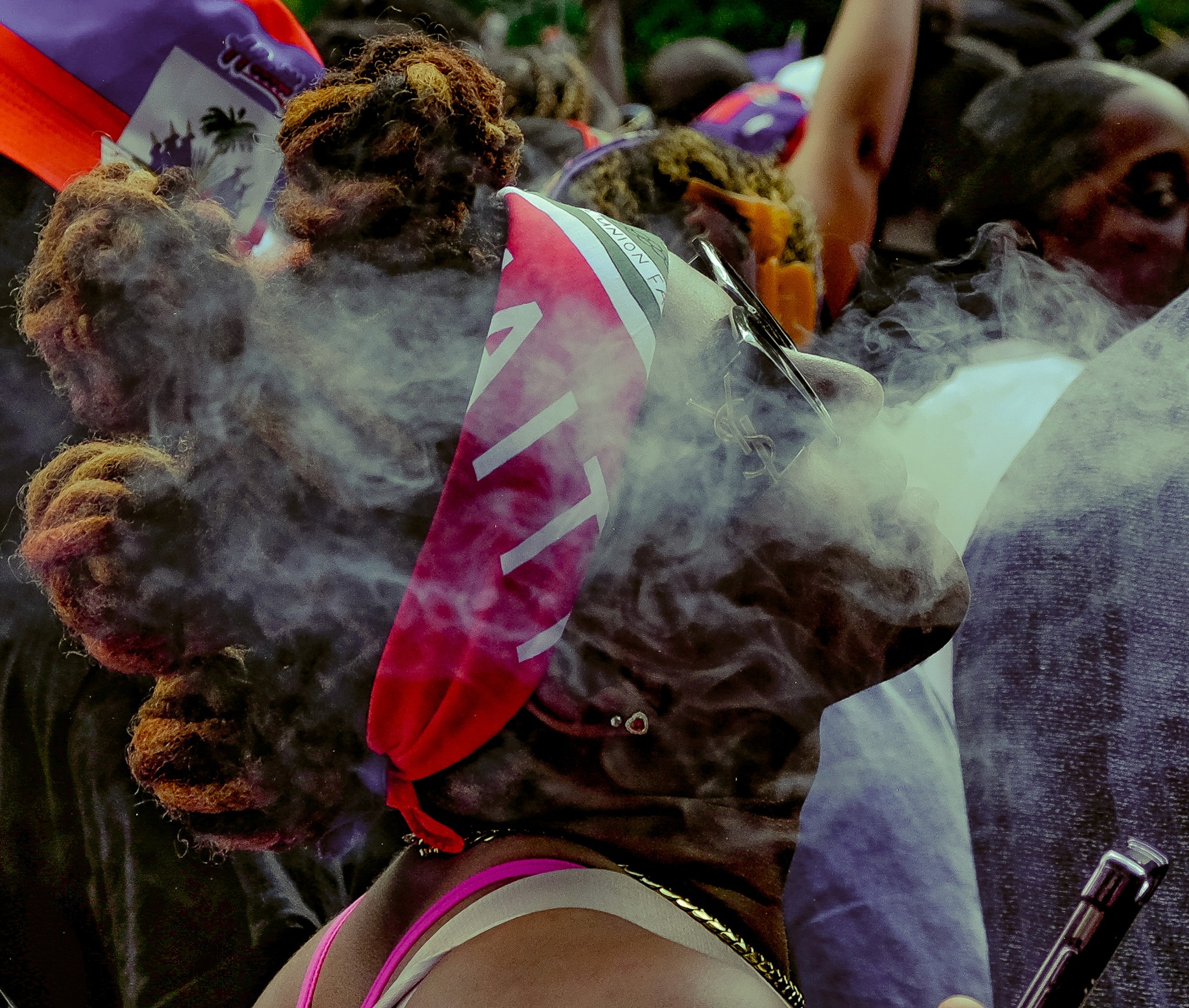
Labor Day Parade - New York City
Gabrielle Pascal
Labor Day Parade - New York City
Gabrielle Pascal
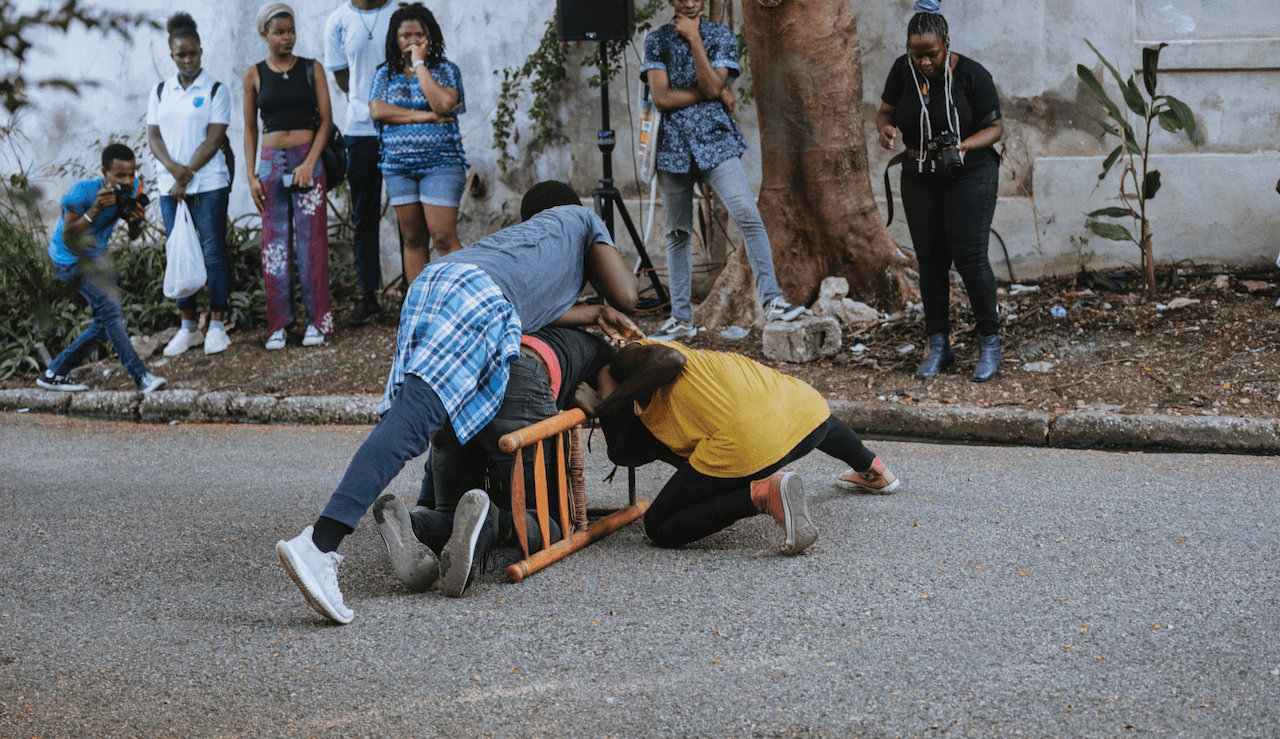
Labor Day Parade - New York City
Gabrielle Pascal
Festival 4 Chemins - Pòtoprens, Ayiti
Vicky Onélien
Festival 4 Chemins - Pòtoprens, Ayiti
Vicky Onélien
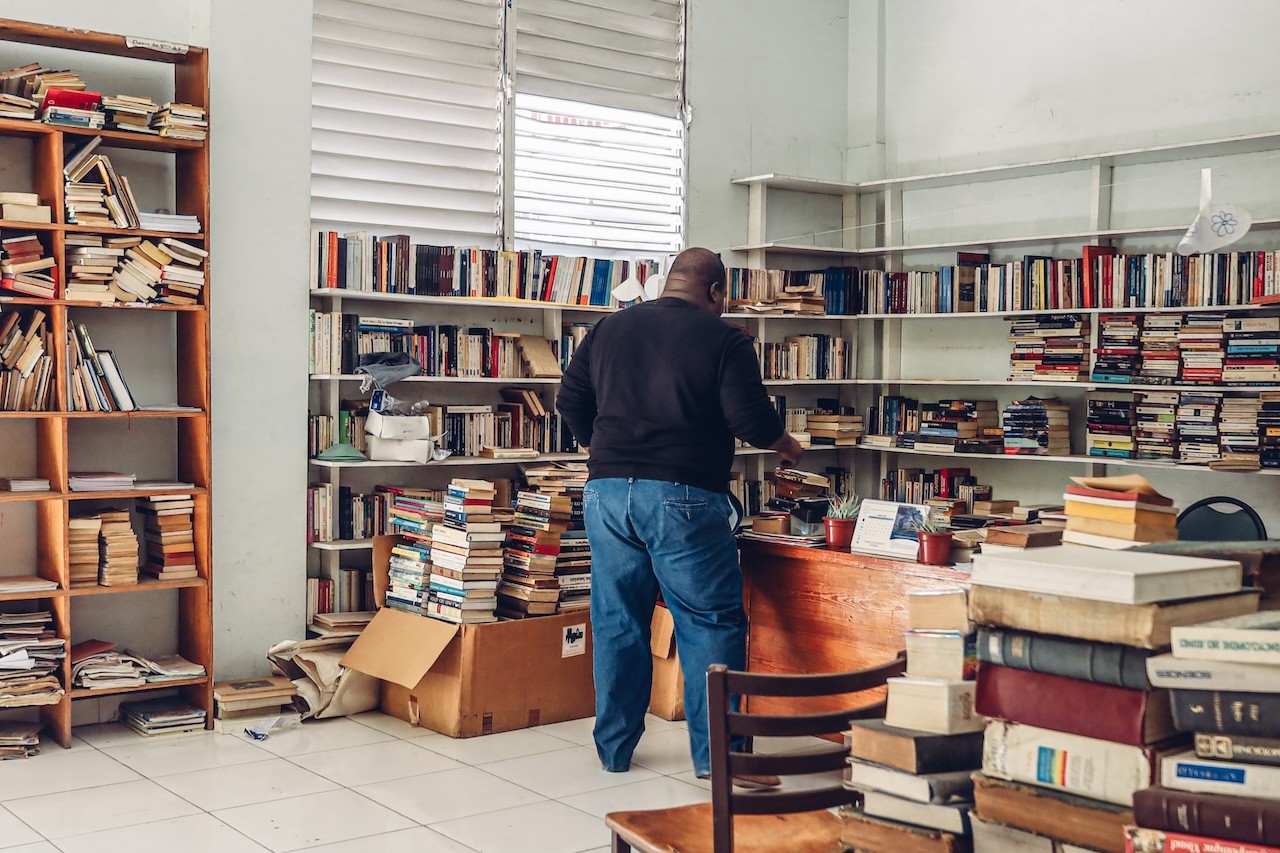
Festival 4 Chemins - Pòtoprens, Ayiti
Vicky Onélien
Festival 4 Chemins - Pòtoprens, Ayiti
Vicky Onélien
Festival 4 Chemins - Pòtoprens, Ayiti
Vicky Onélien
Festival 4 Chemins - Pòtoprens, Ayiti
Vicky Onélien
Collège Florian - Pòtoprens, Ayiti
Vicky Onélien
Collège Florian - Pòtoprens, Ayiti
Vicky Onélien

Collège Florian - Pòtoprens, Ayiti
Vicky Onélien
NANM - Pòtoprens, Ayiti
Cassendy Lafond
NANM - Pòtoprens, Ayiti
Cassendy Lafond
NANM - Pòtoprens, Ayiti
Cassendy Lafond

Ti Jak Stands Before Immigration and Joe Biden
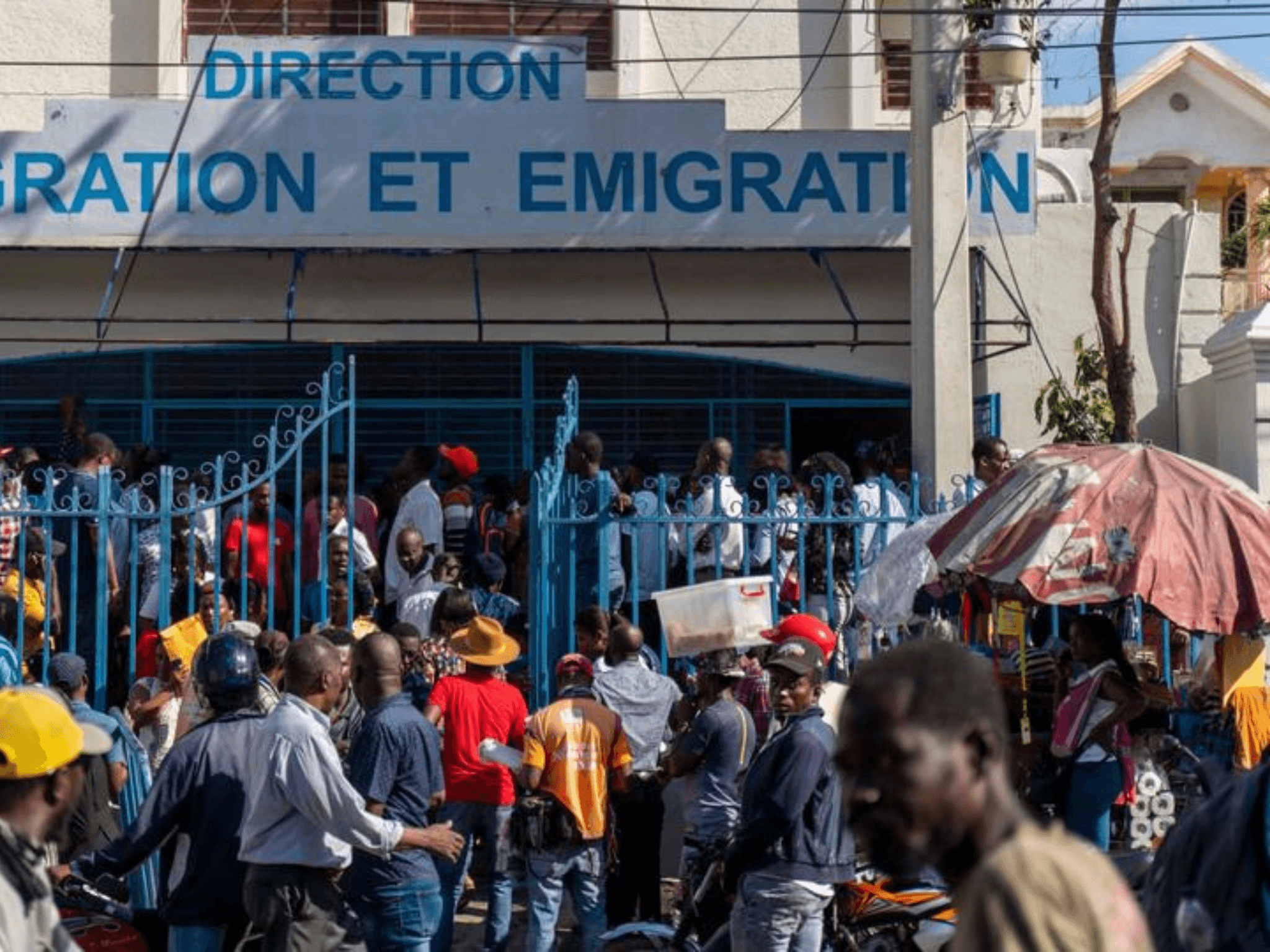
This short story was originally written in Kreyòl

Jakson has no acquaintances in the US, but you never know what could happen. So he settles for putting the odds in his favor.

Six in the morning, Jackson stretches, sits up, and he shakes his head. He had taken his time to cover his food the night before, but the mice still got to it. He smiles; after all, the tiny creatures must also feed themselves. They are God’s creations, just like himself. He has stopped counting the days since he last saw running water from the faucet. The bit of water left in the water drum has tadpoles in it. He splashes some under his arms, brushes his hair, and his shirt is tucked inside his pants.

He’s ready to take on the day. He’s meeting with Jean Bon-Sèvis in front of the immigration building. After a long six month wait, he decided that today would be the day he would finally get his passport. Jakson has no acquaintances in the US, but you never know what could happen. So he decides to put every odd he can in his favor.

On January 5th, 2023, the newspaper Le Nouvelliste quoted an article published by an American newspaper, The Miami Herald, stating that any Haitian who wants to can request a visa to go live in the United States, provided they have a willing and able sponsor. But this would not be without conditions. Applications will be considered case-by-case before approval can be granted to move. This is what President Joe Biden declared.

Jackson was born in 1994 in the district of Middle of Nowhere. He and his mother moved to Port-au-Prince one December to welcome President Jean-Bertrand Aristide, who was being escorted back by US Marines. A ruthless military junta had overthrown Aristide's government, democratically voted into power on December 16, 1990. Jakson’s father was a fervent Lavalas who lost his life on a Sunday afternoon while going to a cockfight with his finest rooster tucked under his arm. At that time, Cedras had ordered the Haïtian military to stop all roosters from crowing even at dawn because Aristide had chosen the rooster as a symbol of his. Jakson’s father had committed the greatest crime of his life: he was a Lavalas and walked the streets with a rooster during a coup d’état.

His mother has passed away, but he remembers nights under full moons where the poor woman would sing to him the stories of their lives on their porch in Martissant.

That passport. He must get it.

It feels like a way to fulfill his duty of honoring his mother and father’s memory, who lost their lives trying to give him a better one. His mother had tried to make her way to the United States by boat in the year 2000, but the coast guards stopped her from reaching her destination. No matter what, he has to go to the United States, so he can see for himself why those people are always inserting themselves in Haitian affairs. When they’re not assigning a President to Haiti, they're opening their gates to welcome Haitians in. Such good-hearted people, these Americans!

Haitians don’t want to see their peers do better. Jackson finds this very disrespectful. Someone with no clue has begun to tell Jackson a load of crap Jackson didn't even want to hear. He hears the rambler saying that the Biden program is very suspicious. Ki byen Frize te fè pou koukou pou koukou t a fè pitit li pou l rele l Frizelya!!! The first question he asked was, why would the same government that humiliated more than 10 thousand Haitians under the Del Rio bridge in the state of Texas be the same government opening its doors to these same people? He went on to say, “Even the Mayor of the town, Mr. Bruno Lozano, has criticized this careless attitude from the federal government while the humanitarian crisis worsens."

“The old fool doesn’t like us, elections are coming and he’s just protecting himself.”

The stranger is full of things to say and pushes things further, claiming that even members of Biden’s government had made similar observations. Ilhan Omar, a member of Congress straight out of the democratic party and a concerned human rights defender, posted a tweet saying: “These Haitian migrants suffered greatly to make their way to our border. [...] The nonchalant behavior displayed is heartbreaking.”

Jackson isn’t thrilled with the rambler's attempts to discourage him, but he leans closer to listen anyway. It’s been almost an hour and forty-five minutes since Bon-Sèvis told Jackson he was close by in Poste Marchand but had not yet shown up. So Jakson decided to keep listening to this clearly bored rambler. It looks like this is what he does for a living,

The rambler inhales and drops a bomb, “The old fool doesn’t like us. Elections are coming, and he’s just protecting himself.”

Those words split the crowd in front of the immigration office in two. One side was ready to stone him; the other was cheering him on. While they all agree that they can no longer live in this country with the gang issue added to the overall poor standard of living, many agree that the program should be questioned.

“According to elected Republican Ted Cruz, Biden is provoking a humanitarian crisis, while Donald Trump made the fight against illegal immigration his main battle cry.” He said he read this with his own eyes in a foreign media outlet called Radio Canada, so he had no choice but to believe it.

Just the sound of Biden's opponent's name is all it takes for the hairs on Jackson's body to stand. He has to move, but Radyo Djòl—this is what they've nicknamed him in front of the immigration building—rambles on. The straw that breaks the camel’s back is when Radyo Djòl wildly claims that in 1994, Joe Biden supposedly declared that no one would care if Haïti were to be swallowed by the ocean. So why is it that today he wants to show so much care all of a sudden? Something is not being said!

Ti Jak isn't a big man, so he gets shoved around in the crowd. Bon-Sèvis’ phone isn’t ringing anymore; when Ti Jak calls, all he hears is a “you have reached the voicemail box” message. Ti Jak decides he will take his chances at entering the immigration office. Standing on tiptoe, he realizes that two people can't walk through the small gate simultaneously. The security guard at the entrance has already taken up half the space. Ti Jak asks himself if the muscular guard could even bend over to tie his shoes, yet here he was, serving as Peter holding the keys to the gates, either granting or refusing entry into Heaven.

Ti Jak feels like his feet are off the ground. He’s not much of a praying man and knows he isn’t being abducted. This is an every-man-for-himself situation. As he’s still trying to understand what’s happening, he feels a baton slam between his shoulder and ear. Suddenly he sees his mother wearing a black dress and holding a white cup, smiling at him, and everything goes black.

Ti Jak is a gardener; he plants and takes care of flowers. It was always a pleasure for him to travel every morning from his house in BelAir, down Champs de Mars, up to Bois Verna, where his clients would wait for him. He didn’t earn much, but the little he did earn made it possible for him to save up and take care of himself. That’s why he always worked with a smile on his face. When he eats, it’s because he's worked hard for it, which makes him proud. Ti Jak has neither a wife nor children. The desire to leave the country has had a hold on him ever since he saw a car with a government-issued license plate, carrying a politician and a white woman, roll into the neighborhood, leaving a bag full of money and firearms to a former police officer turned brigade leader for what they called "neighborhood protection." This happened one night in February 2020.

Ti Jak would like nothing more than to live in his country without feeling scared and to continue to take care of his clients' plants. But the current state of affairs isn’t treating him well. He doesn’t know when they will ask him to join the brigade, and has witnessed what happens to those who refuse the invitation.

A few days later, he saw that same white woman on television saying that the former police officer was a defender of peace. But he saw with his own eyes how that man and his soldiers committed crimes in the neighborhood. They murdered and committed acts of sexual violence whenever they pleased. The worst part of it is that the neighborhood became a lair to hide people who had been kidnapped. And to top it all off, these men felt no shame in flaunting their wealth and power, which is why many young women and men looking to ease their plight brought themselves to these men.

Every day the brigade gains in soldiers. That former police officer now calls himself a revolutionary. He publicly declared they would have to walk over his dead body to overthrow his president. Ti Jak would like nothing more than to live in his country without feeling anxious and continue caring for his clients' plants. But the current state of affairs isn’t doing him well. He doesn’t know when they will ask him to join the brigade and has witnessed what happens to those who refuse the invitation.

At two in the morning, multiple gunshots wake Ti Jak up, and he feels a strain on his neck. His neighbor had given him medicinal leaves to shrink the lump, and as soon as morning comes, he will need to figure out how to get his hands on some money to buy more leaves so he can prepare a bath. He cannot take from the funds set aside for Bon-Sèvis. The things being gossiped about around him are confusing him. Ti Jak suspects the gossipers are correct, but he also knows he isn’t in the wrong. If home isn’t safe, he has to seek a better life elsewhere. He’s been told that in the United States, the grass is greener, and the sun shines brighter. He might be able to find a small hustle to make a living and take care of himself. As soon as he’s well enough to get back on his feet, he’ll hit the road again, he thought with conviction. He will travel up Lalue until he reaches the immigration office. This time, he has no doubt he will get inside. 

Mawon Ann Di Èzli

Ti Jak Stands Before Immigration and Joe Biden

This short story was originally written in Kreyòl

Jakson has no acquaintances in the US, but you never know what could happen. So he settles for putting the odds in his favor.

Six in the morning, Jackson stretches, sits up, and he shakes his head. He had taken his time to cover his food the night before, but the mice still got to it. He smiles; after all, the tiny creatures must also feed themselves. They are God’s creations, just like himself. He has stopped counting the days since he last saw running water from the faucet. The bit of water left in the water drum has tadpoles in it. He splashes some under his arms, brushes his hair, and his shirt is tucked inside his pants.

He’s ready to take on the day. He’s meeting with Jean Bon-Sèvis in front of the immigration building. After a long six month wait, he decided that today would be the day he would finally get his passport. Jakson has no acquaintances in the US, but you never know what could happen. So he decides to put every odd he can in his favor.

On January 5th, 2023, the newspaper Le Nouvelliste quoted an article published by an American newspaper, The Miami Herald, stating that any Haitian who wants to can request a visa to go live in the United States, provided they have a willing and able sponsor. But this would not be without conditions. Applications will be considered case-by-case before approval can be granted to move. This is what President Joe Biden declared.

Jackson was born in 1994 in the district of Middle of Nowhere. He and his mother moved to Port-au-Prince one December to welcome President Jean-Bertrand Aristide, who was being escorted back by US Marines. A ruthless military junta had overthrown Aristide's government, democratically voted into power on December 16, 1990. Jakson’s father was a fervent Lavalas who lost his life on a Sunday afternoon while going to a cockfight with his finest rooster tucked under his arm. At that time, Cedras had ordered the Haïtian military to stop all roosters from crowing even at dawn because Aristide had chosen the rooster as a symbol of his. Jakson’s father had committed the greatest crime of his life: he was a Lavalas and walked the streets with a rooster during a coup d’état.

His mother has passed away, but he remembers nights under full moons where the poor woman would sing to him the stories of their lives on their porch in Martissant.

That passport. He must get it.

It feels like a way to fulfill his duty of honoring his mother and father’s memory, who lost their lives trying to give him a better one. His mother had tried to make her way to the United States by boat in the year 2000, but the coast guards stopped her from reaching her destination. No matter what, he has to go to the United States, so he can see for himself why those people are always inserting themselves in Haitian affairs. When they’re not assigning a President to Haiti, they're opening their gates to welcome Haitians in. Such good-hearted people, these Americans!

Haitians don’t want to see their peers do better. Jackson finds this very disrespectful. Someone with no clue has begun to tell Jackson a load of crap Jackson didn't even want to hear. He hears the rambler saying that the Biden program is very suspicious. Ki byen Frize te fè pou koukou pou koukou t a fè pitit li pou l rele l Frizelya!!! The first question he asked was, why would the same government that humiliated more than 10 thousand Haitians under the Del Rio bridge in the state of Texas be the same government opening its doors to these same people? He went on to say, “Even the Mayor of the town, Mr. Bruno Lozano, has criticized this careless attitude from the federal government while the humanitarian crisis worsens."

“The old fool doesn’t like us, elections are coming and he’s just protecting himself.”

The stranger is full of things to say and pushes things further, claiming that even members of Biden’s government had made similar observations. Ilhan Omar, a member of Congress straight out of the democratic party and a concerned human rights defender, posted a tweet saying: “These Haitian migrants suffered greatly to make their way to our border. [...] The nonchalant behavior displayed is heartbreaking.”

Jackson isn’t thrilled with the rambler's attempts to discourage him, but he leans closer to listen anyway. It’s been almost an hour and forty-five minutes since Bon-Sèvis told Jackson he was close by in Poste Marchand but had not yet shown up. So Jakson decided to keep listening to this clearly bored rambler. It looks like this is what he does for a living,

The rambler inhales and drops a bomb, “The old fool doesn’t like us. Elections are coming, and he’s just protecting himself.”

Those words split the crowd in front of the immigration office in two. One side was ready to stone him; the other was cheering him on. While they all agree that they can no longer live in this country with the gang issue added to the overall poor standard of living, many agree that the program should be questioned.

“According to elected Republican Ted Cruz, Biden is provoking a humanitarian crisis, while Donald Trump made the fight against illegal immigration his main battle cry.” He said he read this with his own eyes in a foreign media outlet called Radio Canada, so he had no choice but to believe it.

Just the sound of Biden's opponent's name is all it takes for the hairs on Jackson's body to stand. He has to move, but Radyo Djòl—this is what they've nicknamed him in front of the immigration building—rambles on. The straw that breaks the camel’s back is when Radyo Djòl wildly claims that in 1994, Joe Biden supposedly declared that no one would care if Haïti were to be swallowed by the ocean. So why is it that today he wants to show so much care all of a sudden? Something is not being said!

Ti Jak isn't a big man, so he gets shoved around in the crowd. Bon-Sèvis’ phone isn’t ringing anymore; when Ti Jak calls, all he hears is a “you have reached the voicemail box” message. Ti Jak decides he will take his chances at entering the immigration office. Standing on tiptoe, he realizes that two people can't walk through the small gate simultaneously. The security guard at the entrance has already taken up half the space. Ti Jak asks himself if the muscular guard could even bend over to tie his shoes, yet here he was, serving as Peter holding the keys to the gates, either granting or refusing entry into Heaven.

Ti Jak feels like his feet are off the ground. He’s not much of a praying man and knows he isn’t being abducted. This is an every-man-for-himself situation. As he’s still trying to understand what’s happening, he feels a baton slam between his shoulder and ear. Suddenly he sees his mother wearing a black dress and holding a white cup, smiling at him, and everything goes black.

Ti Jak is a gardener; he plants and takes care of flowers. It was always a pleasure for him to travel every morning from his house in BelAir, down Champs de Mars, up to Bois Verna, where his clients would wait for him. He didn’t earn much, but the little he did earn made it possible for him to save up and take care of himself. That’s why he always worked with a smile on his face. When he eats, it’s because he's worked hard for it, which makes him proud. Ti Jak has neither a wife nor children. The desire to leave the country has had a hold on him ever since he saw a car with a government-issued license plate, carrying a politician and a white woman, roll into the neighborhood, leaving a bag full of money and firearms to a former police officer turned brigade leader for what they called "neighborhood protection." This happened one night in February 2020.

Ti Jak would like nothing more than to live in his country without feeling scared and to continue to take care of his clients' plants. But the current state of affairs isn’t treating him well. He doesn’t know when they will ask him to join the brigade, and has witnessed what happens to those who refuse the invitation.

A few days later, he saw that same white woman on television saying that the former police officer was a defender of peace. But he saw with his own eyes how that man and his soldiers committed crimes in the neighborhood. They murdered and committed acts of sexual violence whenever they pleased. The worst part of it is that the neighborhood became a lair to hide people who had been kidnapped. And to top it all off, these men felt no shame in flaunting their wealth and power, which is why many young women and men looking to ease their plight brought themselves to these men.

Every day the brigade gains in soldiers. That former police officer now calls himself a revolutionary. He publicly declared they would have to walk over his dead body to overthrow his president. Ti Jak would like nothing more than to live in his country without feeling anxious and continue caring for his clients' plants. But the current state of affairs isn’t doing him well. He doesn’t know when they will ask him to join the brigade and has witnessed what happens to those who refuse the invitation.

At two in the morning, multiple gunshots wake Ti Jak up, and he feels a strain on his neck. His neighbor had given him medicinal leaves to shrink the lump, and as soon as morning comes, he will need to figure out how to get his hands on some money to buy more leaves so he can prepare a bath. He cannot take from the funds set aside for Bon-Sèvis. The things being gossiped about around him are confusing him. Ti Jak suspects the gossipers are correct, but he also knows he isn’t in the wrong. If home isn’t safe, he has to seek a better life elsewhere. He’s been told that in the United States, the grass is greener, and the sun shines brighter. He might be able to find a small hustle to make a living and take care of himself. As soon as he’s well enough to get back on his feet, he’ll hit the road again, he thought with conviction. He will travel up Lalue until he reaches the immigration office. This time, he has no doubt he will get inside. 

Mawon Ann Di Èzli

Ti Jak Stands Before Immigration and Joe Biden

This short story was originally written in Kreyòl

Jakson has no acquaintances in the US, but you never know what could happen. So he settles for putting the odds in his favor.

Six in the morning, Jackson stretches, sits up, and he shakes his head. He had taken his time to cover his food the night before, but the mice still got to it. He smiles; after all, the tiny creatures must also feed themselves. They are God’s creations, just like himself. He has stopped counting the days since he last saw running water from the faucet. The bit of water left in the water drum has tadpoles in it. He splashes some under his arms, brushes his hair, and his shirt is tucked inside his pants.

He’s ready to take on the day. He’s meeting with Jean Bon-Sèvis in front of the immigration building. After a long six month wait, he decided that today would be the day he would finally get his passport. Jakson has no acquaintances in the US, but you never know what could happen. So he decides to put every odd he can in his favor.

On January 5th, 2023, the newspaper Le Nouvelliste quoted an article published by an American newspaper, The Miami Herald, stating that any Haitian who wants to can request a visa to go live in the United States, provided they have a willing and able sponsor. But this would not be without conditions. Applications will be considered case-by-case before approval can be granted to move. This is what President Joe Biden declared.

Jackson was born in 1994 in the district of Middle of Nowhere. He and his mother moved to Port-au-Prince one December to welcome President Jean-Bertrand Aristide, who was being escorted back by US Marines. A ruthless military junta had overthrown Aristide's government, democratically voted into power on December 16, 1990. Jakson’s father was a fervent Lavalas who lost his life on a Sunday afternoon while going to a cockfight with his finest rooster tucked under his arm. At that time, Cedras had ordered the Haïtian military to stop all roosters from crowing even at dawn because Aristide had chosen the rooster as a symbol of his. Jakson’s father had committed the greatest crime of his life: he was a Lavalas and walked the streets with a rooster during a coup d’état.

His mother has passed away, but he remembers nights under full moons where the poor woman would sing to him the stories of their lives on their porch in Martissant.

That passport. He must get it.

It feels like a way to fulfill his duty of honoring his mother and father’s memory, who lost their lives trying to give him a better one. His mother had tried to make her way to the United States by boat in the year 2000, but the coast guards stopped her from reaching her destination. No matter what, he has to go to the United States, so he can see for himself why those people are always inserting themselves in Haitian affairs. When they’re not assigning a President to Haiti, they're opening their gates to welcome Haitians in. Such good-hearted people, these Americans!

Haitians don’t want to see their peers do better. Jackson finds this very disrespectful. Someone with no clue has begun to tell Jackson a load of crap Jackson didn't even want to hear. He hears the rambler saying that the Biden program is very suspicious. Ki byen Frize te fè pou koukou pou koukou t a fè pitit li pou l rele l Frizelya!!! The first question he asked was, why would the same government that humiliated more than 10 thousand Haitians under the Del Rio bridge in the state of Texas be the same government opening its doors to these same people? He went on to say, “Even the Mayor of the town, Mr. Bruno Lozano, has criticized this careless attitude from the federal government while the humanitarian crisis worsens."

“The old fool doesn’t like us, elections are coming and he’s just protecting himself.”

The stranger is full of things to say and pushes things further, claiming that even members of Biden’s government had made similar observations. Ilhan Omar, a member of Congress straight out of the democratic party and a concerned human rights defender, posted a tweet saying: “These Haitian migrants suffered greatly to make their way to our border. [...] The nonchalant behavior displayed is heartbreaking.”

Jackson isn’t thrilled with the rambler's attempts to discourage him, but he leans closer to listen anyway. It’s been almost an hour and forty-five minutes since Bon-Sèvis told Jackson he was close by in Poste Marchand but had not yet shown up. So Jakson decided to keep listening to this clearly bored rambler. It looks like this is what he does for a living,

The rambler inhales and drops a bomb, “The old fool doesn’t like us. Elections are coming, and he’s just protecting himself.”

Those words split the crowd in front of the immigration office in two. One side was ready to stone him; the other was cheering him on. While they all agree that they can no longer live in this country with the gang issue added to the overall poor standard of living, many agree that the program should be questioned.

“According to elected Republican Ted Cruz, Biden is provoking a humanitarian crisis, while Donald Trump made the fight against illegal immigration his main battle cry.” He said he read this with his own eyes in a foreign media outlet called Radio Canada, so he had no choice but to believe it.

Just the sound of Biden's opponent's name is all it takes for the hairs on Jackson's body to stand. He has to move, but Radyo Djòl—this is what they've nicknamed him in front of the immigration building—rambles on. The straw that breaks the camel’s back is when Radyo Djòl wildly claims that in 1994, Joe Biden supposedly declared that no one would care if Haïti were to be swallowed by the ocean. So why is it that today he wants to show so much care all of a sudden? Something is not being said!

Ti Jak isn't a big man, so he gets shoved around in the crowd. Bon-Sèvis’ phone isn’t ringing anymore; when Ti Jak calls, all he hears is a “you have reached the voicemail box” message. Ti Jak decides he will take his chances at entering the immigration office. Standing on tiptoe, he realizes that two people can't walk through the small gate simultaneously. The security guard at the entrance has already taken up half the space. Ti Jak asks himself if the muscular guard could even bend over to tie his shoes, yet here he was, serving as Peter holding the keys to the gates, either granting or refusing entry into Heaven.

Ti Jak feels like his feet are off the ground. He’s not much of a praying man and knows he isn’t being abducted. This is an every-man-for-himself situation. As he’s still trying to understand what’s happening, he feels a baton slam between his shoulder and ear. Suddenly he sees his mother wearing a black dress and holding a white cup, smiling at him, and everything goes black.

Ti Jak is a gardener; he plants and takes care of flowers. It was always a pleasure for him to travel every morning from his house in BelAir, down Champs de Mars, up to Bois Verna, where his clients would wait for him. He didn’t earn much, but the little he did earn made it possible for him to save up and take care of himself. That’s why he always worked with a smile on his face. When he eats, it’s because he's worked hard for it, which makes him proud. Ti Jak has neither a wife nor children. The desire to leave the country has had a hold on him ever since he saw a car with a government-issued license plate, carrying a politician and a white woman, roll into the neighborhood, leaving a bag full of money and firearms to a former police officer turned brigade leader for what they called "neighborhood protection." This happened one night in February 2020.

Ti Jak would like nothing more than to live in his country without feeling scared and to continue to take care of his clients' plants. But the current state of affairs isn’t treating him well. He doesn’t know when they will ask him to join the brigade, and has witnessed what happens to those who refuse the invitation.

A few days later, he saw that same white woman on television saying that the former police officer was a defender of peace. But he saw with his own eyes how that man and his soldiers committed crimes in the neighborhood. They murdered and committed acts of sexual violence whenever they pleased. The worst part of it is that the neighborhood became a lair to hide people who had been kidnapped. And to top it all off, these men felt no shame in flaunting their wealth and power, which is why many young women and men looking to ease their plight brought themselves to these men.

Every day the brigade gains in soldiers. That former police officer now calls himself a revolutionary. He publicly declared they would have to walk over his dead body to overthrow his president. Ti Jak would like nothing more than to live in his country without feeling anxious and continue caring for his clients' plants. But the current state of affairs isn’t doing him well. He doesn’t know when they will ask him to join the brigade and has witnessed what happens to those who refuse the invitation.

At two in the morning, multiple gunshots wake Ti Jak up, and he feels a strain on his neck. His neighbor had given him medicinal leaves to shrink the lump, and as soon as morning comes, he will need to figure out how to get his hands on some money to buy more leaves so he can prepare a bath. He cannot take from the funds set aside for Bon-Sèvis. The things being gossiped about around him are confusing him. Ti Jak suspects the gossipers are correct, but he also knows he isn’t in the wrong. If home isn’t safe, he has to seek a better life elsewhere. He’s been told that in the United States, the grass is greener, and the sun shines brighter. He might be able to find a small hustle to make a living and take care of himself. As soon as he’s well enough to get back on his feet, he’ll hit the road again, he thought with conviction. He will travel up Lalue until he reaches the immigration office. This time, he has no doubt he will get inside. 

Mawon Ann Di Èzli

Writing to Fill the Void: An Interview With Haitian Playwright Andrise Pierre
I'm a young author born in a country where you can count on your fingers how many theatres there are

ANDRISE PIERRE

Writing to Fill the Void: An Interview With Haitian Playwright Andrise Pierre

I'm a young author born in a country where you can count on your fingers how many theatres there are

ANDRISE PIERRE

Writing to Fill the Void: An Interview With Haitian Playwright Andrise Pierre

I'm a young author born in a country where you can count on your fingers how many theatres there are

ANDRISE PIERRE

In Haiti, Theater Is a Living Art

This article originally appeared on Christian Science Monitor on February 1, 2023. This story was produced with support from the Round Earth Media program of the International Women’s Media Foundation in partnership with Woy Magazine. 

On a sunny afternoon, some 60 people gather in the small courtyard of Yanvalou Café, the unofficial home of Haiti’s theater scene. It’s the opening of the 19th annual Quatre Chemins (Four Paths) theater festival, but the fact that there’s a full house was never a given.

For the past three years, Port-au-Prince, Haiti’s capital, has been overrun by criminal gangs. They’ve increasingly terrorized citizens, carrying out kidnappings, sexual assaults, and armed robberies, and blocking freedom of movement since the assassination of President Jovenel Moïse in July 2021. Many citizens have fled their homes in recent months, seeking safety elsewhere – in some cases camping out in public parks because their neighborhoods have become so dangerous.

“This city is scary these days,” says Évens Dossous, an educator who came to see the reading of “Port-au-Prince et sa Douce Nuit (Port-au-Prince and Its Sweet Night),” a new play by award-winning Haitian playwright Gaëlle Bien-Aimé. Before leaving home this afternoon, “I asked myself, ‘Is it really worth traveling? Will I be kidnapped?’”

Art, and specifically theater, have a rich history of political resistance in Haiti. Although the unprecedented climate of insecurity has more to do with a vacuum of leadership – there have been no elections since 2016 – than with the overt oppression and censorship that citizens faced under dictatorships in the past, the crowd at Yanvalou today is a reminder that theater remains an act of defiance.

“You know, life can’t just be about insecurity,” says Mr. Dossous.

Theatergoers talk after an event at the Yanvalou Café in Port-au-Prince, Haiti. The Quatre Chemins theater festival brings audiences together with Haitian playwrights, actors, and dance companies for readings, staged productions, and street performances.

“A living art” amid violence

Colorful murals of well-known artists and thinkers cover the cement walls at Yanvalou, including singer Nina Simone, Haitian dancer Viviane Gauthier, and national anthropologist Jean Price-Mars. The audience at the opening in November makes its way from the courtyard into the restaurant, where chairs are set up facing two lecterns.

The reading focuses on the lives of two young people, madly in love, in a home in Pacot, a wooded, formerly upscale neighborhood in the heart of Port-au-Prince. It underscores many real-life challenges, like the fragile state of the capital and the difficulty of leaving the house to get food, travel, or go to school or work. But it also dives into bigger questions, such as how to love – oneself and others – when a city is collapsing around you.

“Theater helps me ask questions about my life,” says Ms. Bien-Aimé, the playwright, who was the second Haitian in a row to win the prestigious RFI Theatre prize, awarded to emerging Francophone artists. Theater “is a living art,” she says.

Since the assassination of President Moïse, armed gangs have taken control of some 70% of the capital. From blockading a fuel terminal last September that immobilized transportation and industry nationally to controlling key neighborhoods, gangs here have generated disorder and hunger, and heightened the political crisis. Some 20,000 Haitians are facing starvation, according to the United Nations, the vast majority of whom are located in the capital.

The insecurity, which includes using sexual violence as a weapon, has led to widespread displacement. Kidnappings increased by nearly 45% in Port-au-Prince in the second quarter of 2022, according to the National Network for the Defense of Human Rights, a Haitian nongovernmental organization. Many believe the gangs are protected by police, politicians, and business elite.


Audience members react to the farcical play “Kalibofobo.”

“The state has agreed to retreat so that armed groups can control the society,” says Sabine Lamour, a Haitian sociologist at the State University of Haiti, citing research by Haiti’s leading human rights organization, the National Human Rights Defense Network.

By early October last year, the Haitian government, led by acting President Ariel Henry, officially requested foreign military intervention to tackle security challenges. Despite the chaos here, many reject the idea. Human rights abuses and the introduction of cholera by foreigners working with the U.N.’s stabilization mission in 2010 have left a lasting, negative impression of international meddling. The United States this week charged four men with involvement in Mr. Moïse’s assassination, a reflection of Haiti’s troubled justice system.

Micaëlle Charles, the actor reading the lead role of Zily in today’s play, says a lot has changed in Haitian theater over the past three years. She and the entire team putting on today’s show take security precautions she never considered before, such as sleeping over at the rehearsal space. “This helps me to hold on, despite the problems in the country or any other problems life might throw my way,” she says of her passion for the craft.

“It is unfortunate that artists and cultural organizers have to think about security this much,” says Éliezer Guérismé, artistic director of En Lisant_,_ another performing arts festival. Over the past few years, festivals have started functioning under new, self-imposed rules, such as only holding events during the day, so that spectators can return home while the sun is still up. “This means we can’t do [stage] lighting, but we gain in security, and this allows our public to trust us more,” says Mr. Guérismé.

Actor Kav-Alye Pierre, playing a prison guard, is defeated in “Dechouke Lanfè sou Latè (Unleash Hell on Earth),” presented by Cie Hors-temps (Out of Time Company). The performance was part of the Quatre Chemins theater festival in Port-au-Prince, Haiti, which took place Nov. 21 to Dec. 3.

Culture as resistance?

Using theater for social or political commentary isn’t unique to Haiti, but it has a long tradition here. Theater is “a weapon of mass awareness that gives the spectator the means to free themselves,” wrote Félix Morisseau-Leroy in 1955. He was one of the nation’s first writers to create plays in Haitian Creole. Under the Duvalier regime, a father-son dictatorship that ruled Haiti for three decades starting in 1957, Mr. Morisseau-Leroy and others were targeted and exiled for their social commentary and what was perceived as anti-government messages in plays and literature.

The Duvalier reign was characterized by violence and the suppression of free expression. One of Mr. Morisseau-Leroy’s most prominent works was his Haitian Creole translation of the Greek tragedy “Antigone,” a play about a tyrant who meets his demise because of his excessive pride. It was an act of resistance for its message – and its use of the language of the masses. 

“To become aware of what one is, of one’s situation in the world, of one’s role in society, is to get rid of the illusions that power of all kinds imposes on us,” Joubert Satyre, an expert on Haitian theater, told The Christian Science Monitor late last year.

Even today, theater in Haiti plays an important role in social and political struggles, he said.

“It is this liberating and critical side of the theater that has made it, and that still makes it, suspect in the eyes of autocrats.” 

Onlookers take in the street performance of “Inchallah," part of the 19th annual Quatre Chemins theater festival in Port-au-Prince, Haiti.

Actors Rolando Etienne (left) and Chelson Ermoza perform “Kalibofobo” by Frankétienne during the Quatre Chemins theater festival. The play is about a Haitian politician in the early 21st century whose buffoonery knows no limits.

Not that the government is paying much attention to the arts in recent years, says Ms. Bien-Aimé. She’s firmly engaged in a “theater of protest,” she says, but isn’t sure her artwork frightens the government as much as her outright activism. In the summer of 2018, a massive anti-corruption movement emerged seeking accountability for the government’s squandering of an estimated $3 billion. Haitians filled the streets for months, but the assassination of President Moïse and the rapid rise in gang violence brought this key period of public dissent to a halt.

“Today, the state doesn’t even go to the theater,” she says.

But plenty of Haitians do, including other artists and students hoping to make art their lifework. Despite the enthusiasm at today’s show, violence and crime have contributed to the dwindling of live theater. To be sure, a government in chaos is part of the problem: Investment in all sectors from infrastructure to education is insufficient. That, unfortunately, translates to theaters shuttering and Haitians previously interested in pursuing the craft choosing other careers, says Mr. Guérismé.

“The question of funding has always been a thorny problem but is now exacerbated by political and social instability,” he says. His team is trying to come up with creative plans to self-finance its festival.

Actors perform “Inchallah,” choreographed by Daphné Menard. Their movements show the daily struggle of Haitians in the face of violence.

A lot depends on Haitians’ historic love for theater weathering this challenging moment.

Stephanie Jean, an NGO worker in her late 30s, rode 20 minutes on the back of a motorcycle to attend the Quatre Chemins festival. It was her first real outing since a close relative was kidnapped in August. She was in knots over whether to attend.

“Culture is one of the strongest ways we resist,” she says. “In such a politically and economically fraught context, art is how we remind ourselves and the world that we are alive,” Ms. Jean says.

“I come here to feel alive.”


This story was produced with support from the Round Earth Media program of the International Women’s Media Foundation in partnership with Woy Magazine. Melodie Cerin contributed reporting from Port-au-Prince; Nathalie Cerin translated French to English.


Feature photo credit: Victoria Onélien/Special to The Christian Science Monitor

In Haiti, Theater Is a Living Art

This article originally appeared on Christian Science Monitor on February 1, 2023. This story was produced with support from the Round Earth Media program of the International Women’s Media Foundation in partnership with Woy Magazine. 

On a sunny afternoon, some 60 people gather in the small courtyard of Yanvalou Café, the unofficial home of Haiti’s theater scene. It’s the opening of the 19th annual Quatre Chemins (Four Paths) theater festival, but the fact that there’s a full house was never a given.

For the past three years, Port-au-Prince, Haiti’s capital, has been overrun by criminal gangs. They’ve increasingly terrorized citizens, carrying out kidnappings, sexual assaults, and armed robberies, and blocking freedom of movement since the assassination of President Jovenel Moïse in July 2021. Many citizens have fled their homes in recent months, seeking safety elsewhere – in some cases camping out in public parks because their neighborhoods have become so dangerous.

“This city is scary these days,” says Évens Dossous, an educator who came to see the reading of “Port-au-Prince et sa Douce Nuit (Port-au-Prince and Its Sweet Night),” a new play by award-winning Haitian playwright Gaëlle Bien-Aimé. Before leaving home this afternoon, “I asked myself, ‘Is it really worth traveling? Will I be kidnapped?’”

Art, and specifically theater, have a rich history of political resistance in Haiti. Although the unprecedented climate of insecurity has more to do with a vacuum of leadership – there have been no elections since 2016 – than with the overt oppression and censorship that citizens faced under dictatorships in the past, the crowd at Yanvalou today is a reminder that theater remains an act of defiance.

“You know, life can’t just be about insecurity,” says Mr. Dossous.

Theatergoers talk after an event at the Yanvalou Café in Port-au-Prince, Haiti. The Quatre Chemins theater festival brings audiences together with Haitian playwrights, actors, and dance companies for readings, staged productions, and street performances.

“A living art” amid violence

Colorful murals of well-known artists and thinkers cover the cement walls at Yanvalou, including singer Nina Simone, Haitian dancer Viviane Gauthier, and national anthropologist Jean Price-Mars. The audience at the opening in November makes its way from the courtyard into the restaurant, where chairs are set up facing two lecterns.

The reading focuses on the lives of two young people, madly in love, in a home in Pacot, a wooded, formerly upscale neighborhood in the heart of Port-au-Prince. It underscores many real-life challenges, like the fragile state of the capital and the difficulty of leaving the house to get food, travel, or go to school or work. But it also dives into bigger questions, such as how to love – oneself and others – when a city is collapsing around you.

“Theater helps me ask questions about my life,” says Ms. Bien-Aimé, the playwright, who was the second Haitian in a row to win the prestigious RFI Theatre prize, awarded to emerging Francophone artists. Theater “is a living art,” she says.

Since the assassination of President Moïse, armed gangs have taken control of some 70% of the capital. From blockading a fuel terminal last September that immobilized transportation and industry nationally to controlling key neighborhoods, gangs here have generated disorder and hunger, and heightened the political crisis. Some 20,000 Haitians are facing starvation, according to the United Nations, the vast majority of whom are located in the capital.

The insecurity, which includes using sexual violence as a weapon, has led to widespread displacement. Kidnappings increased by nearly 45% in Port-au-Prince in the second quarter of 2022, according to the National Network for the Defense of Human Rights, a Haitian nongovernmental organization. Many believe the gangs are protected by police, politicians, and business elite.


Audience members react to the farcical play “Kalibofobo.”

“The state has agreed to retreat so that armed groups can control the society,” says Sabine Lamour, a Haitian sociologist at the State University of Haiti, citing research by Haiti’s leading human rights organization, the National Human Rights Defense Network.

By early October last year, the Haitian government, led by acting President Ariel Henry, officially requested foreign military intervention to tackle security challenges. Despite the chaos here, many reject the idea. Human rights abuses and the introduction of cholera by foreigners working with the U.N.’s stabilization mission in 2010 have left a lasting, negative impression of international meddling. The United States this week charged four men with involvement in Mr. Moïse’s assassination, a reflection of Haiti’s troubled justice system.

Micaëlle Charles, the actor reading the lead role of Zily in today’s play, says a lot has changed in Haitian theater over the past three years. She and the entire team putting on today’s show take security precautions she never considered before, such as sleeping over at the rehearsal space. “This helps me to hold on, despite the problems in the country or any other problems life might throw my way,” she says of her passion for the craft.

“It is unfortunate that artists and cultural organizers have to think about security this much,” says Éliezer Guérismé, artistic director of En Lisant_,_ another performing arts festival. Over the past few years, festivals have started functioning under new, self-imposed rules, such as only holding events during the day, so that spectators can return home while the sun is still up. “This means we can’t do [stage] lighting, but we gain in security, and this allows our public to trust us more,” says Mr. Guérismé.

Actor Kav-Alye Pierre, playing a prison guard, is defeated in “Dechouke Lanfè sou Latè (Unleash Hell on Earth),” presented by Cie Hors-temps (Out of Time Company). The performance was part of the Quatre Chemins theater festival in Port-au-Prince, Haiti, which took place Nov. 21 to Dec. 3.

Culture as resistance?

Using theater for social or political commentary isn’t unique to Haiti, but it has a long tradition here. Theater is “a weapon of mass awareness that gives the spectator the means to free themselves,” wrote Félix Morisseau-Leroy in 1955. He was one of the nation’s first writers to create plays in Haitian Creole. Under the Duvalier regime, a father-son dictatorship that ruled Haiti for three decades starting in 1957, Mr. Morisseau-Leroy and others were targeted and exiled for their social commentary and what was perceived as anti-government messages in plays and literature.

The Duvalier reign was characterized by violence and the suppression of free expression. One of Mr. Morisseau-Leroy’s most prominent works was his Haitian Creole translation of the Greek tragedy “Antigone,” a play about a tyrant who meets his demise because of his excessive pride. It was an act of resistance for its message – and its use of the language of the masses. 

“To become aware of what one is, of one’s situation in the world, of one’s role in society, is to get rid of the illusions that power of all kinds imposes on us,” Joubert Satyre, an expert on Haitian theater, told The Christian Science Monitor late last year.

Even today, theater in Haiti plays an important role in social and political struggles, he said.

“It is this liberating and critical side of the theater that has made it, and that still makes it, suspect in the eyes of autocrats.” 

Onlookers take in the street performance of “Inchallah," part of the 19th annual Quatre Chemins theater festival in Port-au-Prince, Haiti.

Actors Rolando Etienne (left) and Chelson Ermoza perform “Kalibofobo” by Frankétienne during the Quatre Chemins theater festival. The play is about a Haitian politician in the early 21st century whose buffoonery knows no limits.

Not that the government is paying much attention to the arts in recent years, says Ms. Bien-Aimé. She’s firmly engaged in a “theater of protest,” she says, but isn’t sure her artwork frightens the government as much as her outright activism. In the summer of 2018, a massive anti-corruption movement emerged seeking accountability for the government’s squandering of an estimated $3 billion. Haitians filled the streets for months, but the assassination of President Moïse and the rapid rise in gang violence brought this key period of public dissent to a halt.

“Today, the state doesn’t even go to the theater,” she says.

But plenty of Haitians do, including other artists and students hoping to make art their lifework. Despite the enthusiasm at today’s show, violence and crime have contributed to the dwindling of live theater. To be sure, a government in chaos is part of the problem: Investment in all sectors from infrastructure to education is insufficient. That, unfortunately, translates to theaters shuttering and Haitians previously interested in pursuing the craft choosing other careers, says Mr. Guérismé.

“The question of funding has always been a thorny problem but is now exacerbated by political and social instability,” he says. His team is trying to come up with creative plans to self-finance its festival.

Actors perform “Inchallah,” choreographed by Daphné Menard. Their movements show the daily struggle of Haitians in the face of violence.

A lot depends on Haitians’ historic love for theater weathering this challenging moment.

Stephanie Jean, an NGO worker in her late 30s, rode 20 minutes on the back of a motorcycle to attend the Quatre Chemins festival. It was her first real outing since a close relative was kidnapped in August. She was in knots over whether to attend.

“Culture is one of the strongest ways we resist,” she says. “In such a politically and economically fraught context, art is how we remind ourselves and the world that we are alive,” Ms. Jean says.

“I come here to feel alive.”


This story was produced with support from the Round Earth Media program of the International Women’s Media Foundation in partnership with Woy Magazine. Melodie Cerin contributed reporting from Port-au-Prince; Nathalie Cerin translated French to English.


Feature photo credit: Victoria Onélien/Special to The Christian Science Monitor

In Haiti, Theater Is a Living Art

This article originally appeared on Christian Science Monitor on February 1, 2023. This story was produced with support from the Round Earth Media program of the International Women’s Media Foundation in partnership with Woy Magazine. 

On a sunny afternoon, some 60 people gather in the small courtyard of Yanvalou Café, the unofficial home of Haiti’s theater scene. It’s the opening of the 19th annual Quatre Chemins (Four Paths) theater festival, but the fact that there’s a full house was never a given.

For the past three years, Port-au-Prince, Haiti’s capital, has been overrun by criminal gangs. They’ve increasingly terrorized citizens, carrying out kidnappings, sexual assaults, and armed robberies, and blocking freedom of movement since the assassination of President Jovenel Moïse in July 2021. Many citizens have fled their homes in recent months, seeking safety elsewhere – in some cases camping out in public parks because their neighborhoods have become so dangerous.

“This city is scary these days,” says Évens Dossous, an educator who came to see the reading of “Port-au-Prince et sa Douce Nuit (Port-au-Prince and Its Sweet Night),” a new play by award-winning Haitian playwright Gaëlle Bien-Aimé. Before leaving home this afternoon, “I asked myself, ‘Is it really worth traveling? Will I be kidnapped?’”

Art, and specifically theater, have a rich history of political resistance in Haiti. Although the unprecedented climate of insecurity has more to do with a vacuum of leadership – there have been no elections since 2016 – than with the overt oppression and censorship that citizens faced under dictatorships in the past, the crowd at Yanvalou today is a reminder that theater remains an act of defiance.

“You know, life can’t just be about insecurity,” says Mr. Dossous.

Theatergoers talk after an event at the Yanvalou Café in Port-au-Prince, Haiti. The Quatre Chemins theater festival brings audiences together with Haitian playwrights, actors, and dance companies for readings, staged productions, and street performances.

“A living art” amid violence

Colorful murals of well-known artists and thinkers cover the cement walls at Yanvalou, including singer Nina Simone, Haitian dancer Viviane Gauthier, and national anthropologist Jean Price-Mars. The audience at the opening in November makes its way from the courtyard into the restaurant, where chairs are set up facing two lecterns.

The reading focuses on the lives of two young people, madly in love, in a home in Pacot, a wooded, formerly upscale neighborhood in the heart of Port-au-Prince. It underscores many real-life challenges, like the fragile state of the capital and the difficulty of leaving the house to get food, travel, or go to school or work. But it also dives into bigger questions, such as how to love – oneself and others – when a city is collapsing around you.

“Theater helps me ask questions about my life,” says Ms. Bien-Aimé, the playwright, who was the second Haitian in a row to win the prestigious RFI Theatre prize, awarded to emerging Francophone artists. Theater “is a living art,” she says.

Since the assassination of President Moïse, armed gangs have taken control of some 70% of the capital. From blockading a fuel terminal last September that immobilized transportation and industry nationally to controlling key neighborhoods, gangs here have generated disorder and hunger, and heightened the political crisis. Some 20,000 Haitians are facing starvation, according to the United Nations, the vast majority of whom are located in the capital.

The insecurity, which includes using sexual violence as a weapon, has led to widespread displacement. Kidnappings increased by nearly 45% in Port-au-Prince in the second quarter of 2022, according to the National Network for the Defense of Human Rights, a Haitian nongovernmental organization. Many believe the gangs are protected by police, politicians, and business elite.


Audience members react to the farcical play “Kalibofobo.”

“The state has agreed to retreat so that armed groups can control the society,” says Sabine Lamour, a Haitian sociologist at the State University of Haiti, citing research by Haiti’s leading human rights organization, the National Human Rights Defense Network.

By early October last year, the Haitian government, led by acting President Ariel Henry, officially requested foreign military intervention to tackle security challenges. Despite the chaos here, many reject the idea. Human rights abuses and the introduction of cholera by foreigners working with the U.N.’s stabilization mission in 2010 have left a lasting, negative impression of international meddling. The United States this week charged four men with involvement in Mr. Moïse’s assassination, a reflection of Haiti’s troubled justice system.

Micaëlle Charles, the actor reading the lead role of Zily in today’s play, says a lot has changed in Haitian theater over the past three years. She and the entire team putting on today’s show take security precautions she never considered before, such as sleeping over at the rehearsal space. “This helps me to hold on, despite the problems in the country or any other problems life might throw my way,” she says of her passion for the craft.

“It is unfortunate that artists and cultural organizers have to think about security this much,” says Éliezer Guérismé, artistic director of En Lisant_,_ another performing arts festival. Over the past few years, festivals have started functioning under new, self-imposed rules, such as only holding events during the day, so that spectators can return home while the sun is still up. “This means we can’t do [stage] lighting, but we gain in security, and this allows our public to trust us more,” says Mr. Guérismé.

Actor Kav-Alye Pierre, playing a prison guard, is defeated in “Dechouke Lanfè sou Latè (Unleash Hell on Earth),” presented by Cie Hors-temps (Out of Time Company). The performance was part of the Quatre Chemins theater festival in Port-au-Prince, Haiti, which took place Nov. 21 to Dec. 3.

Culture as resistance?

Using theater for social or political commentary isn’t unique to Haiti, but it has a long tradition here. Theater is “a weapon of mass awareness that gives the spectator the means to free themselves,” wrote Félix Morisseau-Leroy in 1955. He was one of the nation’s first writers to create plays in Haitian Creole. Under the Duvalier regime, a father-son dictatorship that ruled Haiti for three decades starting in 1957, Mr. Morisseau-Leroy and others were targeted and exiled for their social commentary and what was perceived as anti-government messages in plays and literature.

The Duvalier reign was characterized by violence and the suppression of free expression. One of Mr. Morisseau-Leroy’s most prominent works was his Haitian Creole translation of the Greek tragedy “Antigone,” a play about a tyrant who meets his demise because of his excessive pride. It was an act of resistance for its message – and its use of the language of the masses. 

“To become aware of what one is, of one’s situation in the world, of one’s role in society, is to get rid of the illusions that power of all kinds imposes on us,” Joubert Satyre, an expert on Haitian theater, told The Christian Science Monitor late last year.

Even today, theater in Haiti plays an important role in social and political struggles, he said.

“It is this liberating and critical side of the theater that has made it, and that still makes it, suspect in the eyes of autocrats.” 

Onlookers take in the street performance of “Inchallah," part of the 19th annual Quatre Chemins theater festival in Port-au-Prince, Haiti.

Actors Rolando Etienne (left) and Chelson Ermoza perform “Kalibofobo” by Frankétienne during the Quatre Chemins theater festival. The play is about a Haitian politician in the early 21st century whose buffoonery knows no limits.

Not that the government is paying much attention to the arts in recent years, says Ms. Bien-Aimé. She’s firmly engaged in a “theater of protest,” she says, but isn’t sure her artwork frightens the government as much as her outright activism. In the summer of 2018, a massive anti-corruption movement emerged seeking accountability for the government’s squandering of an estimated $3 billion. Haitians filled the streets for months, but the assassination of President Moïse and the rapid rise in gang violence brought this key period of public dissent to a halt.

“Today, the state doesn’t even go to the theater,” she says.

But plenty of Haitians do, including other artists and students hoping to make art their lifework. Despite the enthusiasm at today’s show, violence and crime have contributed to the dwindling of live theater. To be sure, a government in chaos is part of the problem: Investment in all sectors from infrastructure to education is insufficient. That, unfortunately, translates to theaters shuttering and Haitians previously interested in pursuing the craft choosing other careers, says Mr. Guérismé.

“The question of funding has always been a thorny problem but is now exacerbated by political and social instability,” he says. His team is trying to come up with creative plans to self-finance its festival.

Actors perform “Inchallah,” choreographed by Daphné Menard. Their movements show the daily struggle of Haitians in the face of violence.

A lot depends on Haitians’ historic love for theater weathering this challenging moment.

Stephanie Jean, an NGO worker in her late 30s, rode 20 minutes on the back of a motorcycle to attend the Quatre Chemins festival. It was her first real outing since a close relative was kidnapped in August. She was in knots over whether to attend.

“Culture is one of the strongest ways we resist,” she says. “In such a politically and economically fraught context, art is how we remind ourselves and the world that we are alive,” Ms. Jean says.

“I come here to feel alive.”


This story was produced with support from the Round Earth Media program of the International Women’s Media Foundation in partnership with Woy Magazine. Melodie Cerin contributed reporting from Port-au-Prince; Nathalie Cerin translated French to English.


Feature photo credit: Victoria Onélien/Special to The Christian Science Monitor

An interview with Alain Martin, director of "The Forgotten Occupation"
The Occupation of Afghanistan lasted two decades, one year longer than our own intervention. Is Afghanistan better off today?  Puerto Rico is a territory of the US. Are they better off?

ALAIN MARTIN

Alain Martin's much anticipated documentary The Forgotten Occupation exploring the history surrounding the American occupation of Haiti in 1915 has finally released its official trailer. We sat down with Martin to learn more about this endeavor, his team, what he hopes we can take away from this work and more. We had the opportunity to chat with him on the matter for our podcast back in 2018. Have a listen here.

We are so excited to finally view the trailer of this ongoing project! This movie has been long in the making, what major lessons have  you learned along the way? 

Artistic capital is just as significant as financial capital. I remember after we raised our 25k through Kickstarter, we were all elated thinking we had this in the bag. But after the first edit, the movie sucked and we eventually realized it was lacking in soul, in artistic direction. It took us another five years to figure out what we wanted to say and why.  

So I will say that one of the lessons learned here, when it comes to making a film, is to know what you have to say, why you want to say it and how you want to say it is quite significant. Second, irrespective of how historical a documentary is, films are made to entertain,  to engender connections with the audience. As problematic as this may sound, connecting and moving the audience is more important than the facts of your film. 

Lastly, the cavalry is not coming, you are the cavalry you seek. We kept waiting for some magical person to come around, we thought we had raised enough money for that magical person. But in the end, such person never showed up and we rescued the project ourselves. So in life, the best person to know is yourself. 

Tell us about the team that has made this film possible. 

Hans Augustave has really really been indispensable in the making of this film. He had a job with a production company in the city and that allowed us access to free equipment to shoot all the stuff we needed. This film as it is now ain’t possible without him. 

James Doran who I enlisted as an artist consultant ended up shooting the last third of production for free. His involvement really elevated the work. 

I have to also give a shout out to Professor Patrick Bellegarde Smith who nudged in the right direction in terms of which books to read and who to interview. Some of those interviews did wonders for the film. 

Intervention in Haiti is again being debated in the public sphere. How does your film contribute to that conversation?

That’s such an interesting question. In the intervening years before the occupation, Haiti, as a lot of people saw it then, was quite in a deplorable state, not unlike today. In an interview, the historian Roger Gaillard gave to Jean Dominique back in the 1960’s, he describes the sullen psyche of the young Haitians at the time. They were tired of the social-political conditions of their country. It had been liberated for an entire century and yet had nothing to show for it. In the three years before the US Occupation, Haiti had seven different presidents. So talk of a US Occupation was welcomed, for they saw it as the only way out. And honestly, they can be forgiven for this. We have to remember these were the days of the ascension of the American Empire. Immigrants were flocking to it by the millions. Stories of poor people becoming rich overnight in America abounded. 

Furthermore, this was also the beginning of a 20th century that was washing the world with so much technological marvel. The radio. The telephone. Film. The airplane. The automobile. And the United States was at the forefront of all that. So these young despairing Haitians desperately thought an American Occupation would grant them entrance into the modern world of the 20th century. They were of course mistaken. And it is the same today, Haiti is in such a deplorable state that many people are openly asking for American intervention. But they have, as examples, the previous interventions in Haiti, the intervention in Iraq. The Occupation of Afghanistan lasted two decades, one year longer than our own intervention. Is Afghanistan better off today?  Puerto Rico is a territory of the US. Are they better off? So our film contributes to this conversation by evincing this forgotten past of ours. It reminds us that history itself does not move along a linear process but rather through a cyclical one. Things happen. And then they happen again with new actors, over and over. 


Check out the official trailer for "The Forgotten Occupation"

What do you hope this film will offer to a younger generation of Haitians inside of Haiti and outside of it?

That’s such a tough question to answer. I don’t know if I’m arrogant enough to assume that our film offers anything to anyone. But I will hope that the film itself lessens our historical amnesia, awakens us to this idea that we can only be rescued by some benevolent force outside ourselves. I also hope the film broadens their perception around Haitian immigration and why it’s happening and not to fall victim to the usual and incomplete narratives about how Haiti has arrived to the place it’s at now. 

What’s next for you and your team? 

I know Hans, the producer, is raising funds for his film NWA and I’m quite excited about that. I had a slight hand in the direction of the story. 

Me and James are in the process of shooting a feature, an anthology about Queens that is 25 percent complete. It’s an Homage to Queens and its immigrant communities. Queens is the most diverse place in the entire world. More languages are spoken in Queens than anywhere else in the world. I grew up in Queens, so did James so we thought it’s an interesting project to make.

Feature photo credit: The Forgotten Occupation

An interview with Alain Martin, director of "The Forgotten Occupation"

The Occupation of Afghanistan lasted two decades, one year longer than our own intervention. Is Afghanistan better off today?  Puerto Rico is a territory of the US. Are they better off?

ALAIN MARTIN

Alain Martin's much anticipated documentary The Forgotten Occupation exploring the history surrounding the American occupation of Haiti in 1915 has finally released its official trailer. We sat down with Martin to learn more about this endeavor, his team, what he hopes we can take away from this work and more. We had the opportunity to chat with him on the matter for our podcast back in 2018. Have a listen here.

We are so excited to finally view the trailer of this ongoing project! This movie has been long in the making, what major lessons have  you learned along the way? 

Artistic capital is just as significant as financial capital. I remember after we raised our 25k through Kickstarter, we were all elated thinking we had this in the bag. But after the first edit, the movie sucked and we eventually realized it was lacking in soul, in artistic direction. It took us another five years to figure out what we wanted to say and why.  

So I will say that one of the lessons learned here, when it comes to making a film, is to know what you have to say, why you want to say it and how you want to say it is quite significant. Second, irrespective of how historical a documentary is, films are made to entertain,  to engender connections with the audience. As problematic as this may sound, connecting and moving the audience is more important than the facts of your film. 

Lastly, the cavalry is not coming, you are the cavalry you seek. We kept waiting for some magical person to come around, we thought we had raised enough money for that magical person. But in the end, such person never showed up and we rescued the project ourselves. So in life, the best person to know is yourself. 

Tell us about the team that has made this film possible. 

Hans Augustave has really really been indispensable in the making of this film. He had a job with a production company in the city and that allowed us access to free equipment to shoot all the stuff we needed. This film as it is now ain’t possible without him. 

James Doran who I enlisted as an artist consultant ended up shooting the last third of production for free. His involvement really elevated the work. 

I have to also give a shout out to Professor Patrick Bellegarde Smith who nudged in the right direction in terms of which books to read and who to interview. Some of those interviews did wonders for the film. 

Intervention in Haiti is again being debated in the public sphere. How does your film contribute to that conversation?

That’s such an interesting question. In the intervening years before the occupation, Haiti, as a lot of people saw it then, was quite in a deplorable state, not unlike today. In an interview, the historian Roger Gaillard gave to Jean Dominique back in the 1960’s, he describes the sullen psyche of the young Haitians at the time. They were tired of the social-political conditions of their country. It had been liberated for an entire century and yet had nothing to show for it. In the three years before the US Occupation, Haiti had seven different presidents. So talk of a US Occupation was welcomed, for they saw it as the only way out. And honestly, they can be forgiven for this. We have to remember these were the days of the ascension of the American Empire. Immigrants were flocking to it by the millions. Stories of poor people becoming rich overnight in America abounded. 

Furthermore, this was also the beginning of a 20th century that was washing the world with so much technological marvel. The radio. The telephone. Film. The airplane. The automobile. And the United States was at the forefront of all that. So these young despairing Haitians desperately thought an American Occupation would grant them entrance into the modern world of the 20th century. They were of course mistaken. And it is the same today, Haiti is in such a deplorable state that many people are openly asking for American intervention. But they have, as examples, the previous interventions in Haiti, the intervention in Iraq. The Occupation of Afghanistan lasted two decades, one year longer than our own intervention. Is Afghanistan better off today?  Puerto Rico is a territory of the US. Are they better off? So our film contributes to this conversation by evincing this forgotten past of ours. It reminds us that history itself does not move along a linear process but rather through a cyclical one. Things happen. And then they happen again with new actors, over and over. 


Check out the official trailer for "The Forgotten Occupation"

What do you hope this film will offer to a younger generation of Haitians inside of Haiti and outside of it?

That’s such a tough question to answer. I don’t know if I’m arrogant enough to assume that our film offers anything to anyone. But I will hope that the film itself lessens our historical amnesia, awakens us to this idea that we can only be rescued by some benevolent force outside ourselves. I also hope the film broadens their perception around Haitian immigration and why it’s happening and not to fall victim to the usual and incomplete narratives about how Haiti has arrived to the place it’s at now. 

What’s next for you and your team? 

I know Hans, the producer, is raising funds for his film NWA and I’m quite excited about that. I had a slight hand in the direction of the story. 

Me and James are in the process of shooting a feature, an anthology about Queens that is 25 percent complete. It’s an Homage to Queens and its immigrant communities. Queens is the most diverse place in the entire world. More languages are spoken in Queens than anywhere else in the world. I grew up in Queens, so did James so we thought it’s an interesting project to make.

Feature photo credit: The Forgotten Occupation

An interview with Alain Martin, director of "The Forgotten Occupation"

The Occupation of Afghanistan lasted two decades, one year longer than our own intervention. Is Afghanistan better off today?  Puerto Rico is a territory of the US. Are they better off?

ALAIN MARTIN

Alain Martin's much anticipated documentary The Forgotten Occupation exploring the history surrounding the American occupation of Haiti in 1915 has finally released its official trailer. We sat down with Martin to learn more about this endeavor, his team, what he hopes we can take away from this work and more. We had the opportunity to chat with him on the matter for our podcast back in 2018. Have a listen here.

We are so excited to finally view the trailer of this ongoing project! This movie has been long in the making, what major lessons have  you learned along the way? 

Artistic capital is just as significant as financial capital. I remember after we raised our 25k through Kickstarter, we were all elated thinking we had this in the bag. But after the first edit, the movie sucked and we eventually realized it was lacking in soul, in artistic direction. It took us another five years to figure out what we wanted to say and why.  

So I will say that one of the lessons learned here, when it comes to making a film, is to know what you have to say, why you want to say it and how you want to say it is quite significant. Second, irrespective of how historical a documentary is, films are made to entertain,  to engender connections with the audience. As problematic as this may sound, connecting and moving the audience is more important than the facts of your film. 

Lastly, the cavalry is not coming, you are the cavalry you seek. We kept waiting for some magical person to come around, we thought we had raised enough money for that magical person. But in the end, such person never showed up and we rescued the project ourselves. So in life, the best person to know is yourself. 

Tell us about the team that has made this film possible. 

Hans Augustave has really really been indispensable in the making of this film. He had a job with a production company in the city and that allowed us access to free equipment to shoot all the stuff we needed. This film as it is now ain’t possible without him. 

James Doran who I enlisted as an artist consultant ended up shooting the last third of production for free. His involvement really elevated the work. 

I have to also give a shout out to Professor Patrick Bellegarde Smith who nudged in the right direction in terms of which books to read and who to interview. Some of those interviews did wonders for the film. 

Intervention in Haiti is again being debated in the public sphere. How does your film contribute to that conversation?

That’s such an interesting question. In the intervening years before the occupation, Haiti, as a lot of people saw it then, was quite in a deplorable state, not unlike today. In an interview, the historian Roger Gaillard gave to Jean Dominique back in the 1960’s, he describes the sullen psyche of the young Haitians at the time. They were tired of the social-political conditions of their country. It had been liberated for an entire century and yet had nothing to show for it. In the three years before the US Occupation, Haiti had seven different presidents. So talk of a US Occupation was welcomed, for they saw it as the only way out. And honestly, they can be forgiven for this. We have to remember these were the days of the ascension of the American Empire. Immigrants were flocking to it by the millions. Stories of poor people becoming rich overnight in America abounded. 

Furthermore, this was also the beginning of a 20th century that was washing the world with so much technological marvel. The radio. The telephone. Film. The airplane. The automobile. And the United States was at the forefront of all that. So these young despairing Haitians desperately thought an American Occupation would grant them entrance into the modern world of the 20th century. They were of course mistaken. And it is the same today, Haiti is in such a deplorable state that many people are openly asking for American intervention. But they have, as examples, the previous interventions in Haiti, the intervention in Iraq. The Occupation of Afghanistan lasted two decades, one year longer than our own intervention. Is Afghanistan better off today?  Puerto Rico is a territory of the US. Are they better off? So our film contributes to this conversation by evincing this forgotten past of ours. It reminds us that history itself does not move along a linear process but rather through a cyclical one. Things happen. And then they happen again with new actors, over and over. 


Check out the official trailer for "The Forgotten Occupation"

What do you hope this film will offer to a younger generation of Haitians inside of Haiti and outside of it?

That’s such a tough question to answer. I don’t know if I’m arrogant enough to assume that our film offers anything to anyone. But I will hope that the film itself lessens our historical amnesia, awakens us to this idea that we can only be rescued by some benevolent force outside ourselves. I also hope the film broadens their perception around Haitian immigration and why it’s happening and not to fall victim to the usual and incomplete narratives about how Haiti has arrived to the place it’s at now. 

What’s next for you and your team? 

I know Hans, the producer, is raising funds for his film NWA and I’m quite excited about that. I had a slight hand in the direction of the story. 

Me and James are in the process of shooting a feature, an anthology about Queens that is 25 percent complete. It’s an Homage to Queens and its immigrant communities. Queens is the most diverse place in the entire world. More languages are spoken in Queens than anywhere else in the world. I grew up in Queens, so did James so we thought it’s an interesting project to make.

Feature photo credit: The Forgotten Occupation

The Economy of Chaos: How Powerful Nations Benefit From Unrest in Haiti
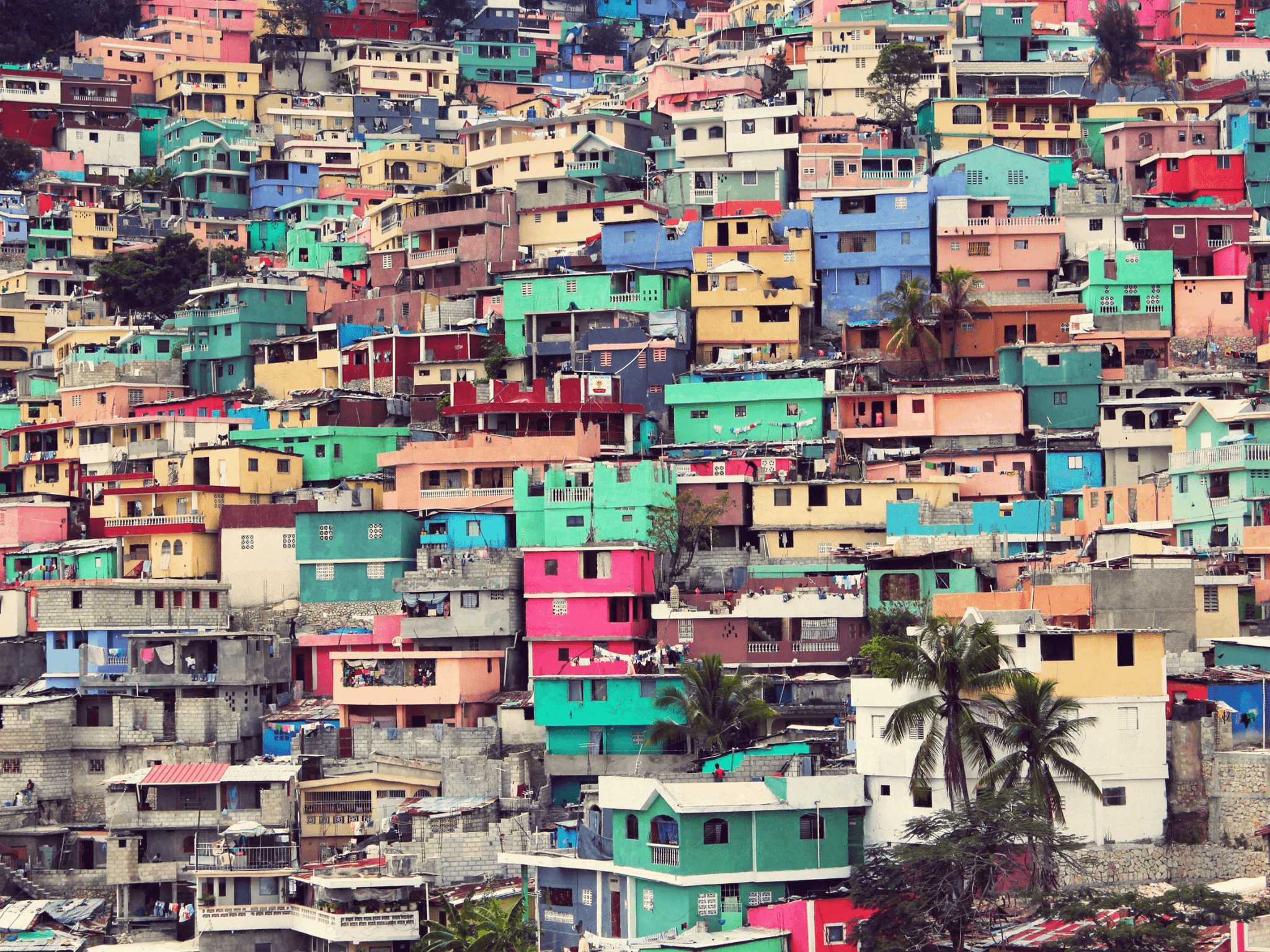
In these circumstances, the Canadian government, through its Minister of Foreign Affairs, Mélanie Joly, has announced sanctions for gang members and politicians terrorizing the country. While some might consider this a first step towards contributing to peace building efforts, it is appropriate to question Canada's positioning on the matter.

Over the past few years, Haiti has been experiencing a mass exodus akin to that of 1980’s (during the Duvalier era) and the early 2000’s. 

At the time of writing this text, roadblocks and protests are still interrupting the daily lives of Haitians. The school year failed to start on the already postponed date of October 3rd. 

After years of depleting the capacity for local production, by both local and international forces, Haiti’s dependence on imported goods now places the country in a precarious situation. Water and other essential goods are scarce and expensive, businesses are forced to shut their doors and banks are currently opening on a three-day schedule. In addition, the proliferation of gangs operating throughout the territory makes day-to-day life hazardous across the country, as these gangs continue to strengthen their hold on acutely perilous, lawless zones.

In these circumstances, the Canadian government, through its Minister of Foreign Affairs, Mélanie Joly, has announced sanctions for gang members and politicians terrorizing the country. While some might consider this a first step towards contributing to peace building efforts, it is appropriate to question Canada's positioning on the matter. With a stance generally siding with its neighbor, the United States, it is part of a group of countries who has been accused of influencing the political landscape in Haiti. Along side the U.S, France, Germany, Brazil and Spain, they are commonly referred to as “the International” and are widely criticized within Haitian society for legitimazing a illegitimate government, with alledged ties to gangs and a head of state whose name has been cited in the murder investigations of former president, Jovenel Moise. 

Canada funds the Haitian National Police (PNH) and offers training to its officers, an institution that is rife with corruption, political manipulation and whose officers are often seen violently suppressing protesters and journalists. As recently as October 15th, Canada along with the United States delivered armored cars for the PNH. Canada is now considering leading a military intervention in Haiti, having recently sent a team to assess the situation on the ground. While the failures of this institution rests at the feet of Haitian leaders, these failures have ensued whilst receiving funding and training from countries like Canada. The chaotic situation in Haiti, quickly becoming a humanitarian crisis, has led thousands of Haitians to flee the country – seeking shelter in neighboring countries like Canada. While these socio-political events are complex and cannot be attributed to one specific reason, it is important to consider the link between times of unrest in Haiti and the economic needs for immigration elsewhere, particularly in Canada.

The Canadian population is aging, and its labor market suffers from an urgent need for a young competent workforce to strengthen its ranks, in several sectors such as education and healthcare. To respond to this, for decades now, Canada and its provinces have put in place a carefully thought out immigration process to control who comes to settle in its territories, with each province outlining its needs for immigrants. It is most of the time a long process, strewn with medical tests, proof of revenue and academic achievement, language proficiency, culminating in a point-based evaluation. As a result, statistically, immigrants account for 84% of the growth in the total labor force, and 55% of the growth in high and medium-skilled jobs in Canada.

The immigration process can be long, but the Canadian provinces (especially Ontario nowadays) offer more expensive Express programs with shorter delays, accepting newcomers that meet their requirements. Canada is often a smart choice in terms of place of residence given its progressive stance on matters such as access healthcare, education, etc. Quebec is furthermore a smarter choice, for Haitians, because of linguistic similarities. 

Canada is very vocal about the sort of immigrants it seeks.

Canada is very vocal about the sort of immigrants it seeks. Take the health sector for instance. In February 2022, the Minister of Labor and Immigration, Jean Boulet, announced that the Quebec government was spending 64 million dollars to recruit 1,000 nurses from abroad, over the next two years. Previously, Quebec has sought to recruit 1,700 nurses in 2021 up from 330 in 2019.  All this to say that, contrary to popular belief or perception, Canada and its provinces carefully choose their immigrants, based on their merit and the needs of each territory. 

Some  activists and scholars believe that Canada's meddling in Haitian internal affairs, and support for repressive and corrupt leaders contributes to the weakening of both the democratic system and Haiti’s sovereignty. Other historians like Professor Georges Eddy Lucien argue that the poor conditions in Haiti enables countries like Canada to indirectly profit economically. Lucien argues in an interview accorded to Ayibopost, “the massive displacement of Haitians always responds to the objective of the capitalist system.” This economy of insecurity in Haiti places countries like Canada, France and the United States in the convenient position of profiting from the exodus for their benefit, effectively draining Haiti of its young workforce and its brains.

Despite the evident need for and the welcoming of educated immigrants, the subject of immigration in Canada remains a contentious topic during elections, oftentimes framed as an "us versus them" to divide and exacerbate old wounds. 

A recent example of this took place on September 21st 2022, during a debate a few days prior to  the provincial elections. The same Minister, Jean Boulet, who is actively recruiting foreign nurses declared that “80% of immigrants [who] go to Montreal, do not work, do not speak French, or do not adhere to the values of Quebec society”.

This trope of the lazy (and french-threatening) immigrant deployed in Boulet’s statement, highlights deep-rooted prejudice that contradict the proven facts as well as the province's migration statistics. The party in question was, since then, effortlessly re-elected, by a large margin, despite this xenophobic statement.

Incidents such as the killing of Fredy Villanueva, in 2008, in Montréal-Nord, shot during a police intervention, or more recently the "excessive force" used by Quebec police to subdue an 18-year-old black man, have highlighted the racial profiling and systemic bias that some minorities face on a daily basis. Racism in Canada, while not as (frequently) violent as its American neighbor, is alive and well. Profoundly embedded in institutions and perceptions alike, it is also more subtle – more subtle to expose and more elusive to address. 

At the height of the pandemic, asylum seekers who had been at the front lines in the healthcare sector (primarily orderlies and nurses) were threatened with expulsion – coupled with the under-representation of visible minorities in public entities – has since then clearly been identified as systemic discrimination.

Black and Indigenous people in Montreal are four to five times more likely to be arrested by police than white people. Black people are nearly 20 times more likely to be shot by Toronto police officers than white people, when they represent only 8.8% of the population.

Laws such as the recently adopted Bill 96 have also been criticized for its potential negative impact on both First Nations, immigrants and refugees alike, further marginalizing minorities in the name of secularism and the protection of French as the primary language.

At the height of the pandemic, asylum seekers who had been at the front lines in the healthcare sector (primarily orderlies and nurses) were threatened with expulsion – coupled with the under-representation of visible minorities in public entities – has since then clearly been identified as systemic discrimination.

While credit can be ascribed to Quebec society, with its opening the floor to dialogue and conversations surrounding these sensitive issues, the Canadian Government has also been called to answer for its violent past regarding the murders of thousand of First Nations children, separated from their families and placed in boarding schools, notably following the discovery of 751 anonymous graves during an excavation on one of these schools. While the principle of systemic discrimination is still being debated (and undermined by the likes of the current premier of Quebec who has denied its existence), the affected populations continue to speak out on these issues.

Provinces like Quebec are walking a thin line between catering to their aging population who often view the immigrant as a threat to their cultural exception from the rest of English-speaking Canada, and their need for new minds, workforce and talent – coming together to unveil a delicate balance of appearances and economic interests, placing Haitian newcomers fleeing gang violence and instability right in the center of a new world of competing interests,  institutionalized violence, and well-mannered racism.

After experiencing successive traumas in Haiti, newly arrived Haitian Immigrants find themselves tip-toieng around prejudice and discrimination in their new place of residence. They will join the ranks of other generations before them, living proof of decades of political instability, benefitting from the resources and safe haven provided by the countries willing to welcome them, and needing them. 

Of course, this situation of crisis also unequivocally points to the political class and economic elite’s inaction and disregard of the crumbling institutions safeguarding Haiti’s sovereignty, and their failure to take a stance in front of Haiti’s so-called “friends”.

There is however no doubt that this workforce is a tool for socio economic issues, conveniently addressing both the aging of the population and the shortage of labor. Some would argue that the social unrest in Haiti purposefully serves as a useful lever, toward that goal.

At the height of this on-going crisis, and while Haiti has been, for years now, in the throes of a political crisis, Haitians continue to flee. There is no data, as of yet, to fully comprehend the impact that this exodus will have on Haiti for the years to come. But by fully understanding the relation between economic benefit and immigration policy, only then will we begin to grasp the extent of the engineering of this constant state of chaos.

Featured Image: Aljazeera

The Economy of Chaos: How Powerful Nations Benefit From Unrest in Haiti

In these circumstances, the Canadian government, through its Minister of Foreign Affairs, Mélanie Joly, has announced sanctions for gang members and politicians terrorizing the country. While some might consider this a first step towards contributing to peace building efforts, it is appropriate to question Canada's positioning on the matter.

Over the past few years, Haiti has been experiencing a mass exodus akin to that of 1980’s (during the Duvalier era) and the early 2000’s. 

At the time of writing this text, roadblocks and protests are still interrupting the daily lives of Haitians. The school year failed to start on the already postponed date of October 3rd. 

After years of depleting the capacity for local production, by both local and international forces, Haiti’s dependence on imported goods now places the country in a precarious situation. Water and other essential goods are scarce and expensive, businesses are forced to shut their doors and banks are currently opening on a three-day schedule. In addition, the proliferation of gangs operating throughout the territory makes day-to-day life hazardous across the country, as these gangs continue to strengthen their hold on acutely perilous, lawless zones.

In these circumstances, the Canadian government, through its Minister of Foreign Affairs, Mélanie Joly, has announced sanctions for gang members and politicians terrorizing the country. While some might consider this a first step towards contributing to peace building efforts, it is appropriate to question Canada's positioning on the matter. With a stance generally siding with its neighbor, the United States, it is part of a group of countries who has been accused of influencing the political landscape in Haiti. Along side the U.S, France, Germany, Brazil and Spain, they are commonly referred to as “the International” and are widely criticized within Haitian society for legitimazing a illegitimate government, with alledged ties to gangs and a head of state whose name has been cited in the murder investigations of former president, Jovenel Moise. 

Canada funds the Haitian National Police (PNH) and offers training to its officers, an institution that is rife with corruption, political manipulation and whose officers are often seen violently suppressing protesters and journalists. As recently as October 15th, Canada along with the United States delivered armored cars for the PNH. Canada is now considering leading a military intervention in Haiti, having recently sent a team to assess the situation on the ground. While the failures of this institution rests at the feet of Haitian leaders, these failures have ensued whilst receiving funding and training from countries like Canada. The chaotic situation in Haiti, quickly becoming a humanitarian crisis, has led thousands of Haitians to flee the country – seeking shelter in neighboring countries like Canada. While these socio-political events are complex and cannot be attributed to one specific reason, it is important to consider the link between times of unrest in Haiti and the economic needs for immigration elsewhere, particularly in Canada.

The Canadian population is aging, and its labor market suffers from an urgent need for a young competent workforce to strengthen its ranks, in several sectors such as education and healthcare. To respond to this, for decades now, Canada and its provinces have put in place a carefully thought out immigration process to control who comes to settle in its territories, with each province outlining its needs for immigrants. It is most of the time a long process, strewn with medical tests, proof of revenue and academic achievement, language proficiency, culminating in a point-based evaluation. As a result, statistically, immigrants account for 84% of the growth in the total labor force, and 55% of the growth in high and medium-skilled jobs in Canada.

The immigration process can be long, but the Canadian provinces (especially Ontario nowadays) offer more expensive Express programs with shorter delays, accepting newcomers that meet their requirements. Canada is often a smart choice in terms of place of residence given its progressive stance on matters such as access healthcare, education, etc. Quebec is furthermore a smarter choice, for Haitians, because of linguistic similarities. 

Canada is very vocal about the sort of immigrants it seeks.

Canada is very vocal about the sort of immigrants it seeks. Take the health sector for instance. In February 2022, the Minister of Labor and Immigration, Jean Boulet, announced that the Quebec government was spending 64 million dollars to recruit 1,000 nurses from abroad, over the next two years. Previously, Quebec has sought to recruit 1,700 nurses in 2021 up from 330 in 2019.  All this to say that, contrary to popular belief or perception, Canada and its provinces carefully choose their immigrants, based on their merit and the needs of each territory. 

Some  activists and scholars believe that Canada's meddling in Haitian internal affairs, and support for repressive and corrupt leaders contributes to the weakening of both the democratic system and Haiti’s sovereignty. Other historians like Professor Georges Eddy Lucien argue that the poor conditions in Haiti enables countries like Canada to indirectly profit economically. Lucien argues in an interview accorded to Ayibopost, “the massive displacement of Haitians always responds to the objective of the capitalist system.” This economy of insecurity in Haiti places countries like Canada, France and the United States in the convenient position of profiting from the exodus for their benefit, effectively draining Haiti of its young workforce and its brains.

Despite the evident need for and the welcoming of educated immigrants, the subject of immigration in Canada remains a contentious topic during elections, oftentimes framed as an "us versus them" to divide and exacerbate old wounds. 

A recent example of this took place on September 21st 2022, during a debate a few days prior to  the provincial elections. The same Minister, Jean Boulet, who is actively recruiting foreign nurses declared that “80% of immigrants [who] go to Montreal, do not work, do not speak French, or do not adhere to the values of Quebec society”.

This trope of the lazy (and french-threatening) immigrant deployed in Boulet’s statement, highlights deep-rooted prejudice that contradict the proven facts as well as the province's migration statistics. The party in question was, since then, effortlessly re-elected, by a large margin, despite this xenophobic statement.

Incidents such as the killing of Fredy Villanueva, in 2008, in Montréal-Nord, shot during a police intervention, or more recently the "excessive force" used by Quebec police to subdue an 18-year-old black man, have highlighted the racial profiling and systemic bias that some minorities face on a daily basis. Racism in Canada, while not as (frequently) violent as its American neighbor, is alive and well. Profoundly embedded in institutions and perceptions alike, it is also more subtle – more subtle to expose and more elusive to address. 

At the height of the pandemic, asylum seekers who had been at the front lines in the healthcare sector (primarily orderlies and nurses) were threatened with expulsion – coupled with the under-representation of visible minorities in public entities – has since then clearly been identified as systemic discrimination.

Black and Indigenous people in Montreal are four to five times more likely to be arrested by police than white people. Black people are nearly 20 times more likely to be shot by Toronto police officers than white people, when they represent only 8.8% of the population.

Laws such as the recently adopted Bill 96 have also been criticized for its potential negative impact on both First Nations, immigrants and refugees alike, further marginalizing minorities in the name of secularism and the protection of French as the primary language.

At the height of the pandemic, asylum seekers who had been at the front lines in the healthcare sector (primarily orderlies and nurses) were threatened with expulsion – coupled with the under-representation of visible minorities in public entities – has since then clearly been identified as systemic discrimination.

While credit can be ascribed to Quebec society, with its opening the floor to dialogue and conversations surrounding these sensitive issues, the Canadian Government has also been called to answer for its violent past regarding the murders of thousand of First Nations children, separated from their families and placed in boarding schools, notably following the discovery of 751 anonymous graves during an excavation on one of these schools. While the principle of systemic discrimination is still being debated (and undermined by the likes of the current premier of Quebec who has denied its existence), the affected populations continue to speak out on these issues.

Provinces like Quebec are walking a thin line between catering to their aging population who often view the immigrant as a threat to their cultural exception from the rest of English-speaking Canada, and their need for new minds, workforce and talent – coming together to unveil a delicate balance of appearances and economic interests, placing Haitian newcomers fleeing gang violence and instability right in the center of a new world of competing interests,  institutionalized violence, and well-mannered racism.

After experiencing successive traumas in Haiti, newly arrived Haitian Immigrants find themselves tip-toieng around prejudice and discrimination in their new place of residence. They will join the ranks of other generations before them, living proof of decades of political instability, benefitting from the resources and safe haven provided by the countries willing to welcome them, and needing them. 

Of course, this situation of crisis also unequivocally points to the political class and economic elite’s inaction and disregard of the crumbling institutions safeguarding Haiti’s sovereignty, and their failure to take a stance in front of Haiti’s so-called “friends”.

There is however no doubt that this workforce is a tool for socio economic issues, conveniently addressing both the aging of the population and the shortage of labor. Some would argue that the social unrest in Haiti purposefully serves as a useful lever, toward that goal.

At the height of this on-going crisis, and while Haiti has been, for years now, in the throes of a political crisis, Haitians continue to flee. There is no data, as of yet, to fully comprehend the impact that this exodus will have on Haiti for the years to come. But by fully understanding the relation between economic benefit and immigration policy, only then will we begin to grasp the extent of the engineering of this constant state of chaos.

Featured Image: Aljazeera

The Economy of Chaos: How Powerful Nations Benefit From Unrest in Haiti

In these circumstances, the Canadian government, through its Minister of Foreign Affairs, Mélanie Joly, has announced sanctions for gang members and politicians terrorizing the country. While some might consider this a first step towards contributing to peace building efforts, it is appropriate to question Canada's positioning on the matter.

Over the past few years, Haiti has been experiencing a mass exodus akin to that of 1980’s (during the Duvalier era) and the early 2000’s. 

At the time of writing this text, roadblocks and protests are still interrupting the daily lives of Haitians. The school year failed to start on the already postponed date of October 3rd. 

After years of depleting the capacity for local production, by both local and international forces, Haiti’s dependence on imported goods now places the country in a precarious situation. Water and other essential goods are scarce and expensive, businesses are forced to shut their doors and banks are currently opening on a three-day schedule. In addition, the proliferation of gangs operating throughout the territory makes day-to-day life hazardous across the country, as these gangs continue to strengthen their hold on acutely perilous, lawless zones.

In these circumstances, the Canadian government, through its Minister of Foreign Affairs, Mélanie Joly, has announced sanctions for gang members and politicians terrorizing the country. While some might consider this a first step towards contributing to peace building efforts, it is appropriate to question Canada's positioning on the matter. With a stance generally siding with its neighbor, the United States, it is part of a group of countries who has been accused of influencing the political landscape in Haiti. Along side the U.S, France, Germany, Brazil and Spain, they are commonly referred to as “the International” and are widely criticized within Haitian society for legitimazing a illegitimate government, with alledged ties to gangs and a head of state whose name has been cited in the murder investigations of former president, Jovenel Moise. 

Canada funds the Haitian National Police (PNH) and offers training to its officers, an institution that is rife with corruption, political manipulation and whose officers are often seen violently suppressing protesters and journalists. As recently as October 15th, Canada along with the United States delivered armored cars for the PNH. Canada is now considering leading a military intervention in Haiti, having recently sent a team to assess the situation on the ground. While the failures of this institution rests at the feet of Haitian leaders, these failures have ensued whilst receiving funding and training from countries like Canada. The chaotic situation in Haiti, quickly becoming a humanitarian crisis, has led thousands of Haitians to flee the country – seeking shelter in neighboring countries like Canada. While these socio-political events are complex and cannot be attributed to one specific reason, it is important to consider the link between times of unrest in Haiti and the economic needs for immigration elsewhere, particularly in Canada.

The Canadian population is aging, and its labor market suffers from an urgent need for a young competent workforce to strengthen its ranks, in several sectors such as education and healthcare. To respond to this, for decades now, Canada and its provinces have put in place a carefully thought out immigration process to control who comes to settle in its territories, with each province outlining its needs for immigrants. It is most of the time a long process, strewn with medical tests, proof of revenue and academic achievement, language proficiency, culminating in a point-based evaluation. As a result, statistically, immigrants account for 84% of the growth in the total labor force, and 55% of the growth in high and medium-skilled jobs in Canada.

The immigration process can be long, but the Canadian provinces (especially Ontario nowadays) offer more expensive Express programs with shorter delays, accepting newcomers that meet their requirements. Canada is often a smart choice in terms of place of residence given its progressive stance on matters such as access healthcare, education, etc. Quebec is furthermore a smarter choice, for Haitians, because of linguistic similarities. 

Canada is very vocal about the sort of immigrants it seeks.

Canada is very vocal about the sort of immigrants it seeks. Take the health sector for instance. In February 2022, the Minister of Labor and Immigration, Jean Boulet, announced that the Quebec government was spending 64 million dollars to recruit 1,000 nurses from abroad, over the next two years. Previously, Quebec has sought to recruit 1,700 nurses in 2021 up from 330 in 2019.  All this to say that, contrary to popular belief or perception, Canada and its provinces carefully choose their immigrants, based on their merit and the needs of each territory. 

Some  activists and scholars believe that Canada's meddling in Haitian internal affairs, and support for repressive and corrupt leaders contributes to the weakening of both the democratic system and Haiti’s sovereignty. Other historians like Professor Georges Eddy Lucien argue that the poor conditions in Haiti enables countries like Canada to indirectly profit economically. Lucien argues in an interview accorded to Ayibopost, “the massive displacement of Haitians always responds to the objective of the capitalist system.” This economy of insecurity in Haiti places countries like Canada, France and the United States in the convenient position of profiting from the exodus for their benefit, effectively draining Haiti of its young workforce and its brains.

Despite the evident need for and the welcoming of educated immigrants, the subject of immigration in Canada remains a contentious topic during elections, oftentimes framed as an "us versus them" to divide and exacerbate old wounds. 

A recent example of this took place on September 21st 2022, during a debate a few days prior to  the provincial elections. The same Minister, Jean Boulet, who is actively recruiting foreign nurses declared that “80% of immigrants [who] go to Montreal, do not work, do not speak French, or do not adhere to the values of Quebec society”.

This trope of the lazy (and french-threatening) immigrant deployed in Boulet’s statement, highlights deep-rooted prejudice that contradict the proven facts as well as the province's migration statistics. The party in question was, since then, effortlessly re-elected, by a large margin, despite this xenophobic statement.

Incidents such as the killing of Fredy Villanueva, in 2008, in Montréal-Nord, shot during a police intervention, or more recently the "excessive force" used by Quebec police to subdue an 18-year-old black man, have highlighted the racial profiling and systemic bias that some minorities face on a daily basis. Racism in Canada, while not as (frequently) violent as its American neighbor, is alive and well. Profoundly embedded in institutions and perceptions alike, it is also more subtle – more subtle to expose and more elusive to address. 

At the height of the pandemic, asylum seekers who had been at the front lines in the healthcare sector (primarily orderlies and nurses) were threatened with expulsion – coupled with the under-representation of visible minorities in public entities – has since then clearly been identified as systemic discrimination.

Black and Indigenous people in Montreal are four to five times more likely to be arrested by police than white people. Black people are nearly 20 times more likely to be shot by Toronto police officers than white people, when they represent only 8.8% of the population.

Laws such as the recently adopted Bill 96 have also been criticized for its potential negative impact on both First Nations, immigrants and refugees alike, further marginalizing minorities in the name of secularism and the protection of French as the primary language.

At the height of the pandemic, asylum seekers who had been at the front lines in the healthcare sector (primarily orderlies and nurses) were threatened with expulsion – coupled with the under-representation of visible minorities in public entities – has since then clearly been identified as systemic discrimination.

While credit can be ascribed to Quebec society, with its opening the floor to dialogue and conversations surrounding these sensitive issues, the Canadian Government has also been called to answer for its violent past regarding the murders of thousand of First Nations children, separated from their families and placed in boarding schools, notably following the discovery of 751 anonymous graves during an excavation on one of these schools. While the principle of systemic discrimination is still being debated (and undermined by the likes of the current premier of Quebec who has denied its existence), the affected populations continue to speak out on these issues.

Provinces like Quebec are walking a thin line between catering to their aging population who often view the immigrant as a threat to their cultural exception from the rest of English-speaking Canada, and their need for new minds, workforce and talent – coming together to unveil a delicate balance of appearances and economic interests, placing Haitian newcomers fleeing gang violence and instability right in the center of a new world of competing interests,  institutionalized violence, and well-mannered racism.

After experiencing successive traumas in Haiti, newly arrived Haitian Immigrants find themselves tip-toieng around prejudice and discrimination in their new place of residence. They will join the ranks of other generations before them, living proof of decades of political instability, benefitting from the resources and safe haven provided by the countries willing to welcome them, and needing them. 

Of course, this situation of crisis also unequivocally points to the political class and economic elite’s inaction and disregard of the crumbling institutions safeguarding Haiti’s sovereignty, and their failure to take a stance in front of Haiti’s so-called “friends”.

There is however no doubt that this workforce is a tool for socio economic issues, conveniently addressing both the aging of the population and the shortage of labor. Some would argue that the social unrest in Haiti purposefully serves as a useful lever, toward that goal.

At the height of this on-going crisis, and while Haiti has been, for years now, in the throes of a political crisis, Haitians continue to flee. There is no data, as of yet, to fully comprehend the impact that this exodus will have on Haiti for the years to come. But by fully understanding the relation between economic benefit and immigration policy, only then will we begin to grasp the extent of the engineering of this constant state of chaos.

Featured Image: Aljazeera

Haiti’s Battle With Cholera Returns. Here’s Why
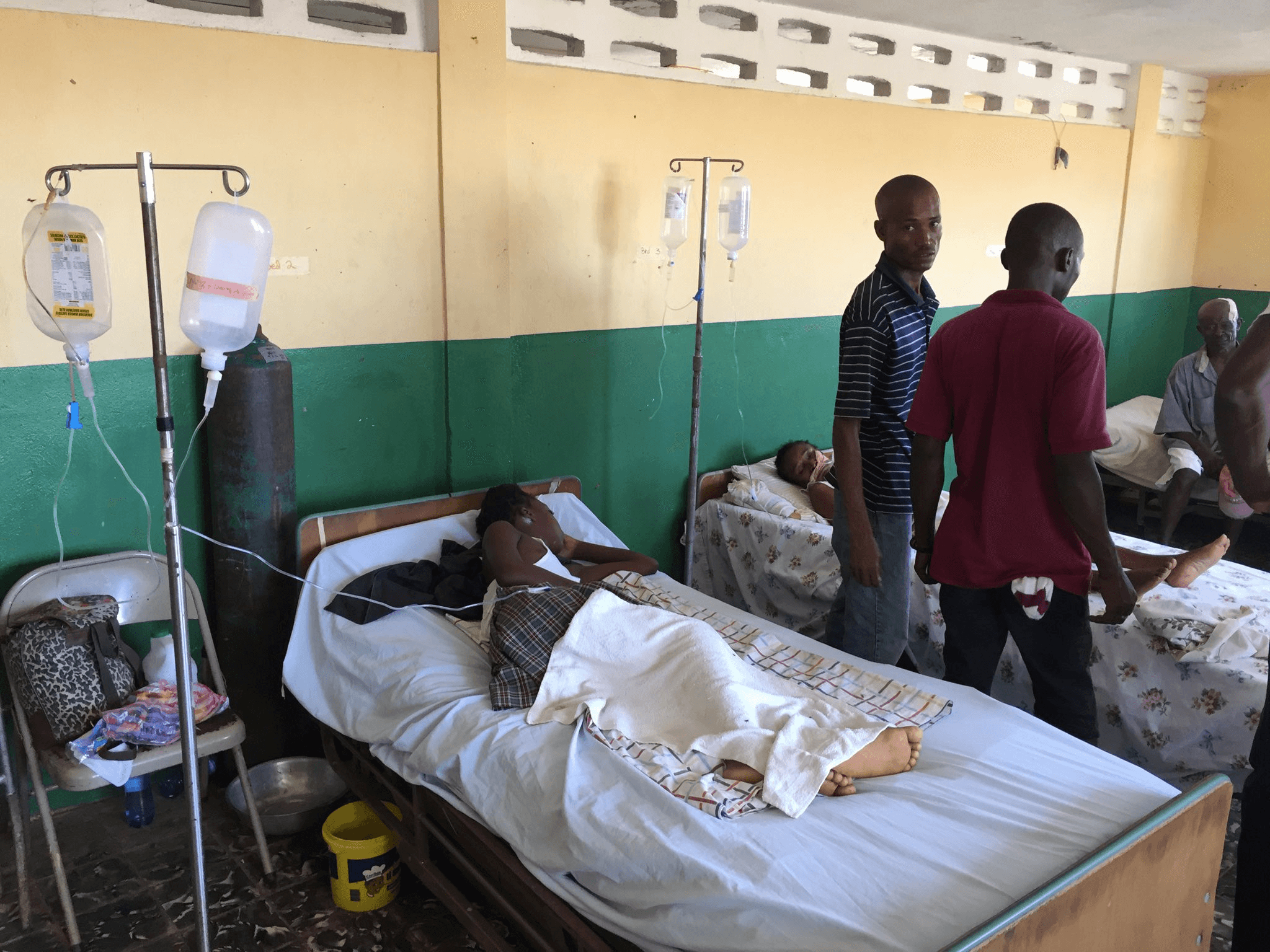
The lesson is that a public health system is never independent of the general functioning of a country—especially a surveillance system. 


Photo credit: Etant Dupain

On a warm February morning earlier this year, I was thrilled to learn some fantastic news about Haiti. After years of struggle, the country had come to eliminate cholera. This diarrheic disease acquired principally by ingesting food or water contaminated with the vibrio cholerae bacteria has had a tragic impact on the island. In 2010, a few months after a deadly earthquake killed hundreds of thousands, UN peacekeeping troops stationed along the Artibonite river in central Haiti started the local epidemic. The epidemic had regional consequences as the El Tor strain the UN soldiers imported into the country from South Asia was linked to outbreaks in other countries, including the Dominican Republic, Cuba, and even Mexico. 

What followed was a decade of astounding physical and psychological trauma. Nevertheless, with incredible willpower and critical partnerships with international agencies, 12 years later, the Haitian Ministry of Health closed this chapter with relative satisfaction. Hence the announcement and celebrations in February. Unfortunately, the joy of this accomplishment was short-lived. A mixture of misfortune in conjunction with an unstable political situation, major economic setbacks, and the deadly COVID-19 pandemic are likely responsible for the reversal of this significant achievement. 

In October 2022, a resurgence of the cholera outbreak was reported in Haiti. There are conflicting reports about the exact number of people affected by this resurgence, but by October 19th, the Ministry of Health had confirmed 23 deaths. The most alarming outbreak is happening now in the largest prison in the country. Questions remain unanswered about why this dreaded specter has reappeared. The National Cholera Surveillance System, established by Haiti’s Ministry of Public Health with support from the CDC, is the focus of most of these interrogations. The surveillance system was and is still instrumental in the fight to eliminate cholera. Despite its efficiency at the start of the epidemic, it is hard to say whether such a system was consistently implemented in Haiti after cases went down. 

Daily reporting of cholera cases through the Direction d’Epidémiologie, de Laboratoire et de Recherches (DELR) and microbiological surveillance through the Laboratoire National de Santé Publique (LNSP) allowed Haitian health officials to detect and monitor cases with great accuracy during the first ten years of the epidemic. Surveillance officers trained in Haiti working from 357 sites carried out these crucial daily reports. 

From October 2010 to December 2018, the Ministry of Health recorded 820,300 suspected cases and 9,792 deaths. Afterward, cases diminished by 72% in 2018 and 82% in 2019. By August 2020, the decision-makers perceived the decreased incidence of cholera as a victory. However, researchers noted that the underperformance of the passive surveillance system allowed an increased number of cases to go under-reported and a risk of disease resurgence, as published in a Lancet article by Jeannot Francois. Jeannot Francois was the director of the country's vaccination program (Programme Elargi de Vaccination).  Environmental surveillance was not consistent from the start. It lacked funding and effective governance and mainly consisted of various dispersed projects. The Ministry of Health did not communicate any findings to the general population. Haiti’s challenging socio-political context culminating in an explosive situation following the assassination of Jovenel Moise, only worsened these already worrisome structural problems. 

Political instability

For about three years before the assassination of Moise, nationwide protests were commonplace, with roadblocks as a strategic mainstay. The circulation of people and goods remains limited in cities and between departments. To make matters worse, armed groups actively control large territories in Port-au-Prince and neighboring towns threatening access to clean water and sanitation. 

In 2015, only 52% of Haitians had access to essential water and sanitation facilities, according to the World Bank. I suspect that these figures are even more alarming in sensitive zones. Gun violence, blocked areas, and poor access to all basic services are characteristics of these neighborhoods where the state is absent. 

Recently, the national water authorities announced that uprisings and general strikes had disrupted clean water systems. During this “lockdown,” many people resorted to drinking visibly contaminated water. Videos circulated on social media showed people drawing water from taps near the southern exit of Port-au-Prince in an unsanitary environment. Large amounts of toxigenic cholera living in the environment for years were likely being ingested weeks before the announced resurgence. In this unstable context, the Ministry of Health and its network of field epidemiologists doing active surveillance are powerless. No clinical site has been regularly functioning amid severe gang violence and essential resources blockade. Now, any epidemiological investigation can be an overwhelming risk. Therefore, no reliable data can be reported. 

Economic setbacks 

People in Haiti face stagnant wages, forcing them to leave the public workforce and reducing the state’s ability to maintain motivated disease surveillance teams. 

Haiti has been on a path of economic regression that has worsened in the last year. Inflation has reached an unsettling 29%, according to the Institut Haïtien de Statistique et d’Informatique (IHSI). Even more dramatically, the US dollar exchange rate against the national Gourde has been the center of everyone’s attention, reminiscent of past periods of the near-collapse of the Haitian economy. 

The ongoing waves of young people fleeing the country are unsurprising. People in Haiti face stagnant wages, forcing them to leave the public workforce and reducing the state’s ability to maintain motivated disease surveillance teams. 

Furthermore, the Ministry of Health’s endeavors remain increasingly dependent on outside partnerships. This limits the state’s ability to set priorities on resource allocation independently. The environmental surveillance system remains unfunded while promising young scientists still have no incentive to integrate the scattered projects into a national program. 

The COVID-19 pandemic 

When the COVID-29 pandemic hit Haiti in March 2020… Staff and funding were moved from one epidemic to the other.

When the COVID-19 pandemic hit Haiti in March 2020, it was 13 months since the last documented case of cholera. The cholera epidemic had not yet been declared over. Complacency in cholera surveillance was rampant among decision-makers and the general population. 

COVID-19 was undoubtedly a major public health threat that required a rapid response. An already weak healthcare system had to deal with two major public health threats simultaneously. Staff and funding were moved from one epidemic to the other. In an interesting article about cholera elimination in Haiti, Sophie Cousins cited Jeannot Francois, saying, “In 2019, surveillance practically stopped on cholera... And then in 2020, all resources were redirected to COVID-19.” From this point of view, the COVID-19 pandemic delivered a considerable blow to the frail cholera surveillance system. 

Was it premature to celebrate the elimination of cholera in Haiti? Most likely. I acknowledge the incredible work done primarily by Haitian staff with the support of key partners. It is a remarkable achievement to have built a system, albeit imperfect, that has produced admirable results. The lesson is that a public health system is never independent of the general functioning of a country. Especially a surveillance system. 

To save lives, the following needs to happen: ensure the urgent availability of clean water and sanitation products in vulnerable areas, roll out education campaigns on the disease, set up rapid response teams, organize vaccination campaigns in target areas, strengthen the care system in the treatment facilities and bolster the active surveillance system and research collaborations. 

The conditions for the resurgence of cholera reared their head from the first signs of political instability in 2018, and surveillance suffered greatly. The political instability limits the prospects of a good vaccination campaign also. Just as it jeopardizes the current response, so does it pose grave challenges for improved water and sanitation services for Haitians at the structural level. The country's economic retraction has also significantly affected, destabilizing response teams and cutting off vital resources. Finally, the COVID-19 pandemic, which was yet another misfortune, undermined efforts at a crucial moment.

Nonetheless, I face the future with calm optimism. Enormous challenges are still present, but Haiti is not starting from zero. The knowledge and the willpower remain. 

Feature photo credit: Etant Dupain

Subscribe to our free newsletter to keep up with news about Haiti and its diaspora. Consider becoming a paid subscriber to support our work

Haiti’s Battle With Cholera Returns. Here’s Why

The lesson is that a public health system is never independent of the general functioning of a country—especially a surveillance system. 


Photo credit: Etant Dupain

On a warm February morning earlier this year, I was thrilled to learn some fantastic news about Haiti. After years of struggle, the country had come to eliminate cholera. This diarrheic disease acquired principally by ingesting food or water contaminated with the vibrio cholerae bacteria has had a tragic impact on the island. In 2010, a few months after a deadly earthquake killed hundreds of thousands, UN peacekeeping troops stationed along the Artibonite river in central Haiti started the local epidemic. The epidemic had regional consequences as the El Tor strain the UN soldiers imported into the country from South Asia was linked to outbreaks in other countries, including the Dominican Republic, Cuba, and even Mexico. 

What followed was a decade of astounding physical and psychological trauma. Nevertheless, with incredible willpower and critical partnerships with international agencies, 12 years later, the Haitian Ministry of Health closed this chapter with relative satisfaction. Hence the announcement and celebrations in February. Unfortunately, the joy of this accomplishment was short-lived. A mixture of misfortune in conjunction with an unstable political situation, major economic setbacks, and the deadly COVID-19 pandemic are likely responsible for the reversal of this significant achievement. 

In October 2022, a resurgence of the cholera outbreak was reported in Haiti. There are conflicting reports about the exact number of people affected by this resurgence, but by October 19th, the Ministry of Health had confirmed 23 deaths. The most alarming outbreak is happening now in the largest prison in the country. Questions remain unanswered about why this dreaded specter has reappeared. The National Cholera Surveillance System, established by Haiti’s Ministry of Public Health with support from the CDC, is the focus of most of these interrogations. The surveillance system was and is still instrumental in the fight to eliminate cholera. Despite its efficiency at the start of the epidemic, it is hard to say whether such a system was consistently implemented in Haiti after cases went down. 

Daily reporting of cholera cases through the Direction d’Epidémiologie, de Laboratoire et de Recherches (DELR) and microbiological surveillance through the Laboratoire National de Santé Publique (LNSP) allowed Haitian health officials to detect and monitor cases with great accuracy during the first ten years of the epidemic. Surveillance officers trained in Haiti working from 357 sites carried out these crucial daily reports. 

From October 2010 to December 2018, the Ministry of Health recorded 820,300 suspected cases and 9,792 deaths. Afterward, cases diminished by 72% in 2018 and 82% in 2019. By August 2020, the decision-makers perceived the decreased incidence of cholera as a victory. However, researchers noted that the underperformance of the passive surveillance system allowed an increased number of cases to go under-reported and a risk of disease resurgence, as published in a Lancet article by Jeannot Francois. Jeannot Francois was the director of the country's vaccination program (Programme Elargi de Vaccination).  Environmental surveillance was not consistent from the start. It lacked funding and effective governance and mainly consisted of various dispersed projects. The Ministry of Health did not communicate any findings to the general population. Haiti’s challenging socio-political context culminating in an explosive situation following the assassination of Jovenel Moise, only worsened these already worrisome structural problems. 

Political instability

For about three years before the assassination of Moise, nationwide protests were commonplace, with roadblocks as a strategic mainstay. The circulation of people and goods remains limited in cities and between departments. To make matters worse, armed groups actively control large territories in Port-au-Prince and neighboring towns threatening access to clean water and sanitation. 

In 2015, only 52% of Haitians had access to essential water and sanitation facilities, according to the World Bank. I suspect that these figures are even more alarming in sensitive zones. Gun violence, blocked areas, and poor access to all basic services are characteristics of these neighborhoods where the state is absent. 

Recently, the national water authorities announced that uprisings and general strikes had disrupted clean water systems. During this “lockdown,” many people resorted to drinking visibly contaminated water. Videos circulated on social media showed people drawing water from taps near the southern exit of Port-au-Prince in an unsanitary environment. Large amounts of toxigenic cholera living in the environment for years were likely being ingested weeks before the announced resurgence. In this unstable context, the Ministry of Health and its network of field epidemiologists doing active surveillance are powerless. No clinical site has been regularly functioning amid severe gang violence and essential resources blockade. Now, any epidemiological investigation can be an overwhelming risk. Therefore, no reliable data can be reported. 

Economic setbacks 

People in Haiti face stagnant wages, forcing them to leave the public workforce and reducing the state’s ability to maintain motivated disease surveillance teams. 

Haiti has been on a path of economic regression that has worsened in the last year. Inflation has reached an unsettling 29%, according to the Institut Haïtien de Statistique et d’Informatique (IHSI). Even more dramatically, the US dollar exchange rate against the national Gourde has been the center of everyone’s attention, reminiscent of past periods of the near-collapse of the Haitian economy. 

The ongoing waves of young people fleeing the country are unsurprising. People in Haiti face stagnant wages, forcing them to leave the public workforce and reducing the state’s ability to maintain motivated disease surveillance teams. 

Furthermore, the Ministry of Health’s endeavors remain increasingly dependent on outside partnerships. This limits the state’s ability to set priorities on resource allocation independently. The environmental surveillance system remains unfunded while promising young scientists still have no incentive to integrate the scattered projects into a national program. 

The COVID-19 pandemic 

When the COVID-29 pandemic hit Haiti in March 2020… Staff and funding were moved from one epidemic to the other.

When the COVID-19 pandemic hit Haiti in March 2020, it was 13 months since the last documented case of cholera. The cholera epidemic had not yet been declared over. Complacency in cholera surveillance was rampant among decision-makers and the general population. 

COVID-19 was undoubtedly a major public health threat that required a rapid response. An already weak healthcare system had to deal with two major public health threats simultaneously. Staff and funding were moved from one epidemic to the other. In an interesting article about cholera elimination in Haiti, Sophie Cousins cited Jeannot Francois, saying, “In 2019, surveillance practically stopped on cholera... And then in 2020, all resources were redirected to COVID-19.” From this point of view, the COVID-19 pandemic delivered a considerable blow to the frail cholera surveillance system. 

Was it premature to celebrate the elimination of cholera in Haiti? Most likely. I acknowledge the incredible work done primarily by Haitian staff with the support of key partners. It is a remarkable achievement to have built a system, albeit imperfect, that has produced admirable results. The lesson is that a public health system is never independent of the general functioning of a country. Especially a surveillance system. 

To save lives, the following needs to happen: ensure the urgent availability of clean water and sanitation products in vulnerable areas, roll out education campaigns on the disease, set up rapid response teams, organize vaccination campaigns in target areas, strengthen the care system in the treatment facilities and bolster the active surveillance system and research collaborations. 

The conditions for the resurgence of cholera reared their head from the first signs of political instability in 2018, and surveillance suffered greatly. The political instability limits the prospects of a good vaccination campaign also. Just as it jeopardizes the current response, so does it pose grave challenges for improved water and sanitation services for Haitians at the structural level. The country's economic retraction has also significantly affected, destabilizing response teams and cutting off vital resources. Finally, the COVID-19 pandemic, which was yet another misfortune, undermined efforts at a crucial moment.

Nonetheless, I face the future with calm optimism. Enormous challenges are still present, but Haiti is not starting from zero. The knowledge and the willpower remain. 

Feature photo credit: Etant Dupain

Subscribe to our free newsletter to keep up with news about Haiti and its diaspora. Consider becoming a paid subscriber to support our work

Haiti’s Battle With Cholera Returns. Here’s Why

The lesson is that a public health system is never independent of the general functioning of a country—especially a surveillance system. 


Photo credit: Etant Dupain

On a warm February morning earlier this year, I was thrilled to learn some fantastic news about Haiti. After years of struggle, the country had come to eliminate cholera. This diarrheic disease acquired principally by ingesting food or water contaminated with the vibrio cholerae bacteria has had a tragic impact on the island. In 2010, a few months after a deadly earthquake killed hundreds of thousands, UN peacekeeping troops stationed along the Artibonite river in central Haiti started the local epidemic. The epidemic had regional consequences as the El Tor strain the UN soldiers imported into the country from South Asia was linked to outbreaks in other countries, including the Dominican Republic, Cuba, and even Mexico. 

What followed was a decade of astounding physical and psychological trauma. Nevertheless, with incredible willpower and critical partnerships with international agencies, 12 years later, the Haitian Ministry of Health closed this chapter with relative satisfaction. Hence the announcement and celebrations in February. Unfortunately, the joy of this accomplishment was short-lived. A mixture of misfortune in conjunction with an unstable political situation, major economic setbacks, and the deadly COVID-19 pandemic are likely responsible for the reversal of this significant achievement. 

In October 2022, a resurgence of the cholera outbreak was reported in Haiti. There are conflicting reports about the exact number of people affected by this resurgence, but by October 19th, the Ministry of Health had confirmed 23 deaths. The most alarming outbreak is happening now in the largest prison in the country. Questions remain unanswered about why this dreaded specter has reappeared. The National Cholera Surveillance System, established by Haiti’s Ministry of Public Health with support from the CDC, is the focus of most of these interrogations. The surveillance system was and is still instrumental in the fight to eliminate cholera. Despite its efficiency at the start of the epidemic, it is hard to say whether such a system was consistently implemented in Haiti after cases went down. 

Daily reporting of cholera cases through the Direction d’Epidémiologie, de Laboratoire et de Recherches (DELR) and microbiological surveillance through the Laboratoire National de Santé Publique (LNSP) allowed Haitian health officials to detect and monitor cases with great accuracy during the first ten years of the epidemic. Surveillance officers trained in Haiti working from 357 sites carried out these crucial daily reports. 

From October 2010 to December 2018, the Ministry of Health recorded 820,300 suspected cases and 9,792 deaths. Afterward, cases diminished by 72% in 2018 and 82% in 2019. By August 2020, the decision-makers perceived the decreased incidence of cholera as a victory. However, researchers noted that the underperformance of the passive surveillance system allowed an increased number of cases to go under-reported and a risk of disease resurgence, as published in a Lancet article by Jeannot Francois. Jeannot Francois was the director of the country's vaccination program (Programme Elargi de Vaccination).  Environmental surveillance was not consistent from the start. It lacked funding and effective governance and mainly consisted of various dispersed projects. The Ministry of Health did not communicate any findings to the general population. Haiti’s challenging socio-political context culminating in an explosive situation following the assassination of Jovenel Moise, only worsened these already worrisome structural problems. 

Political instability

For about three years before the assassination of Moise, nationwide protests were commonplace, with roadblocks as a strategic mainstay. The circulation of people and goods remains limited in cities and between departments. To make matters worse, armed groups actively control large territories in Port-au-Prince and neighboring towns threatening access to clean water and sanitation. 

In 2015, only 52% of Haitians had access to essential water and sanitation facilities, according to the World Bank. I suspect that these figures are even more alarming in sensitive zones. Gun violence, blocked areas, and poor access to all basic services are characteristics of these neighborhoods where the state is absent. 

Recently, the national water authorities announced that uprisings and general strikes had disrupted clean water systems. During this “lockdown,” many people resorted to drinking visibly contaminated water. Videos circulated on social media showed people drawing water from taps near the southern exit of Port-au-Prince in an unsanitary environment. Large amounts of toxigenic cholera living in the environment for years were likely being ingested weeks before the announced resurgence. In this unstable context, the Ministry of Health and its network of field epidemiologists doing active surveillance are powerless. No clinical site has been regularly functioning amid severe gang violence and essential resources blockade. Now, any epidemiological investigation can be an overwhelming risk. Therefore, no reliable data can be reported. 

Economic setbacks 

People in Haiti face stagnant wages, forcing them to leave the public workforce and reducing the state’s ability to maintain motivated disease surveillance teams. 

Haiti has been on a path of economic regression that has worsened in the last year. Inflation has reached an unsettling 29%, according to the Institut Haïtien de Statistique et d’Informatique (IHSI). Even more dramatically, the US dollar exchange rate against the national Gourde has been the center of everyone’s attention, reminiscent of past periods of the near-collapse of the Haitian economy. 

The ongoing waves of young people fleeing the country are unsurprising. People in Haiti face stagnant wages, forcing them to leave the public workforce and reducing the state’s ability to maintain motivated disease surveillance teams. 

Furthermore, the Ministry of Health’s endeavors remain increasingly dependent on outside partnerships. This limits the state’s ability to set priorities on resource allocation independently. The environmental surveillance system remains unfunded while promising young scientists still have no incentive to integrate the scattered projects into a national program. 

The COVID-19 pandemic 

When the COVID-29 pandemic hit Haiti in March 2020… Staff and funding were moved from one epidemic to the other.

When the COVID-19 pandemic hit Haiti in March 2020, it was 13 months since the last documented case of cholera. The cholera epidemic had not yet been declared over. Complacency in cholera surveillance was rampant among decision-makers and the general population. 

COVID-19 was undoubtedly a major public health threat that required a rapid response. An already weak healthcare system had to deal with two major public health threats simultaneously. Staff and funding were moved from one epidemic to the other. In an interesting article about cholera elimination in Haiti, Sophie Cousins cited Jeannot Francois, saying, “In 2019, surveillance practically stopped on cholera... And then in 2020, all resources were redirected to COVID-19.” From this point of view, the COVID-19 pandemic delivered a considerable blow to the frail cholera surveillance system. 

Was it premature to celebrate the elimination of cholera in Haiti? Most likely. I acknowledge the incredible work done primarily by Haitian staff with the support of key partners. It is a remarkable achievement to have built a system, albeit imperfect, that has produced admirable results. The lesson is that a public health system is never independent of the general functioning of a country. Especially a surveillance system. 

To save lives, the following needs to happen: ensure the urgent availability of clean water and sanitation products in vulnerable areas, roll out education campaigns on the disease, set up rapid response teams, organize vaccination campaigns in target areas, strengthen the care system in the treatment facilities and bolster the active surveillance system and research collaborations. 

The conditions for the resurgence of cholera reared their head from the first signs of political instability in 2018, and surveillance suffered greatly. The political instability limits the prospects of a good vaccination campaign also. Just as it jeopardizes the current response, so does it pose grave challenges for improved water and sanitation services for Haitians at the structural level. The country's economic retraction has also significantly affected, destabilizing response teams and cutting off vital resources. Finally, the COVID-19 pandemic, which was yet another misfortune, undermined efforts at a crucial moment.

Nonetheless, I face the future with calm optimism. Enormous challenges are still present, but Haiti is not starting from zero. The knowledge and the willpower remain. 

Feature photo credit: Etant Dupain

Subscribe to our free newsletter to keep up with news about Haiti and its diaspora. Consider becoming a paid subscriber to support our work